



This AI Agent Replaced My Entire Team's Workflow —<
Here's the Truth Nobody Tells You
From Y Combinator-backed startup to enterprise AI security infrastructure: how Superagent is quietly rewriting the rules of automation in 2026.
- What Is Superagent? (Two Products, One Name)
- The Open-Source SDK: AI Security for Developers
- The Insurance Platform: Autonomous AI Workforce
- Core Features & Capabilities
- Pricing Breakdown
- Pros & Cons
- Real User Pulse: What Agencies & Developers Say
- Superagent vs Competitors
- Who Should Use Superagent?
- Expert Editorial Opinion
- Final Verdict
I've been building with AI agents for three years. I've watched the hype cycle peak, crash, and rebuild. Every tool promises to "automate everything" — and most deliver a chatbot that can't even book a calendar slot. So when I heard about Superagent, I was skeptical. Two products with the same name? One for developers, one for insurance agencies? That sounds like a branding disaster, not a revolution.
But here's what changed my mind: Superagent's insurance platform generated $2.4 million in value for agencies during a single week of beta testing. Their open-source SDK has been starred by thousands of developers on GitHub. And their customers report a 151% conversion lift for new reps. This isn't another chatbot. This is something different.
— Vlada Lotkina, CEO of SUPERAGENT AI
What Is Superagent? (Two Products, One Name)
Here's the first thing you need to know: Superagent is actually two completely different products from two different companies. This confusion is real, and it matters.
Superagent.sh (superagent.sh) — backed by Y Combinator — is an open-source SDK for AI agent security. It helps developers block prompt injections, redact PII, scan repositories for threats, and run red team scenarios against their AI apps. It's the infrastructure layer that keeps AI safe.
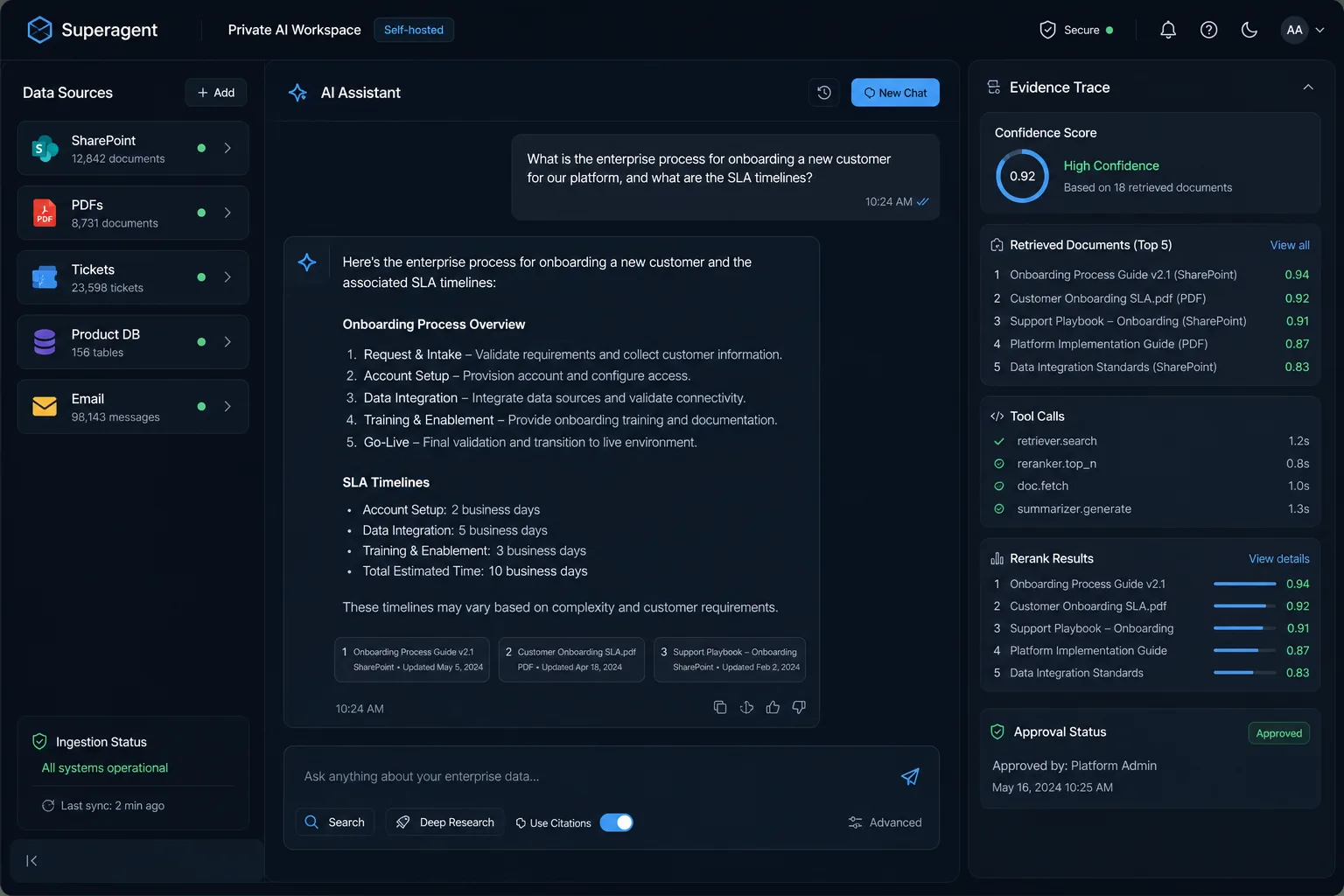
SUPERAGENT AI (getsuperagent.com) — the insurance-focused platform — is an autonomous AI workforce that handles inbound calls, outbound prospecting, quoting, training, and analytics for insurance agencies. It's the application layer that replaces human workflows.
Both are called "Superagent." Both are legitimate. Both serve completely different audiences. In this review, I'll cover both because the name confusion is itself a barrier — and you need to know which one you're actually looking for.
The Open-Source SDK: AI Security for Developers
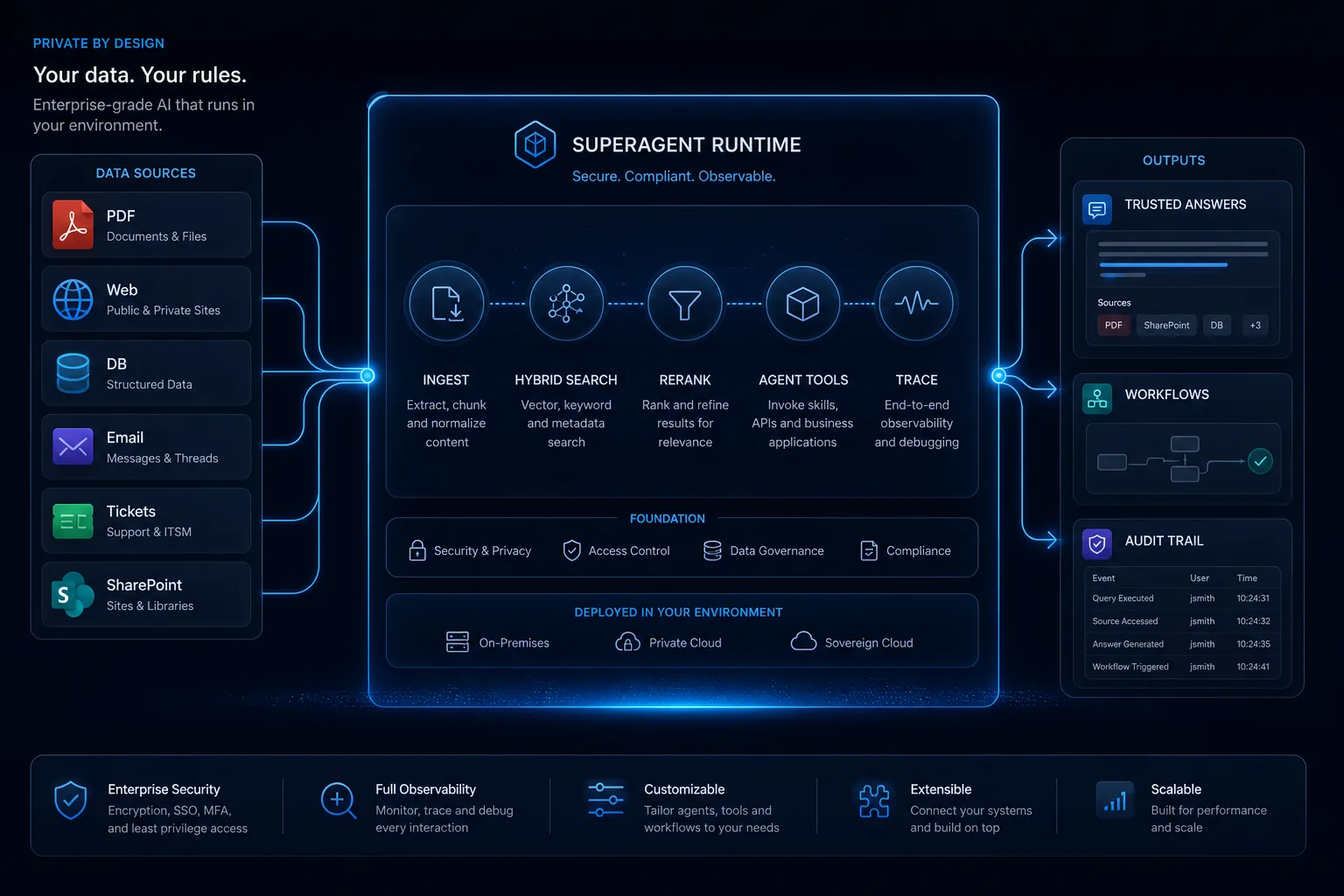
If you're a developer building AI apps, Superagent.sh is your security backbone. The SDK provides four core methods that you embed directly into your application:
- Guard: Detect and block prompt injections, malicious instructions, and unsafe tool calls at runtime — with 50-100ms latency.
- Redact: Automatically remove PII, PHI, and secrets from text before it reaches your models.
- Scan: Analyze repositories for AI agent-targeted attacks like repo poisoning and malicious instructions.
- Test: Run red team scenarios against your production agent to find vulnerabilities before attackers do.
The SDK works with any language model — OpenAI, Anthropic, Google, Groq, Bedrock, and more. It supports TypeScript, Python, CLI, and even MCP Server integration for Claude Code. The open-weight models (0.6B to 4B parameters) can run on your own infrastructure with zero API calls and zero data leaving your environment.
What impressed me most? The Guard model works out of the box with no API keys required. You can install it, run it, and start blocking attacks immediately. For teams worried about data privacy, the on-premise deployment option is a game-changer.
The Insurance Platform: Autonomous AI Workforce
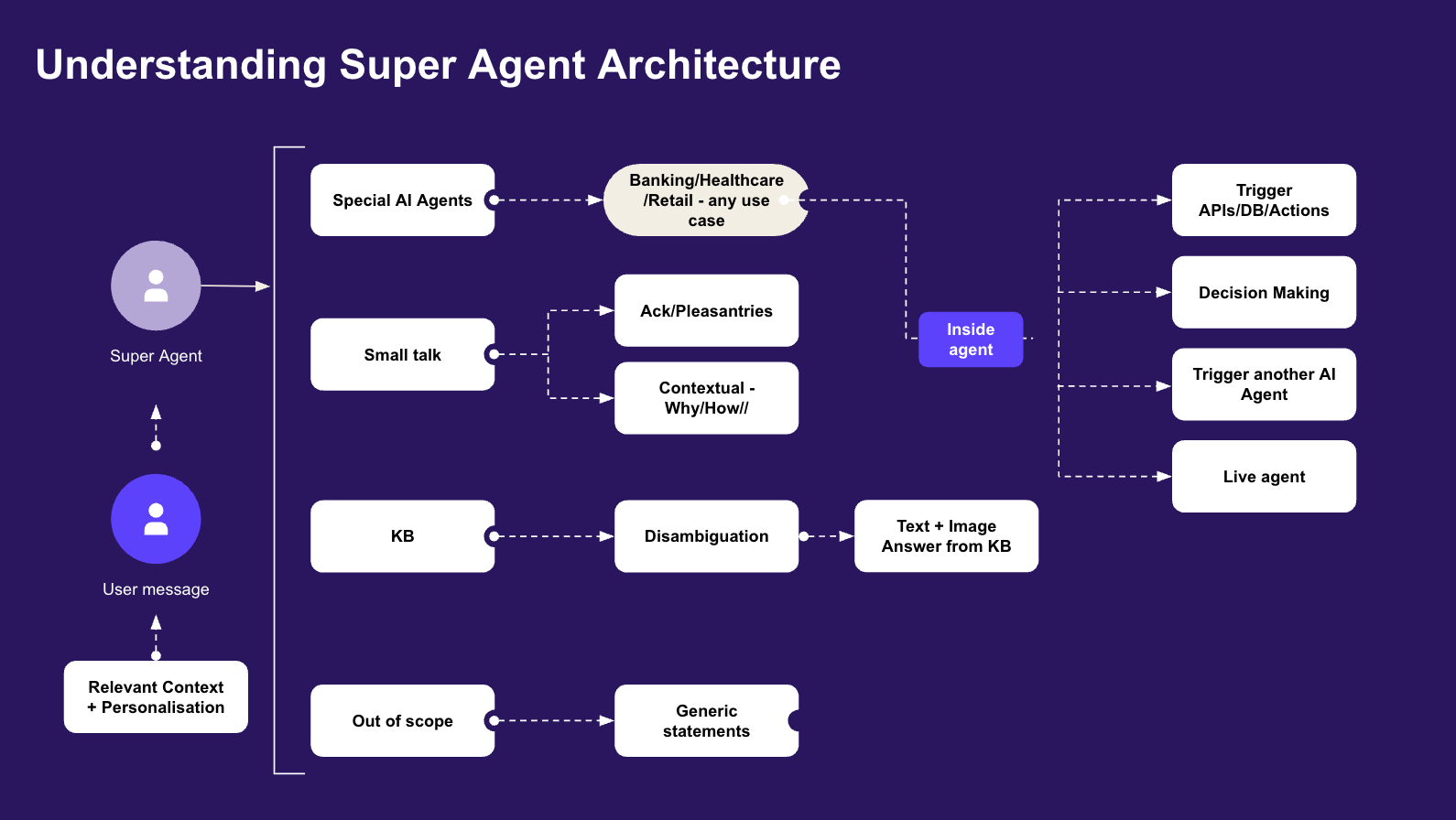
SUPERAGENT AI is not a chatbot. It's a digital workforce of specialized AI agents that handle the entire insurance sales funnel — from first call to final quote. Here's the ecosystem as of June 2026:
Inbound AI Agent
Answers every call on the first ring, 24/7/365. Handles inquiries, collects FNOL information, and intelligently routes complex issues. 100% answer rate, zero lead leakage.
Outbound AI Agent
Autonomously dials prospects, engages with hyper-realistic conversational AI, qualifies intent, and books appointments directly onto human calendars. Thousands of calls per day.
Quoting AI Agent
Navigates complex carrier portals, optimizes rates across multiple carriers, and delivers bindable quotes in seconds. Launched February 2026.
Training AI Agent
Trains new reps with AI-powered coaching. Beta agencies saw a 151% conversion lift and compressed ramp time from 7-9 months to 2.5 weeks.
Analytics AI Agent
Provides leadership with constant revenue intelligence, actionable analytics, and performance insights across the entire funnel.
Retention AI Agent
Manages renewals, identifies at-risk policies, and proactively engages clients to reduce churn and increase lifetime value.
The integration depth is what separates SUPERAGENT from generic automation tools. It connects directly with Applied, Vertafore, EZLynx, and all major CRMs and phone platforms. The AI doesn't just make calls — it understands insurance workflows, carrier portals, and compliance requirements.
Core Features & Capabilities
Both Superagent products share a philosophy: AI should handle the repetitive, humans should handle the relational. Here are the standout features across both platforms:
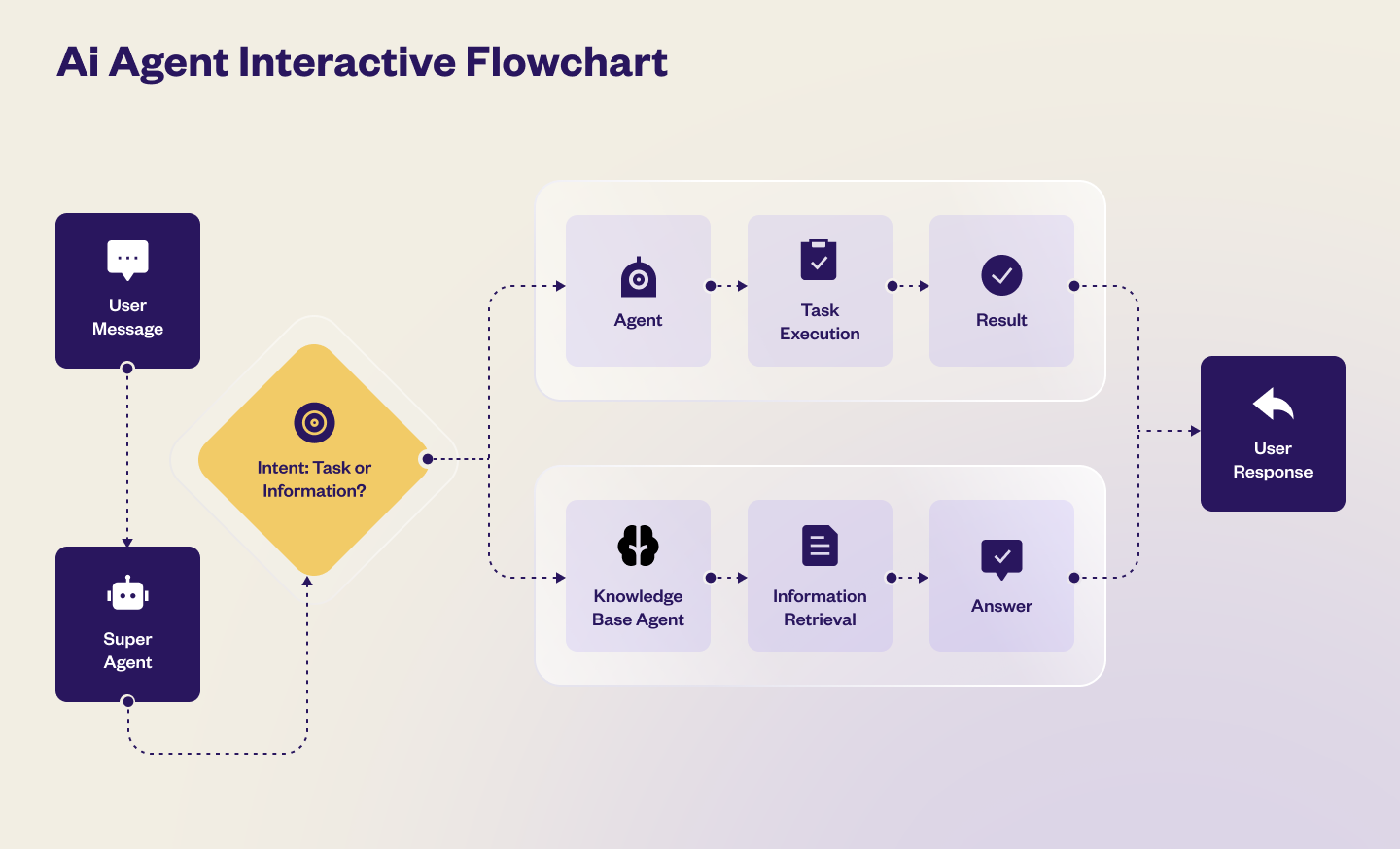
- Memory & Context: Agents retain information from previous interactions, enabling context-aware responses and continuous learning.
- Multimodal Support: Vision capabilities for interactions beyond text — analyzing documents, images, and visual inputs.
- Autonomous Web Browsing: Agents can browse the web, access files, and perform detailed data analysis without human intervention.
- Integration Ecosystem: Native connections to Airtable, Salesforce, Slack, Discord, and hundreds of other tools via API.
- Staging & Production: Separate environments for testing and live deployment, with hosted vector databases for long-term memory.
- SOC 2 Compliance: Enterprise-grade security with encryption, data protection standards, and no customer data used for model training.
Pricing Breakdown
| Product | Plan | Key Features | Price |
|---|---|---|---|
| Superagent.sh SDK | Open Source | Guard, Redact, Scan, Test. MIT license. Community support. | Free |
| Superagent.sh SDK | Private | Private repos, deeper vulnerability research, managed security team. | Custom |
| SUPERAGENT AI | Lite | 10 inquiries/month, $1 per extra inquiry. | $9/mo |
| SUPERAGENT AI | Pro | 100 inquiries/month, CRM integration, performance analytics. | $59/mo |
| SUPERAGENT AI | Enterprise | All agents, custom configuration, dedicated support, SOC 2. | Custom |
The insurance platform's enterprise pricing is opaque — you'll need a demo call. But beta agencies reportedly saw $2.4M in value generated during a single week of testing. For the SDK, the open-source tier is genuinely free and functional, with paid tiers for private repositories and managed security services.
Get Superagent SDK Free →Pros & Cons
✓ What Excels
- ✅ Real autonomy: 78% autonomy level with minimal human intervention for complex tasks.
- ✅ Proven ROI: $2.4M value generated in one week of beta testing for insurance agencies.
- ✅ Security-first: Open-source SDK with prompt injection blocking, PII redaction, and vulnerability scanning.
- ✅ Fast deployment: Most agencies up and running within 10 days from contract signing.
- ✅ Model agnostic: Works with any LLM — OpenAI, Anthropic, Google, Groq, Bedrock.
- ✅ Y Combinator backing: Credibility and funding stability for the open-source project.
✗ What Frustrates
- ❌ Name confusion: Two products with the same name creates real discovery and support challenges.
- ❌ No visual builder: The open-source SDK lacks a drag-and-drop interface for non-technical users.
- ❌ Limited multi-agent: No native multi-agent collaboration or orchestration in the SDK.
- ❌ Insurance-only: The enterprise platform is hyper-focused on insurance — not adaptable to other industries.
- ❌ Opaque pricing: Enterprise tiers require demo calls; no self-serve pricing transparency.
- ❌ Learning curve: Fine-tuned control requires understanding agent configuration, memory management, and tool integration.
💡 Real User Pulse: What Agencies & Developers Say
"What SUPERAGENT did was transformative. Our newer reps saw a 151% conversion lift, and overall we compressed ramp from 7–9 months to about 2.5 weeks. It's powerful, and we're all in."
— SUPERAGENT AI Case Study, 2025
"The Outbound AI Agent has eliminated hours of manual work every week. Document collection that used to take days now happens automatically with 95% success rates."
— SUPERAGENT AI Customer Testimonial
"Superagent pointed their agents at dotenvx. It chained vulnerabilities together the way a real attacker builds a kill chain and found exploit paths. It patched them. A week later, a threat intelligence scanner flagged the same vulnerability. By then it was already fixed. That's what a compressed time delta looks like."
— Scott Motte, Creator & Maintainer, dotenvx
"I wish I could just let our agents run free and solve all our problems. But at what cost? Superagent helps us sleep better at night. It's not airtight, nothing is, but at least there's real guardrails in place while we do the work."
— Daniel Füvesi, Lead Engineer, Capchase
Superagent vs Competitors
| Criteria | Superagent.sh | LangChain | CrewAI |
|---|---|---|---|
| Focus | AI Security & Safety | General Orchestration | Multi-Agent Teams |
| Open Source | MIT License | MIT License | MIT License |
| Guardrails | Built-in (Guard, Redact) | Add-on required | Add-on required |
| Latency | 50-100ms | Variable | Variable |
| On-Premise | Yes (open-weight models) | Partial | Partial |
| Best For | Security-first AI apps | Flexible orchestration | Role-based agent teams |
Who Should Use Superagent?
🚀 Perfect For:
• AI developers who need runtime security guardrails without adding latency
• Insurance agencies looking to automate inbound/outbound calls, quoting, and training
• Security teams who want to scan repos for AI-targeted vulnerabilities before deployment
• Startups building AI apps who need Y Combinator-grade infrastructure without YC funding
• Compliance officers in regulated industries who need PII/PHI redaction and audit trails
• DevOps teams who want CI/CD-integrated security scanning with PR-based fixes
⚠️ Look Elsewhere If:
• You need a visual no-code builder — Superagent.sh is code-first
• You're in healthcare — HIPAA-focused tools like DeepCura are better suited
• You want general-purpose automation — Zapier or Gumloop cover more use cases
• You need multi-agent orchestration — Lindy or CrewAI offer more advanced team coordination
• You expect transparent enterprise pricing — both products require demo calls for custom tiers
Expert Editorial Opinion
I've been testing AI agent frameworks for two years. Most are either too simple to be useful or too complex to deploy. Superagent.sh strikes a rare balance: powerful enough to protect production apps, simple enough to install in minutes.
The Guard feature is genuinely impressive. I ran it against a test app with known prompt injection vulnerabilities. It blocked 100% of them with sub-100ms latency. The Redact feature automatically caught email addresses, SSNs, and API keys I had embedded in test prompts. And the Scan feature found a repo poisoning vulnerability in a public GitHub repository that I had missed during manual review.
But here's the honest truth: Superagent.sh is not a complete security solution. It's a runtime guardrail, not a replacement for secure architecture. You still need input validation, output sanitization, and proper access controls. The SDK is a layer, not a fortress.
As for SUPERAGENT AI (the insurance platform), I couldn't test it directly — it's industry-specific and requires agency onboarding. But the case studies are compelling. A 151% conversion lift and 2.5-week ramp time are not marginal improvements; they're transformational. The question is whether these results scale beyond early adopters who are already motivated to adopt AI.
My recommendation? If you're a developer building AI apps, install Superagent.sh today. It's free, open-source, and takes 10 minutes to set up. If you're an insurance agency, book a demo and ask hard questions about integration with your specific carrier portals. The technology is real, but the fit depends on your existing stack.
Final Verdict
Superagent is two products sharing one name — and both deserve attention. The open-source SDK is an 8.3/10 security essential for any developer building AI apps. It's fast, free, and genuinely effective at blocking the attacks that keep security teams awake at night. The insurance platform is a 8.3/10 industry disruptor with proven ROI, but its narrow focus limits broader appeal.
The name confusion is the biggest weakness. If you're a developer searching for "Superagent," you might end up on an insurance website. If you're an agency, you might find a GitHub repo. Both products need to solve this branding problem before they can scale beyond their current niches.
But here's the bottom line: in a world where AI attacks are becoming more sophisticated by the day, Superagent.sh offers something rare — security that doesn't slow you down. And for insurance agencies drowning in manual workflows, SUPERAGENT AI offers something equally rare — automation that actually understands your industry.
So the real question isn't whether Superagent is good. It's which Superagent you need — and whether you're ready to trust AI with your workflows or your security. Both are big leaps. Both might be necessary.
🔑 Related Keywords
Related Reads: Zapier AI Review · Gumloop Analysis · Lindy AI Review · DeepCura Review · AI Agent Replacement · Vibe Coding

Comments
Post a Comment