


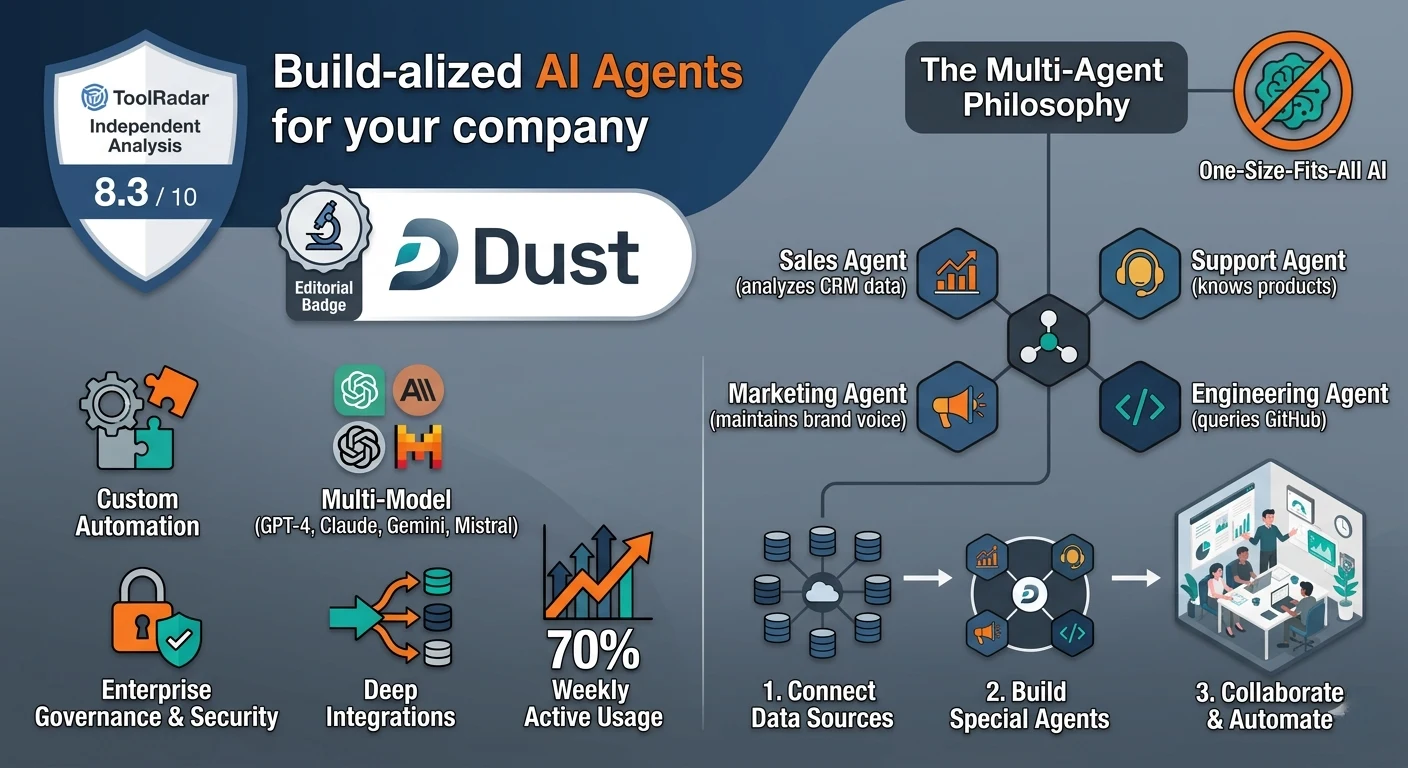
Tired of One-Size-Fits-All AI?
Dust Lets You Build Agents That Actually Know Your Company
Dust is the AI agent platform for teams that need custom automation, not generic chatbots. But is €29/user/month worth it when n8n is free?
- What Is Dust and Why Should Teams Care?
- The Multi-Agent Philosophy: Why One Assistant Never Works
- Core Capabilities Breakdown
- Pricing: Is €29/User/Month Justified?
- Pros & Cons
- Real User Pulse: What Reddit and G2 Say
- Head-to-Head: Dust vs n8n vs Zapier AI
- Who Should Actually Use Dust?
- Expert Editorial Opinion
- Final Verdict
- FAQ
Picture this: Your sales team is drowning in CRM data. Your support team can't find answers in scattered documentation. Your marketing team is manually copying campaign performance into spreadsheets. And your engineers? They're writing the same onboarding docs for the hundredth time.
You've tried ChatGPT. It gives generic answers that don't understand your products. You've tried Zapier automations. They connect tools but don't think. You've considered n8n for workflow automation. But your non-technical team members stare at the node canvas like it's a foreign language.
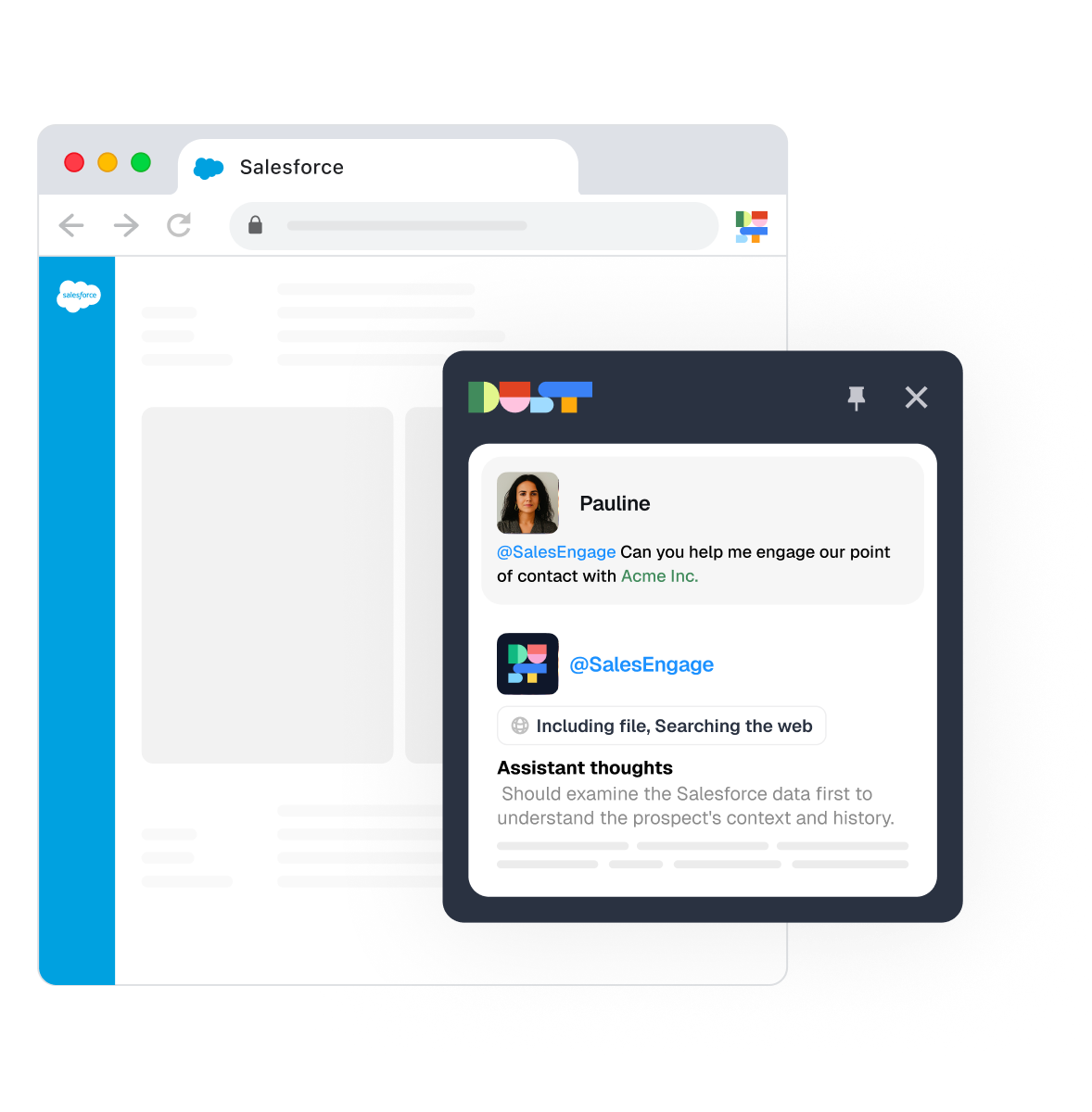
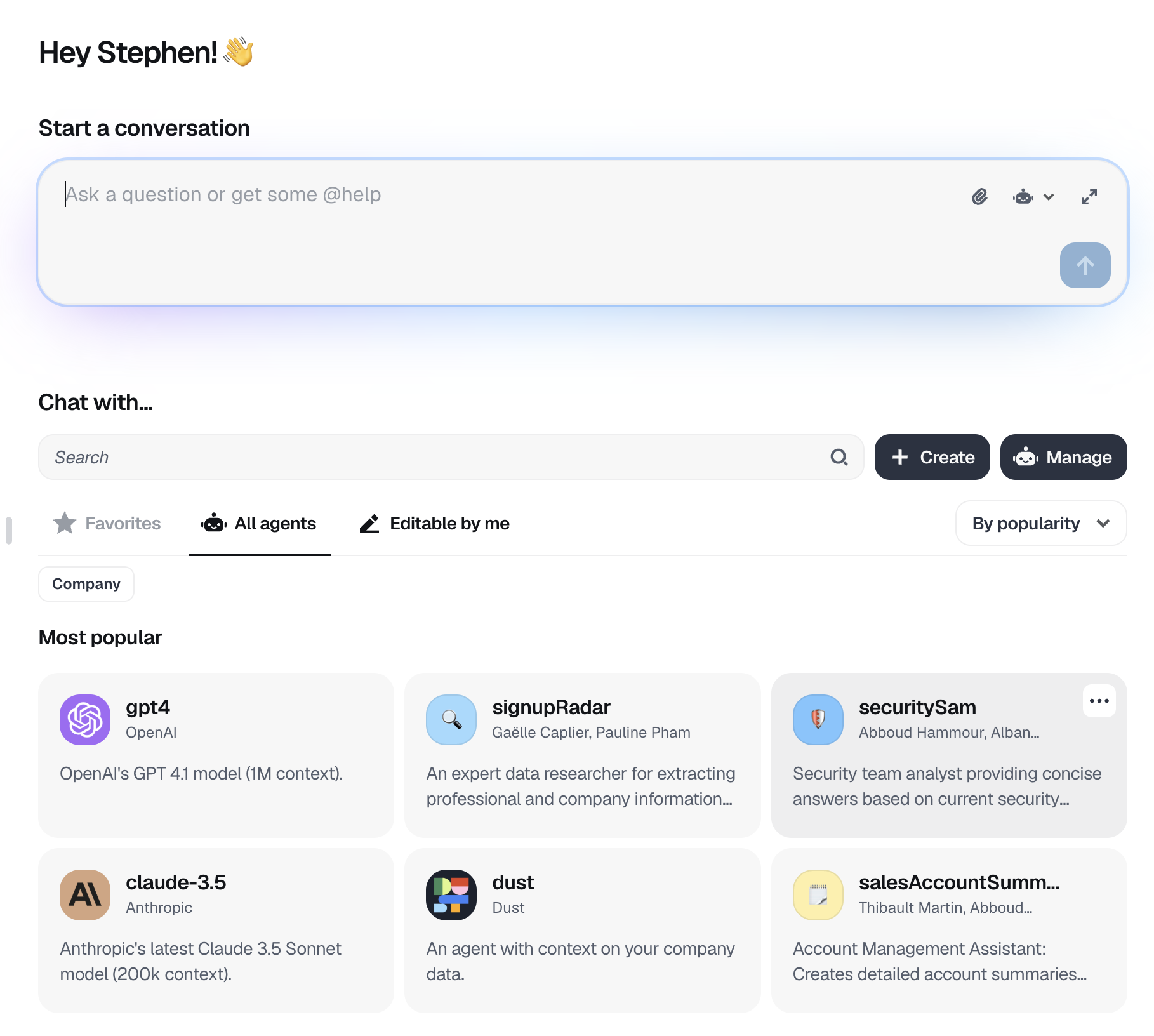
Dust enters this chaos with a different premise: instead of one AI assistant trying to do everything poorly, build a team of specialized agents — each trained on your company's specific knowledge, connected to your exact tools, and designed for one job. A sales agent that reads your CRM. A support agent that knows your product inside-out. A marketing agent that understands your brand voice. All working inside a shared workspace where teams collaborate with AI, not just chat with it.
Built by former OpenAI and Stripe engineers, Dust has raised $16M from Sequoia Capital, hit $1M ARR, and claims 70% of monthly active users engage weekly — putting it in Slack territory for daily usage patterns. But in a world where n8n is open-source and free, and Zapier AI starts at $20/month, does Dust's €29/user price tag deliver enough value to justify the premium?
What Is Dust and Why Should Teams Care?
Dust (dust.tt) is a collaborative AI agent platform built for enterprise teams. Founded in 2023 by Stanislas Polu (ex-OpenAI) and Gabriel Hubert (ex-Stripe), it positions itself as "The Operating System for AI Agents" — a workspace where teams build, deploy, and orchestrate fleets of specialized AI agents connected to company knowledge and tools.
The platform's core architecture is model-agnostic, supporting GPT-4/5, Claude, Gemini, and Mistral. But the real differentiation isn't model choice — it's the multi-agent philosophy. Instead of a single chatbot interface, Dust enables teams to create purpose-built agents for specific functions: customer support agents that read Zendesk tickets, sales agents that analyze CRM data, engineering agents that query GitHub repos, marketing agents that maintain brand voice across campaigns.
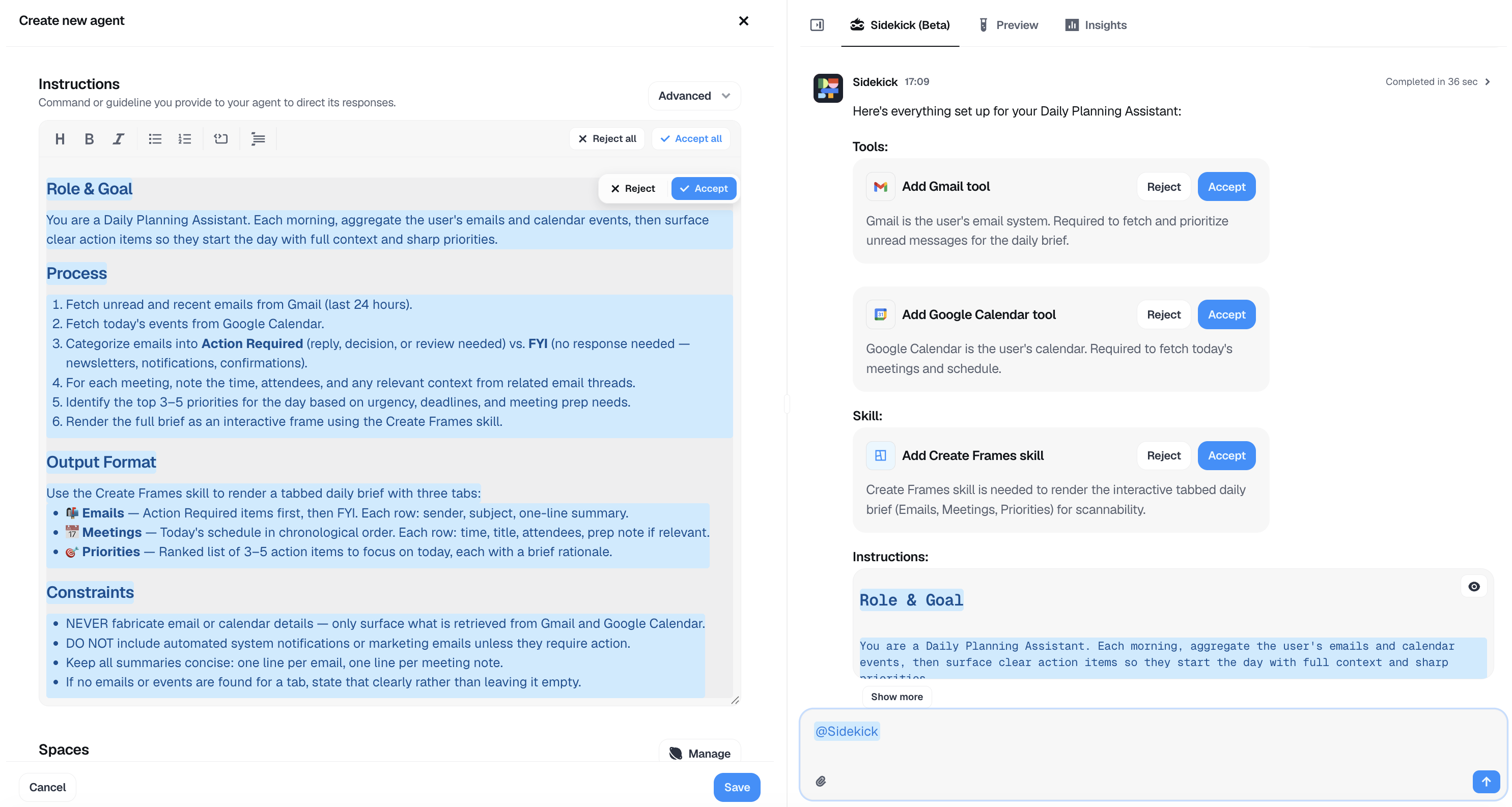
Each agent connects to specific data sources through 50+ integrations including Slack, Google Drive, Notion, Confluence, GitHub, Salesforce, Zendesk, and Snowflake. Granular permissions ensure agents only access authorized data — your engineering docs don't leak to sales, your financial models stay private. The system processes 10 million Temporal workflow activities daily, orchestrating complex multi-step automations with retry logic and state persistence.
The Multi-Agent Philosophy: Why One Assistant Never Works
Dust's foundational insight is that generalist AI assistants fail in enterprise contexts because they lack specialized knowledge and context. A single ChatGPT instance doesn't know your Salesforce schema, your Notion documentation structure, or your Slack channel conventions. It gives generic answers that require human verification and refinement.
The multi-agent approach solves this by creating narrow, deep experts:
Specialized Knowledge
Each agent connects to specific data sources — a sales agent reads CRM and Gong transcripts, a support agent reads Zendesk and help docs. No information overload, no irrelevant context.
Model Flexibility
Choose the right LLM for each task. Claude for reasoning-heavy analysis, GPT-4 for creative writing, Gemini for multimodal tasks. Switch instantly when better models release.
Team Orchestration
Agents work together through shared workspaces. A research agent finds competitive intel, a writing agent drafts the brief, a review agent checks brand compliance — all coordinated.
Governance Built-In
Role-based access controls, audit logs, SSO/SCIM integration, and zero data retention options. Enterprise security that doesn't require a PhD in compliance to configure.
The result is agents that don't just answer questions — they perform workflows. Dust's Tracker product monitors documentation for staleness and triggers agent-led updates. The Chrome extension brings agents into any web workflow. The Slack integration turns conversations into structured actions. This isn't chatbot theater — it's operational infrastructure.
Core Capabilities Breakdown
Dust's feature set is designed around the full agent lifecycle — from creation to deployment to governance:
No-Code Agent Builder
50+ pre-built templates, natural language instructions, visual configuration. Non-technical team members can create functional agents in under 5 minutes without writing code or prompts.
Deep Integrations
Native connections to Google Drive, Notion, Slack, GitHub, Salesforce, Zendesk, Confluence, Snowflake, BigQuery, and more. Plus custom API integrations and webhook support for proprietary tools.
Contextual Retrieval
Vector search across connected knowledge bases with source citations. Agents don't just answer — they show their work, linking back to specific documents, tickets, or conversations.
Action Execution
Beyond chat — agents can call APIs, update records, create tickets, draft emails, and trigger workflows in connected systems. From conversation to action without human handoff.
imageimage_search:26#1
Pricing: Is €29/User/Month Justified?
Dust's pricing is straightforward but potentially expensive at scale. The Pro plan at €29/user/month (approximately $31 USD) includes unlimited messages, 1GB per user for data sources, and access to all integrations. Enterprise plans start at 100+ users with custom pricing, SSO/SCIM, and dedicated support.
| Plan | Monthly Cost | Key Features | Best For |
|---|---|---|---|
| Pro | €29/user/mo | All models, 50+ integrations, 1GB/user data, unlimited messages, SOC2 | Small-mid teams (5-50 users) |
| Enterprise | Custom | SSO/SCIM, unlimited data, US/EU hosting, dedicated support, audit logs | Large orgs (100+ users) |
imageimage_search:26#2
The cost reality: A 20-person team pays €580/month ($625 USD) — before API usage for programmatic access. For comparison, n8n is open-source and free for self-hosting, with paid cloud plans starting at $20/month. Zapier AI starts at $20/month with broader integration support. Dust's premium pricing is justified only if the multi-agent collaboration and enterprise governance deliver measurable productivity gains.
Try Dust Free for 14 Days →Pros & Cons
✓ Comprehensive Advantages
- ✅ Multi-agent architecture enables specialized, high-quality automation vs. generic chatbots.
- ✅ Model-agnostic design prevents vendor lock-in and allows optimization per task.
- ✅ 50+ native integrations with enterprise tools (Salesforce, Zendesk, Snowflake, etc.).
- ✅ Strong governance: SOC2 Type II, GDPR, HIPAA-compatible, SSO/SCIM, granular permissions.
- ✅ No-code builder makes agent creation accessible to non-technical team members.
- ✅ 70% weekly active usage rate indicates genuine adoption, not just trial signups.
- ✅ Chrome extension and Slack integration bring agents into existing workflows.
✗ Foundational Constraints
- ❌ No free tier — 14-day trial only, then immediate paywall at €29/user.
- ❌ Per-seat pricing scales poorly; 100-user team costs €2,900/month before API usage.
- ❌ 1GB/user data limit on Pro may force premature Enterprise upgrades.
- ❌ No self-hosted option for organizations with on-premise mandates.
- ❌ No MCP server — cannot serve as shared context layer for external AI tools.
- ❌ No persistent file storage — agents generate outputs but can't store them natively.
- ❌ Steeper learning curve than advertised for complex multi-agent orchestrations.
💡 Real User Pulse: What Reddit and G2 Say
Head-to-Head: Dust vs n8n vs Zapier AI
| Evaluated Criteria | Dust | n8n | Zapier AI |
|---|---|---|---|
| Core Paradigm | Multi-agent workspace | Visual workflow automation | Trigger-action automation |
| Pricing | €29/user/mo | Free (self-hosted) / $20 cloud | $20/mo starter |
| Ease of Use | No-code agent builder | Technical node canvas | Simple trigger-action |
| AI Capabilities | Multi-model agents with reasoning | AI nodes via integrations | Basic AI actions |
| Enterprise Governance | SOC2, SSO, SCIM, audit logs | Self-hosted control | Basic admin controls |
| Best For | Teams needing AI agents + governance | Technical teams, complex workflows | Simple app-to-app automation |
Who Should Actually Use Dust?
Optimized Target Profiles: Mid-size to large teams (20-500 users) across multiple departments who need specialized AI agents with enterprise-grade security. Organizations where non-technical staff must build and maintain automations without engineering support. Companies with strict compliance requirements (SOC2, GDPR, HIPAA) that can't risk data exposure through consumer AI tools. Teams already living in Slack and Google Workspace who want AI integrated into existing workflows rather than a separate interface.
Alternative Directions: If you're a solo developer or small startup, n8n (free self-hosted) or Zapier ($20/mo) deliver more value per dollar. If you need complex conditional logic and don't mind technical setup, n8n's visual workflow builder is more powerful. If your team is deeply embedded in Microsoft 365, Microsoft Copilot will likely integrate more seamlessly. Dust's premium is justified only when multi-agent collaboration, model flexibility, and governance are non-negotiable requirements.
Expert Editorial Opinion
I've evaluated dozens of AI automation platforms, and Dust occupies a unique position in the market. It's not the cheapest — n8n is free. It's not the simplest — Zapier has that locked down. But it's the only platform that genuinely bridges the gap between powerful AI capabilities and enterprise governance without requiring a computer science degree to operate.
The multi-agent philosophy isn't marketing fluff — it's a genuine architectural advantage. Watching a sales team use a Dust agent that automatically reads Gong calls, checks Salesforce history, and generates account briefs in under 2 minutes is genuinely impressive. The agent doesn't just answer questions — it performs a workflow that previously required 45 minutes of manual research.
But I'm deducting points for the pricing model. €29/user/month with no free tier creates immediate friction for experimentation. The 1GB data limit on Pro feels artificially constraining — it's clearly designed to push teams toward Enterprise plans. And the lack of MCP server support is a strategic miss in an increasingly agentic ecosystem where interoperability matters.
My honest take: Dust is the right tool for teams that have outgrown simple automations but aren't ready for n8n's complexity. It's the Goldilocks zone of AI agent platforms — powerful enough for real work, simple enough for broad adoption, secure enough for enterprise compliance. Just make sure your budget can handle the per-seat pricing before you fall in love with the product.
Final Verdict
Dust is the most thoughtfully designed AI agent platform for enterprise teams that I've evaluated. The multi-agent architecture, model-agnostic design, and genuine no-code accessibility create a product that delivers on its promise: AI agents that know your company and work across your tools. The 70% weekly active usage rate isn't vanity metrics — it's evidence that teams actually adopt and depend on these agents.
But the pricing strategy creates a ceiling. At €29/user/month with no free tier and a 1GB data cap, Dust is positioning itself as premium enterprise software in a market where powerful alternatives exist at lower price points. The lack of self-hosting, MCP support, and persistent file storage are meaningful limitations for technical teams.
For organizations where governance, security, and broad adoption matter more than raw cost optimization, Dust is an excellent investment. For startups and technical teams comfortable with open-source tooling, n8n remains the pragmatic choice. Dust wins when you need AI agents that your entire company can use safely — not just your engineering team.
Frequently Asked Questions
🔑 Related Keywords
So here's my question to you: Would you rather have one generic AI assistant that kinda knows your company — or a team of specialized agents that actually understand your tools, your data, and your workflows?
Comments
Post a Comment