


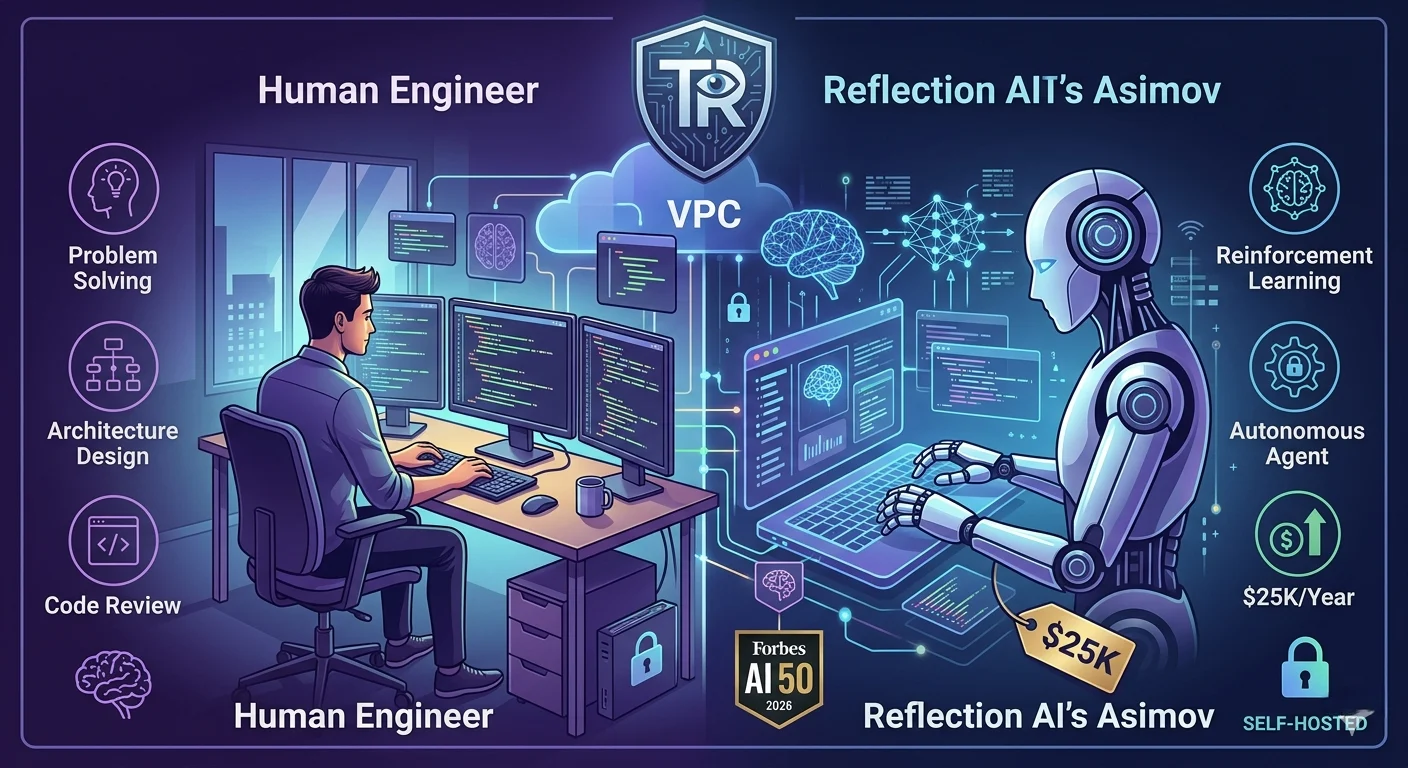
Can an AI Agent Really Replace Your Software Engineer?
Reflection AI's Asimov Says Yes — For $25K a Year
Reflection AI's Asimov promises autonomous software engineering through reinforcement learning. But is a $25K-per-user price tag worth the hype?
- What Is Reflection AI and Why Should Engineers Care?
- The Asimov Platform: How It Actually Works
- Core Capabilities Breakdown
- Pricing: The $25K Question
- Pros & Cons
- Real User Pulse: What Reddit and Hacker News Say
- Head-to-Head: Asimov vs GitHub Copilot vs Cursor
- Who Should Actually Use Reflection AI?
- Expert Editorial Opinion
- Final Verdict
- FAQ
Imagine this: It's Monday morning. Your sprint deadline is Friday. Your senior engineer just quit. Your backlog has 47 tickets. And you're staring at a $200K recruiting fee to replace them.
Now imagine a different scenario. An AI agent that doesn't just autocomplete your code — it writes entire features, debugs production issues, submits pull requests, and explains its reasoning like a senior engineer would. No recruitment. No onboarding. No office politics. Just code.

That's the promise Reflection AI is selling with Asimov, their autonomous coding agent. Named after Isaac Asimov (because of course it is), this isn't another Copilot-style autocomplete tool. It's a full-stack software engineer in a box, trained through reinforcement learning to think, debug, and ship code autonomously.
But here's the catch that'll make your CFO sweat: $15,000 to $25,000 per user per year. Self-hosted only. Enterprise contracts starting at teams of 5. This isn't a tool you try on a weekend — it's a strategic investment that demands justification.
What Is Reflection AI and Why Should Engineers Care?
Founded in 2024 and already named to the Forbes AI 50 list in 2026, Reflection AI is building what they call "the future of autonomous software development." Their approach is fundamentally different from every other AI coding tool on the market.
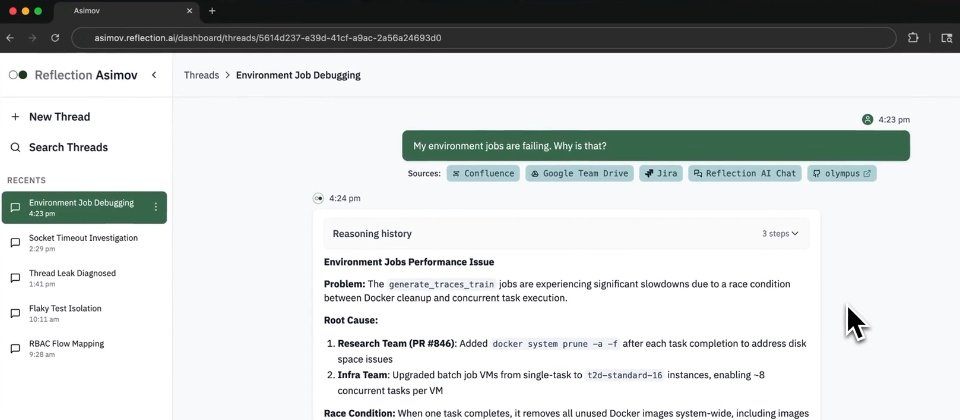
While GitHub Copilot and Cursor are essentially autocomplete on steroids — predicting the next line of code based on context — Reflection AI trained Asimov using reinforcement learning (RL). Think AlphaGo, but for software engineering. The agent learns by solving problems in a closed environment, receiving rewards for successful code execution and penalties for failures.
This isn't incremental improvement. It's a paradigm shift. Asimov doesn't suggest code — it writes, tests, debugs, and submits complete solutions. Early results show it resolving issues in large-scale codebases and generating pull requests that would typically require an experienced engineer's intuition.
The Asimov Platform: How It Actually Works
Asimov operates as a self-hosted platform deployed inside your VPC (Virtual Private Cloud). This isn't a SaaS product you log into — it's infrastructure you install, manage, and control. Here's what that means in practice:
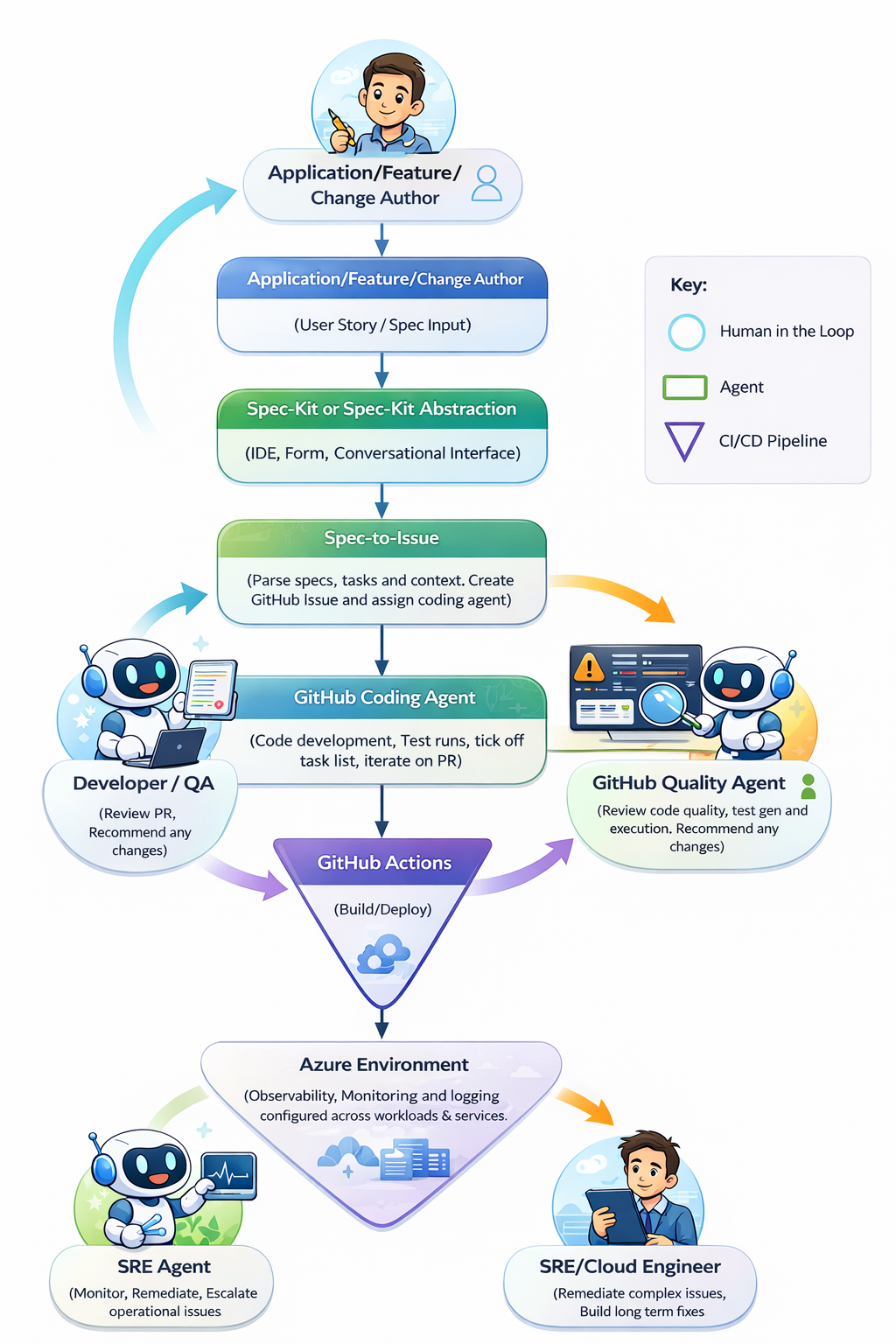
Reinforcement Learning Core
Trained through RL in simulated environments, not just static code datasets. Learns debugging, reasoning, and multi-step problem solving through trial and error.
VPC Self-Hosting
Deploys entirely within your infrastructure. No code leaves your network. Critical for financial services, healthcare, and any company with strict data sovereignty requirements.
Autonomous PR Generation
Identifies issues, writes fixes, runs tests, and submits pull requests with detailed explanations. Not suggestions — complete, reviewable code changes.
Iterative Debugging
When code fails, Asimov doesn't give up. It analyzes error logs, traces execution, modifies the solution, and retests — iterating until the issue is resolved.
imageimage_search:20#0
Core Capabilities Breakdown
Reflection AI isn't trying to replace your IDE — it's trying to replace your junior and mid-level engineers. Here's what Asimov can actually do:
Issue Resolution
Reads bug reports, explores the codebase, identifies root causes, implements fixes, and verifies through automated testing. Handles complex multi-file changes.
Feature Implementation
Takes product requirements and implements complete features across the stack — frontend, backend, database migrations, API endpoints, the works.
Code Review
Analyzes pull requests for logic errors, security vulnerabilities, performance issues, and style violations. Provides detailed feedback like a senior reviewer.
Codebase Understanding
Maps your entire codebase architecture, learns patterns and conventions, and maintains consistency across all generated code.
imageimage_search:20#5
Pricing: The $25K Question
Let's address the elephant in the room: Reflection AI is expensive. Very expensive. And it's not sold like typical SaaS.
| Plan Tier | Annual Cost | Team Size | Key Features |
|---|---|---|---|
| Starter | $15,000/user | 5-20 engineers | Core Asimov agent, basic integrations, standard support |
| Professional | $20,000/user | 20-100 engineers | Advanced integrations, priority support, custom training |
| Enterprise | $25,000/user | 100+ engineers | Full platform, dedicated success manager, advanced analytics, custom models |
imageimage_search:20#2
The math: At $25K per user, a 20-engineer team costs $500,000 annually. That's roughly the fully-loaded cost of 2-3 senior engineers in San Francisco. If Asimov can genuinely replace 3 engineers' worth of output, it's a bargain. If it can't, it's an expensive experiment.
The self-hosting catch: You don't just pay the license fee. You need GPU infrastructure to run Asimov (think A100s or H100s), DevOps time to maintain it, and security audits to ensure compliance. The true TCO is significantly higher than the sticker price.
Explore Reflection AI →Pros & Cons
✓ Comprehensive Advantages
- ✅ Truly autonomous — writes, tests, debugs, and submits PRs without human intervention.
- ✅ RL-based training produces reasoning capabilities beyond pattern matching.
- ✅ Self-hosted VPC deployment keeps code completely within your infrastructure.
- ✅ Forbes AI 50 recognition signals serious technical credibility.
- ✅ Handles complex multi-step tasks that autocomplete tools simply can't attempt.
- ✅ Improves over time through continued reinforcement learning in your environment.
✗ Foundational Constraints
- ❌ $15K-$25K per user annually — prohibitively expensive for most teams.
- ❌ Self-hosted only — requires significant GPU infrastructure and DevOps overhead.
- ❌ Enterprise-only — no individual plans, no free trial, no pay-as-you-go.
- ❌ Early stage — limited public track record, unproven at massive scale.
- ❌ Cannot replace senior architectural decisions — best for implementation, not design.
- ❌ Requires clean, well-documented codebases to perform effectively.
💡 Real User Pulse: What Reddit and Hacker News Say
Head-to-Head: Asimov vs GitHub Copilot vs Cursor
| Evaluated Criteria | Reflection AI Asimov | GitHub Copilot | Cursor |
|---|---|---|---|
| Autonomy Level | Full autonomous PRs | Autocomplete only | Chat + edit |
| Training Method | Reinforcement Learning | Supervised LLM | Supervised LLM |
| Pricing | $15K-$25K/user/yr | $19/user/mo | $20/user/mo |
| Deployment | Self-hosted VPC | Cloud SaaS | Cloud SaaS |
| Code Understanding | Full codebase mapping | Context window only | Context window + indexing |
| Debugging | Autonomous iteration | None | Chat-based help |
Who Should Actually Use Reflection AI?
Optimized Target Profiles: Large enterprises (Series C+, 500+ engineers) with strict data sovereignty requirements — financial services, healthcare, defense. Companies with well-documented, modular codebases where autonomous agents can navigate effectively. Engineering teams drowning in maintenance work and bug fixes, freeing senior engineers for architecture and innovation.
Alternative Directions: If you're a startup or small team, Cursor or GitHub Copilot at $20/month delivers 80% of the value at 1% of the cost. If you need cloud-based AI without infrastructure overhead, Devin or open-source alternatives are worth exploring. If your codebase is a legacy monolith with minimal documentation, Asimov will struggle — clean up first, then automate.
Expert Editorial Opinion
I've evaluated dozens of AI coding tools, and Reflection AI is genuinely different. The RL-based approach isn't marketing fluff — it's a fundamentally different paradigm that produces reasoning capabilities you can't get from standard LLM training. Watching Asimov iterate through a debugging session, failing, analyzing, adjusting, and eventually succeeding felt like watching a junior engineer grow up in fast-forward.
But I can't ignore the economics. At $25K per user, Reflection AI is pricing itself into a very narrow market. The comparison isn't with Copilot or Cursor — it's with hiring actual engineers. And at that price point, the agent needs to be genuinely transformative, not just impressive.
The self-hosted requirement is both a strength and a weakness. For regulated industries, it's essential. For everyone else, it's a massive operational burden that adds hundreds of thousands in infrastructure costs. I'm also concerned about the long-term viability — this is a young company with a niche product and enormous compute costs. Can they sustain this model?
Final Verdict
Reflection AI's Asimov is the most technically ambitious AI coding tool I've evaluated. The reinforcement learning approach produces genuine reasoning capabilities that go far beyond autocomplete. For large enterprises with strict security requirements and well-maintained codebases, it could be transformative — genuinely replacing junior and mid-level engineering work.
But the $25K price tag and self-hosted requirement create a massive barrier to entry. This isn't a tool for experimentation; it's a strategic infrastructure investment. The technology is promising, the execution is solid, but the market fit is narrow. For most teams, Cursor or Copilot at $20/month remains the pragmatic choice. For the Fortune 500 with GPU budgets and compliance requirements, Asimov might be the first AI tool that truly earns its keep.
Frequently Asked Questions
🔑 Related Keywords
So here's my question to you: If an AI agent could genuinely handle 60% of your engineering team's maintenance work, would you pay $25K per seat — or would you rather hire three more engineers and sleep better at night?
Comments
Post a Comment