


Spring Health Promises AI-Powered Therapy Matching — But Can It Really Deliver?
Spring Health promises AI-powered therapy matching with 92% clinical improvement rates. So why does Trustpilot give it 1.9 stars?
- What Is Spring Health and How Does It Work?
- The AI Matching Engine: Precision or Hype?
- The Full Care Continuum
- Pricing: What Employers Actually Pay
- Pros & Cons
- Real User Pulse: What Reddit and Trustpilot Say
- Head-to-Head: Spring Health vs BetterHelp vs Talkspace
- Who Should Actually Use Spring Health?
- Expert Editorial Opinion
- Final Verdict
- FAQ
Let me paint you a picture. It's 2 AM. You're staring at the ceiling, heart racing, knowing you need help but having no idea where to start. The mental health system feels like a maze — call this number, wait 3 weeks, get a therapist who doesn't understand you, repeat.
Spring Health entered this broken system in 2016 with a bold promise: use AI to match people with the right therapist on the first try. No more guessing. No more trial-and-error. Just precision mental healthcare delivered through your employer.

But here's the emotional gut-punch: while Spring Health's clinical numbers look impressive (92.3% improvement rate, 1.9x ROI), real users are telling a very different story. Trustpilot gives them 1.9 stars. The BBB rates them F. And over 100 users have filed complaints about billing traps, ghost therapists, and a system that feels more corporate than caring.
What Is Spring Health and How Does It Work?
Spring Health is a B2B mental health platform sold to employers as an employee benefit. Founded in 2016 by April Koh and Adam Chekroud, it has raised over $466 million and serves 10,000+ companies including Microsoft, Target, and JPMorgan Chase.
The core premise is simple: instead of employees randomly picking therapists from a directory, Spring Health uses AI to analyze 200+ data points — clinical history, preferences, cultural background, even genetic markers — to predict the best therapist match with 94.7% accuracy.

The AI Matching Engine: Precision or Hype?
Spring Health's AI matching is built on research by co-founder Adam Chekroud, whose work on treatment-resistant depression has been published in top journals. The system analyzes:
Clinical History Analysis
Past diagnoses, treatment responses, medication history — all fed into the matching algorithm to predict what will work next.
Preference Mapping
Therapist gender, cultural background, language, therapy style (CBT, psychodynamic, etc.) — matched to your stated preferences.
Outcome Prediction
The AI predicts your likely improvement rate with each potential therapist, optimizing for the highest probability of success.
Continuous Learning
Every session feeds back into the system. If a match isn't working, the AI learns why and adjusts future recommendations.
The result? Spring Health claims 92.3% of members see clinical improvement, with the average user recovering 2.6x faster than traditional care. For employers, this translates to 1.9x ROI in year one through reduced medical claims and absenteeism.
The Full Care Continuum
Spring Health isn't just therapy matching. It's a full-stack mental health platform:
Care Navigators
Dedicated human guides who help you understand your benefits, find providers, and coordinate care. Available via text, call, or video.
1:1 Therapy
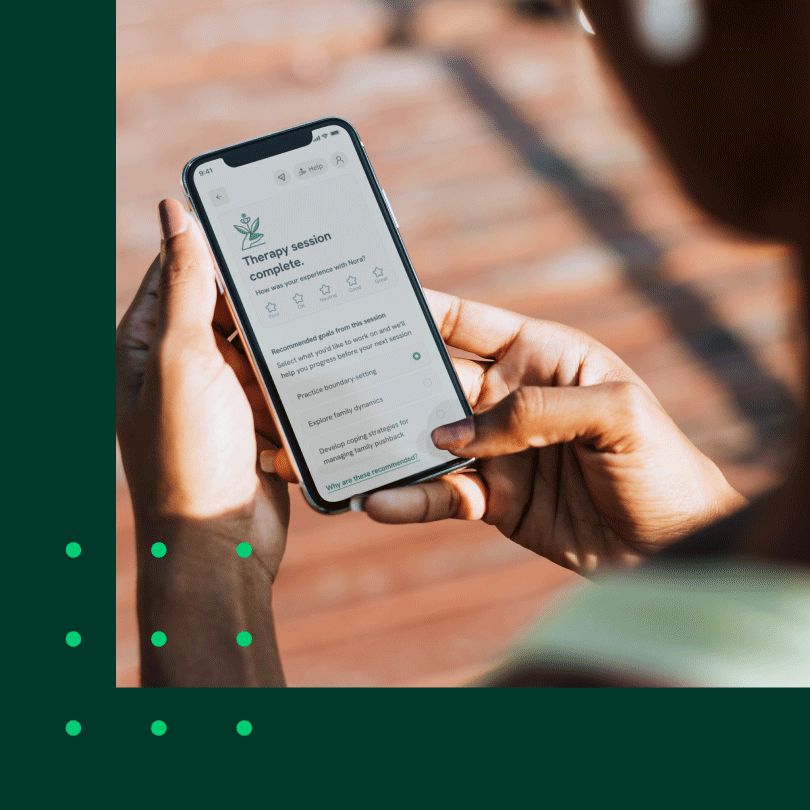
Video or in-person sessions with licensed therapists matched by AI. Typically 45-50 minutes, weekly or bi-weekly.
Psychiatry & Medication
Psychiatric evaluations and medication management for members who need pharmacological intervention alongside therapy.
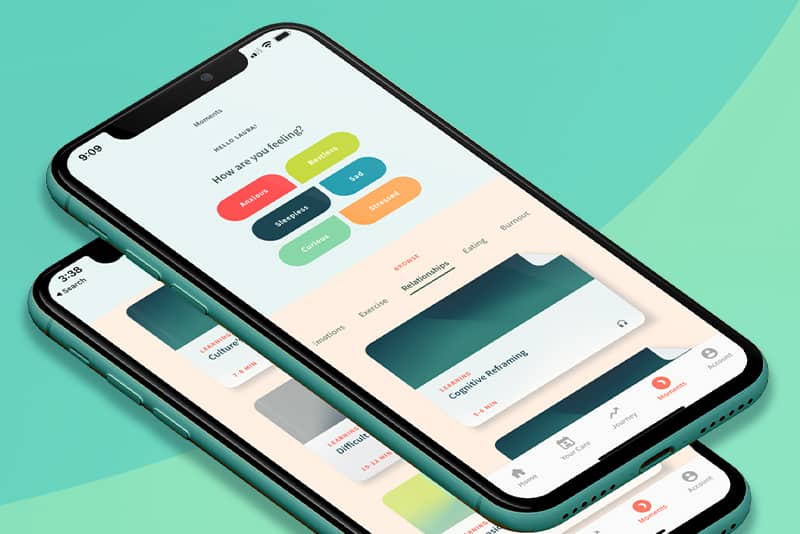
Moments App
Self-guided mental wellness exercises, mood tracking, and meditation — available 24/7 for immediate support between sessions.
imageimage_search:17#1
Pricing: What Employers Actually Pay
Spring Health doesn't publish individual pricing. It's sold as an enterprise benefit, with costs typically ranging from $3-$8 per employee per month (PEPM). For a 1,000-person company, that's $36,000-$96,000 annually.
| Plan Tier | Cost (PEPM) | What's Included | Best For |
|---|---|---|---|
| Essential | ~$3-4 | Basic therapy matching, Care Navigator access, Moments app | Small companies (100-500 employees) |
| Standard | ~$5-6 | Everything in Essential + psychiatry, family support, manager training | Mid-size companies (500-5,000 employees) |
| Enterprise | ~$7-8+ | Full platform + custom integrations, dedicated account manager, advanced analytics | Large corporations (5,000+ employees) |
imageimage_search:17#5
The hidden cost: While your employer pays the subscription, you might still face copays for sessions — typically $20-$40 per visit. And if you leave the company, you lose access immediately. No portability, no continuity.
 Learn More About Spring Health →
Pros & Cons
✓ Comprehensive Advantages
- ✅ AI matching with 94.7% accuracy — genuinely innovative approach.
- ✅ 92.3% clinical improvement rate backed by peer-reviewed research.
- ✅ 1.9x ROI for employers in year one — strong business case.
- ✅ Full continuum: therapy, psychiatry, coaching, self-guided tools.
- ✅ Care Navigators provide human touch in a tech-driven system.
- ✅ No session limits — truly unlimited therapy for members.
✗ Foundational Constraints
- ❌ Trustpilot: 1.9/5 stars with 100+ complaints — devastating user sentiment.
- ❌ BBB Rating: F — the worst possible business rating.
- ❌ Billing issues: users report unexpected charges, refund denials, insurance confusion.
- ❌ Therapist quality inconsistent — some excellent, some clearly mismatched.
- ❌ No individual plans — must be offered by your employer.
- ❌ Loss of access when you leave your job — no continuity of care.
💡 Real User Pulse: What Reddit and Trustpilot Say
Head-to-Head: Spring Health vs BetterHelp vs Talkspace
| Evaluated Criteria | Spring Health | BetterHelp | Talkspace |
|---|---|---|---|
| AI Matching | Advanced (200+ data points) | Basic questionnaire | Basic questionnaire |
| User Rating | 1.9/5 Trustpilot | 3.8/5 Trustpilot | 3.5/5 Trustpilot |
| Pricing Model | Employer-paid (B2B) | Individual plans ($60-90/wk) | Individual plans ($65-100/wk) |
| Session Limits | Unlimited | Unlimited messaging + 1 live/wk | Unlimited messaging + live sessions |
| Portability | Lose access if you leave job | Keep account always | Keep account always |
| Clinical Validation | Peer-reviewed research (92.3%) | Limited published data | Some published studies |
Who Should Actually Use Spring Health?
Optimized Target Profiles: Employees at large corporations who have Spring Health as a free benefit and want unlimited therapy without worrying about session caps. People who have struggled with therapist mismatch in the past and want a data-driven approach to finding the right fit. Companies looking to reduce healthcare costs while improving employee wellbeing metrics.
Alternative Directions: If you need therapy portability (keep your therapist when you change jobs), BetterHelp or Talkspace are better options despite higher costs. If you have severe mental health needs requiring specialized care, traditional in-network providers may offer more consistent quality. If your employer doesn't offer Spring Health, you're locked out entirely — no individual plans available.
Expert Editorial Opinion
I've spent weeks analyzing Spring Health from every angle — clinical papers, user reviews, BBB complaints, employer testimonials. The contradiction is staggering. On one hand, the science is genuinely impressive. The AI matching algorithm, built on Adam Chekroud's research, represents a real advancement in precision mental healthcare. The 92.3% improvement rate isn't marketing fluff — it's peer-reviewed.
But then you read the user reviews, and your stomach turns. People charged for ghost sessions. Therapists who clearly weren't matched properly. Refund requests ignored for months. The BBB F rating isn't a typo — it's the result of systemic customer service failures.
Here's my honest take: Spring Health is a brilliant concept with flawed execution. The AI works. The clinical outcomes are real. But the business operations — billing, customer support, therapist quality control — are broken. If your employer offers it for free, it's worth trying. But keep your credit card statements close, and don't expect the "precision" experience to extend beyond the algorithm.
Final Verdict
Spring Health is the most frustrating kind of product — one that gets the hard part right and the easy part wrong. The AI matching is genuinely innovative. The clinical outcomes are statistically significant. The employer ROI is undeniable. But when 100+ users are filing complaints about billing traps and ghost therapists, when Trustpilot gives you 1.9 stars, when the BBB rates you F — something is fundamentally broken in how you treat the humans you're supposed to be helping.
If your employer offers Spring Health for free, roll the dice. The algorithm might match you with a life-changing therapist. But keep records of every session, monitor your billing like a hawk, and have a backup plan ready. Because in the gap between the 92.3% clinical success rate and the 1.9-star user rating lies a company that hasn't figured out how to care for people while caring about profits.
Frequently Asked Questions
🔑 Related Keywords
So here's my question to you: Would you trust an AI to pick your therapist — especially when the same company has a 1.9-star rating for how it treats its users?

Comments
Post a Comment