


Can Jina AI Reader Really Turn Any Webpage Into Perfect LLM Input in One Line?
A free API that processes 100 billion tokens daily, built on Google Cloud Run, open-source under Apache 2.0, and now owned by Elastic — Jina AI Reader is the single-line tool developers reach for when they need clean web content for their LLMs.
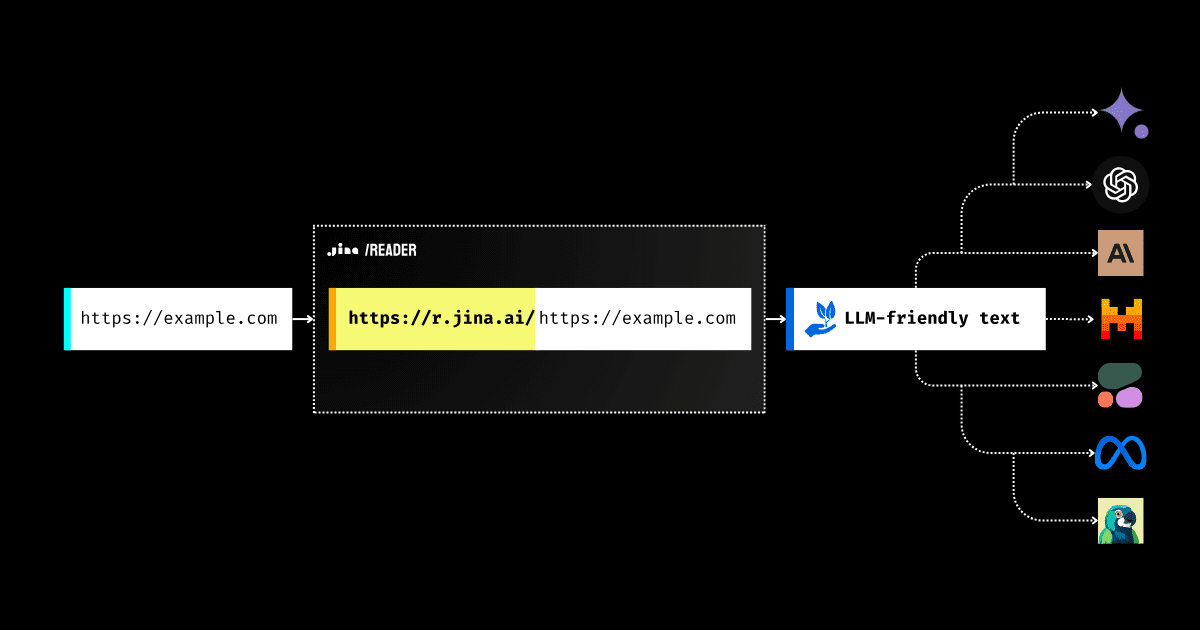
Every developer building an LLM application that needs live web content has faced the same problem: HTML is a mess. Navigation bars, cookie banners, ad scripts, sidebar widgets, and footer links clutter every page. Extracting clean, readable text that an LLM can actually process requires either brittle regex patterns, heavy scraping libraries, or expensive third-party services. Jina AI Reader solves this with a single URL prefix. Prepend https://r.jina.ai/ to any link, and within seconds you get structured Markdown back — JavaScript-heavy pages, PDFs, and messy HTML all handled automatically behind the scenes.
Launched in April 2024 by Jina AI, the tool exploded in usage — serving more than 10 million requests and 100 billion tokens daily within months of launch. The system was built jointly with Google Cloud Run, reducing browser-instance startup times from over 10 seconds to under two seconds through prewarming and optimized container images. The entire stack is open-source under Apache 2.0, written in TypeScript, and uses Puppeteer for rendering, Mozilla's Readability for content extraction, and Turndown for Markdown conversion. In October 2025, Elastic acquired Jina AI, validating the technology's enterprise value while keeping the core service free and accessible.
What Is Jina AI Reader?
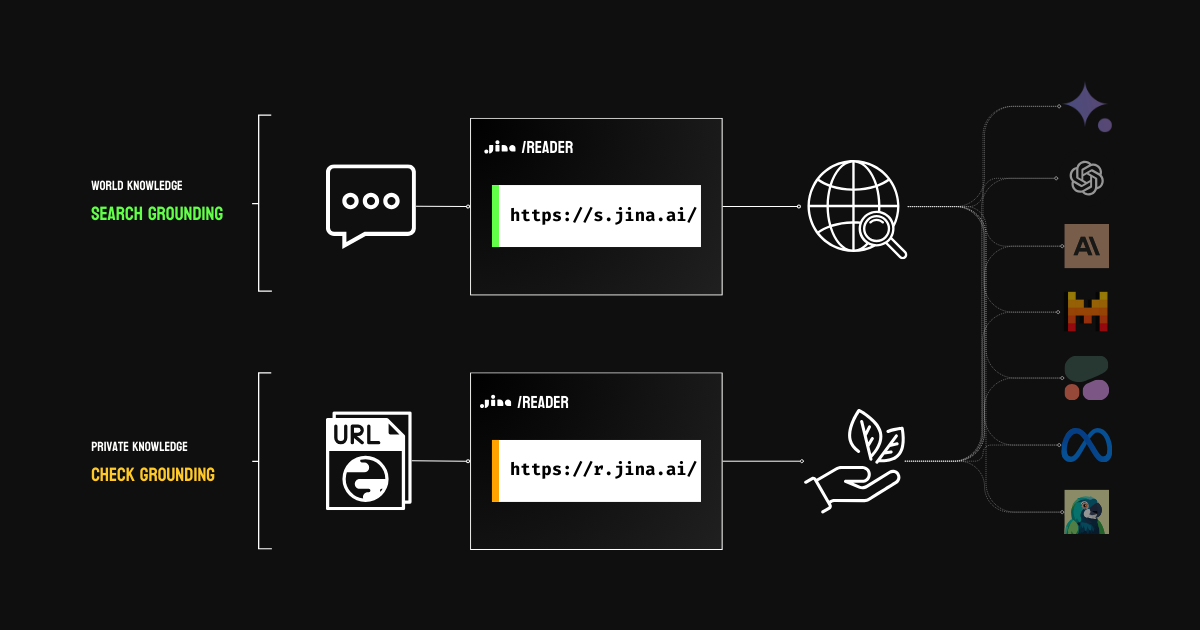
Jina AI Reader is a free API service that converts any webpage into clean, LLM-ready Markdown with a single HTTP request. The core mechanism is elegantly simple: prepend https://r.jina.ai/ to any URL, and the service returns structured Markdown containing only the article content — stripped of navigation, ads, sidebars, and other page clutter. Behind this simplicity is a sophisticated pipeline: Puppeteer renders JavaScript-heavy pages in a headless browser, Mozilla's Readability algorithm identifies the main content block, and Turndown converts the HTML to clean Markdown. The service also handles PDFs via PDF.js integration, and a search endpoint at s.jina.ai uses the Brave Search API to return search results as clean text. For advanced use cases, the ReaderLM-v2 model — a 1.5B-parameter model purpose-built for HTML-to-Markdown/JSON conversion — supports 29 languages and handles up to 512K combined tokens of context, accessible via the x-engine: readerlm-v2 header.
Key Features
One-Line URL Conversion
Prepend r.jina.ai/ to any URL and get clean Markdown back in seconds. No API setup, no authentication, no configuration. Works with JavaScript-heavy SPAs, static HTML, and everything in between. The simplest possible integration for any developer feeding web content into an LLM.
PDF & Dynamic Content Support
Handles PDFs via PDF.js integration for text extraction. Supports CSS selector targeting for specific content blocks, wait-for-selector for dynamic content loading, locale and proxy control for geo-restricted pages, custom JavaScript injection, and image auto-captioning. Robots.txt compliance checks ensure ethical scraping.
ReaderLM-v2 Model (1.5B Parameters)
A purpose-built model for HTML-to-Markdown/JSON conversion supporting 29 languages and up to 512K tokens of combined context. Accessible via the x-engine: readerlm-v2 header for advanced extraction scenarios where standard Readability isn't sufficient. Open-source and available on Hugging Face.
Search-to-Text Endpoint (s.jina.ai)
Uses the Brave Search API to return search results as clean, structured text. Combine web search with content extraction in a single workflow — search for a topic, then extract the full article from each result, all through the same API interface.
Pricing & Limits
| Tier | Price | What's Included |
|---|---|---|
| No-Key Free | Free | 20 requests per minute, standard extraction, no signup required |
| Free API Key | Free | 200 requests per minute, 10 million free tokens on signup (shared across Reader, Embeddings, and Reranker APIs) |
| Paid Plans | Custom pricing | Higher rate limits, faster processing, priority support. Does not bypass websites that actively block the service. |
| Self-Hosted (Open Source) | Free | Apache 2.0 licensed, full source code on GitHub, unlimited usage, requires your own infrastructure |
Note: Upgrading to a paid key increases rate limits and speed, but does not bypass websites that actively block the service. The 10 million free tokens are shared across Jina's Reader, Embeddings, and Reranker APIs.
Try Jina AI Reader Free →Pros & Cons
✓ What Makes It Shine
- ✅ Zero-setup API — prepend a URL prefix, get Markdown back instantly
- ✅ Open-source under Apache 2.0 — self-host for unlimited, free usage
- ✅ 100 billion tokens processed daily — proven production scale
- ✅ PDF support, dynamic content handling, and 29-language ReaderLM-v2 model
- ✅ Elastic acquisition validates enterprise value while keeping core service free
✗ Where It Falls Short
- ❌ Free tier limited to 20 RPM (200 RPM with free key) — production use requires paid plan
- ❌ Read-operation timeouts occur frequently on complex pages, requiring retry logic
- ❌ Single-page conversion only — no full-site crawling or structured JSON extraction
- ❌ Some websites actively block the service, and paid keys don't bypass these blocks
- ❌ Opaque paid pricing — no public rate card, requires contacting sales
💡 Community Feedback: What Developers Say

How It Compares to Alternatives
| Feature | Jina AI Reader | Firecrawl | ScrapeGraphAI | BeautifulSoup + Readability |
|---|---|---|---|---|
| Setup Complexity | One URL prefix | API key + SDK | API key + SDK | Code required |
| Cost to Start | Free (no key) | Free tier | Free tier | Free (self-hosted) |
| JavaScript Rendering | Yes (Puppeteer) | Yes | Yes | No |
| PDF Support | Yes (PDF.js) | Partial | Partial | No |
| Structured JSON Extraction | No | Yes | Yes (LLM-based) | Manual |
| Full-Site Crawling | No | Yes | Yes | No |
| Open Source | Yes (Apache 2.0) | Partial | Partial | Yes |
| Production Scale | 100B tokens/day | Enterprise | Growing | Self-limited |
Jina AI Reader's comparison table reveals a clear strategic position: it trades feature breadth for simplicity and scale. Firecrawl and ScrapeGraphAI offer structured JSON extraction and full-site crawling — capabilities Jina Reader explicitly does not have. BeautifulSoup with Readability is the DIY alternative that gives you full control but requires significant development effort and infrastructure. Where Jina Reader wins is in the zero-setup, single-page conversion use case. For developers who need to feed one article at a time into an LLM — the most common web-to-LLM workflow — Jina Reader's one-line API is unbeatable. The 100 billion tokens processed daily is not a vanity metric; it's proof that the simplicity-first approach serves a massive, real user base. For teams that need structured data extraction, site-wide crawling, or complex scraping pipelines, Firecrawl or ScrapeGraphAI are better fits. For teams that need the absolute simplest possible solution for single-page Markdown conversion, Jina Reader is the default choice — as evidenced by competitor founders treating it as the market benchmark in their own comparisons.
Who Should Use Jina AI Reader?
Best For: Developers building LLM applications that need to ingest live web content one page at a time — RAG pipelines, chatbots with web browsing, content summarization tools, and research assistants. Teams prototyping quickly who need to validate a web-to-LLM workflow without investing in scraping infrastructure. Startups and indie developers who want a free, reliable solution for moderate-volume web content extraction. Engineering teams already using Elasticsearch who will benefit from the Elastic acquisition's tighter integration over time. Anyone who needs clean Markdown from JavaScript-heavy pages, PDFs, or messy HTML without writing a single line of scraping code.
Consider Alternatives If: You need structured JSON extraction from web pages — Firecrawl or ScrapeGraphAI offer LLM-based structured data extraction that Jina Reader doesn't. You need to crawl entire websites, not just single pages — Firecrawl's site-wide crawling and sitemap support are purpose-built for this. You need high-volume production usage beyond 200 RPM — the free tier will bottleneck you, and paid pricing is opaque. You're building a scraping pipeline with complex business logic — BeautifulSoup with custom Readability tuning gives you full control. You need guaranteed uptime and SLA-backed reliability — self-hosting the open-source version or using a paid enterprise scraper may be more appropriate for mission-critical workloads.
Expert Editorial Opinion
Jina AI Reader is the most elegant solution to a genuinely hard problem in the LLM ecosystem. Web content extraction sounds simple until you try it at scale — JavaScript frameworks, infinite scroll, paywalls, cookie banners, and responsive layouts all conspire to break naive scrapers. Jina Reader's approach of using Puppeteer for rendering, Readability for content identification, and Turndown for Markdown conversion is not novel in isolation, but packaging it as a single URL prefix is a product design decision that removes every barrier to entry.
The 100 billion tokens processed daily is a staggering number that puts Jina Reader in the same scale tier as major cloud services. This is not a side project — it's a production system engineered with Google Cloud Run, optimized for sub-2-second startup times, and handling millions of requests per day. The Google Cloud engineering writeup on the architecture is worth reading for anyone building high-throughput web services; the prewarming and container optimization techniques are applicable well beyond content extraction.
The Elastic acquisition in October 2025 is a significant signal. Elastic is not an acquirer of consumer tools — it's an enterprise search and observability company. The acquisition validates that web-to-structured-content extraction is a core infrastructure need for enterprise search, RAG pipelines, and AI applications. The tighter Elasticsearch integration expected over time will make Jina Reader significantly more valuable for teams already in the Elastic ecosystem, though the standalone API remains fully functional and free.
The limitations are real and worth planning for. The 20 RPM free tier (200 RPM with a free key) is generous for prototyping but will bottleneck any production application. The frequent read-operation timeouts on complex pages mean you'll need retry logic and fallback handling in production code. The lack of structured JSON extraction and full-site crawling means Jina Reader is a single-purpose tool, not a general scraping platform. And the opaque paid pricing — no public rate card, contact sales — is a friction point for teams that need predictable costs.
One question remains: will the Elastic acquisition change the free tier? So far, pricing hasn't changed materially, and the open-source Apache 2.0 license means the community can fork and maintain the project if the commercial direction shifts. For now, Jina Reader remains the best zero-setup solution for single-page web-to-Markdown conversion at scale. The combination of simplicity, proven production capacity, and open-source availability makes it a foundational tool in the LLM developer's toolkit.
Final Verdict
Jina AI Reader is the best zero-setup tool for converting single web pages into clean LLM-ready Markdown. The one-line API integration, 100 billion tokens processed daily, and open-source Apache 2.0 licensing make it the default choice for developers who need to feed web content into LLMs without building scraping infrastructure. The ReaderLM-v2 model, PDF support, and dynamic content handling extend its utility beyond basic extraction. The limitations — free tier rate limits, frequent timeouts on complex pages, no structured JSON extraction, and opaque paid pricing — are real but manageable for the target use case. For single-page web-to-LLM conversion, this is an 8.5 out of 10 — the simplest solution that actually works at scale.
🔗 Related ToolRadar Reviews
More tools from AI Developer Tools
- Opik Review 2026: The Open-Source LLM Observatory That Catches Hallucinations Before Your Users Do
- Mastra AI Review: The TypeScript Agent Framework That Wants to Be the Rails for AI
- Is Aider the Best Free AI Coding Assistant in 2026?
- Why Replit Agent Is One of the Hottest AI Coding Tools Right Now
- v0.dev vs Bolt.new vs Cursor: Which AI Coding Tool Wins in 2026?
- Forget GitHub Copilot — Cursor 3 Just Changed Everything
- Gumloop: Build AI Workflows Without Writing a Single Line of Code
- Zapier AI Review 2026: Automation Tool That Actually Thinks
❓ Frequently Asked Questions
So here's the real question: are you still writing regex patterns to strip HTML tags, or have you discovered the one-line prefix that turns the entire web into clean LLM input?
Because 100 billion tokens processed daily didn't happen by accident — it happened because developers got tired of fighting with web pages and found a tool that just works. The only question left is whether you'll keep scraping, or start reading.

Comments
Post a Comment