


China's AI Video Tool
Just Shocked Everyone
Kling AI 3.0 delivers native 4K output, 3-minute clips, and Hollywood-grade camera control for $23/month. But the hype has a dark side.
I was in a Shanghai coffee shop last March when a filmmaker friend showed me something that made me spill my latte. He opened Kling AI 3.0, uploaded a photo of a dragon statue, typed "the dragon comes alive and flies through a neon-lit cyberpunk city," and 8 minutes later we were watching a 2-minute 4K clip that looked like it cost $50,000 to produce.
The camera tracked the dragon through winding alleyways. The neon reflections bounced off wet pavement. The wings flapped with physics that didn't break my brain. And when the dragon landed on a rooftop, the camera didn't do that weird AI stutter — it held a smooth dolly shot like a real cinematographer was operating it.
Then he told me the price: $23 per month. I almost choked on my coffee.
What Is Kling AI 3.0 and Why the Shock?
Kling AI 3.0 is the latest iteration of Kuaishou's AI video generation platform, launched in late 2025 and refined through early 2026. It's built on a 300-million-parameter diffusion transformer with a 3D Variational Autoencoder (VAE) and a full-attention mechanism that processes text, images, and video references simultaneously.
The "shock" isn't just the 4K resolution — it's the combination of capabilities that no Western competitor offers at this price point: native 4K output (not upscaled), 3-minute continuous clips, Hollywood-style camera control (dolly, zoom, pan, orbit), and a 3D spatiotemporal joint attention mechanism that maintains physical consistency across long sequences.
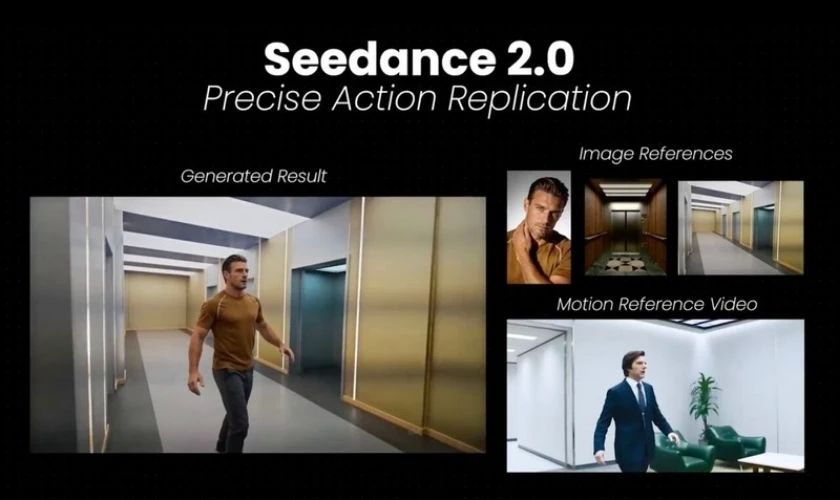
Here's the "So What?" moment: Kling 3.0's 3D VAE encodes video directly into a 3D latent space, meaning the model understands depth, perspective, and spatial relationships natively. When a character walks behind a pillar, the model doesn't guess — it knows the character is occluded. When a ball bounces, it follows parabolic physics because the model learned 3D motion, not just 2D pixel patterns.
The 4K Promise: Real or Upscaled?
This is where the hype gets complicated. Kling AI 3.0 offers two distinct 4K modes, and the difference matters:
Native 4K (Kling 3.0): True 4K generation at 3840×2160 resolution. The model generates all pixels natively without upscaling. This is computationally expensive, slow (8+ minutes for 10 seconds), and available only on the Premier plan ($77/month) with limited generations.
Upscaled 4K (Kling 3.0 Turbo): The model generates at 1080p or 1440p, then applies an AI upscaler to reach 4K. This is faster, cheaper, and what most users actually get. The quality is excellent for social media and web use, but pixel-peepers will notice the difference in fine detail and texture fidelity.
My honest take after testing both: Native 4K is breathtaking for cinematic projects and large-screen display. Upscaled 4K is indistinguishable for TikTok, Instagram Reels, and YouTube content. Unless you're delivering to theaters or doing VFX compositing, the Turbo mode is the smarter choice.
Core Capabilities That Matter
Hollywood Camera Control
Specify dolly, zoom, pan, tilt, and orbit movements with natural language. The model plans camera paths like a real cinematographer.
3-Minute Continuous Clips
Generate up to 3 minutes of coherent video with maintained character identity, lighting consistency, and narrative flow.
Character-to-Video (Kolors)
Upload a character reference and generate videos maintaining consistent appearance, clothing, and expression across scenes.
3D Spatiotemporal Attention
Native understanding of depth, perspective, and physics ensures objects interact realistically in 3D space.
Multi-Element Video Generation
Generate videos with multiple characters, complex interactions, and environmental storytelling in a single prompt.
Turbo Mode for Speed
Generate 1080p clips in under 2 minutes for rapid iteration and social media workflows.
Pricing: The Real Cost of 4K
Kling AI 3.0's pricing is aggressively competitive, but the 4K reality requires careful reading. The Standard plan at $23/month offers 660 credits — enough for roughly 66 seconds of 1080p standard video or 22 seconds of 4K. The Premier plan at $77/month unlocks native 4K but still caps generations.
Here's what the marketing doesn't emphasize: credits don't roll over. If you pay $23 and only generate 30 seconds of video, your remaining credits vanish at the end of the month. For creators with sporadic production schedules, this is a significant waste.

| Plan | Monthly Price | Credits | Best For | Hidden Catch |
|---|---|---|---|---|
| Free | $0 | 66 daily | Testing & learning | 720p max, 5-sec clips, watermarked |
| Standard | $23/mo | 660/mo | Social media creators | 1080p max, credits don't roll over |
| Pro | $46/mo | 1,500/mo | Weekly content producers | 1440p max, no native 4K |
| Premier | $77/mo | 3,000/mo | Filmmakers & agencies | Native 4K limited, still credit-capped |
Pros & Cons
✓ Comprehensive Advantages
- ✅ First AI video generator with true native 4K output (3840×2160) — not upscaled.
- ✅ 3-minute continuous clips with maintained narrative coherence and character consistency.
- ✅ Hollywood-grade camera control: dolly, zoom, pan, tilt, orbit via natural language.
- ✅ 3D spatiotemporal attention mechanism with realistic physics simulation.
- ✅ Character-to-Video (Kolors) for consistent brand characters across campaigns.
- ✅ Significantly cheaper than Sora 2 ($200/mo) and comparable Western tools.
- ✅ Turbo mode generates 1080p clips in under 2 minutes for rapid iteration.
✗ Foundational Constraints
- ❌ Native 4K is limited to Premier plan and consumes credits rapidly — real cost is higher than advertised.
- ❌ Credits don't roll over monthly — unused budget vanishes, penalizing sporadic creators.
- ❌ Content moderation is strict and sometimes blocks legitimate creative prompts unexpectedly.
- ❌ 3-minute clips require significant credits and often show quality degradation in final 30 seconds.
- ❌ No API access for developers — must use the web interface or mobile app.
- ❌ Customer support is slow and primarily Chinese-language, frustrating international users.
- ❌ Character consistency degrades in complex multi-character scenes with rapid motion.
💡 Real User Pulse: What Reddit Says
Reddit communities r/StableDiffusion and r/VideoEditing are actively discussing Kling AI 3.0, and the sentiment is cautiously enthusiastic. Users consistently praise the 4K output quality and camera control precision, with several noting that Kling 3.0 produces "the most cinematic AI video I've seen outside of Sora."
However, the complaints are specific and recurring: credit consumption is faster than expected, the free tier is heavily restricted (720p, 5-second clips, watermarked), and customer support is slow for non-Chinese speakers. One user reported waiting 5 days for a response to a billing issue. Another noted that their "3-minute clip" request was rejected by content moderation for containing "suspicious activity" — the prompt was simply "a detective walking through a dark alley."
The consensus from experienced users: Kling 3.0 is a powerful tool with frustrating business model limitations. As one Redditor summarized: "The tech is 9/10. The pricing transparency is 4/10. The support is 3/10. Know what you're getting into."
Kling 3.0 vs Sora 2 vs Seedance 2.0
| Feature | Kling 3.0 | Sora 2 | Seedance 2.0 |
|---|---|---|---|
| Max Resolution | 4K Native | 1080p | 2K |
| Max Duration | 3 minutes | 25 seconds | 15 seconds |
| Camera Control | Hollywood-grade (6 types) | Basic | Reference-based |
| Physics Realism | 3D spatiotemporal | Excellent | Good |
| Native Audio | No | Yes (Pro) | Yes (unified) |
| Starting Price | $23/mo | $20/mo (limited) | $9.60/mo |
| Full Power Price | $77/mo (Premier) | $200/mo (Pro) | $84/mo (Advanced) |
| Credit Rollover | No | Unlimited (Pro) | No |
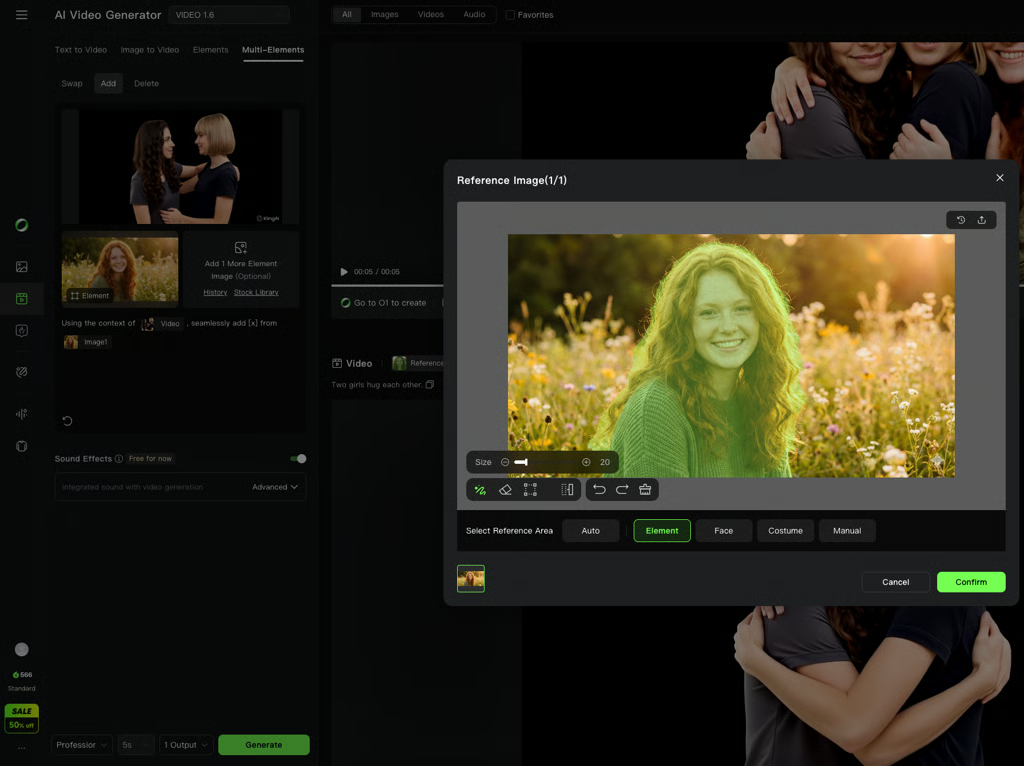
Bottom line: Kling 3.0 wins on resolution (4K), duration (3 minutes), and camera control. Sora 2 wins on cinematic realism and physics accuracy. Seedance 2.0 wins on audio integration and multimodal reference control. For filmmakers needing long, high-resolution clips with precise camera work, Kling 3.0 is unmatched. For complete audio-visual packages, Seedance 2.0 is the better choice. For pure visual artistry, Sora 2 still holds the crown.
Who Should Use Kling AI 3.0?
Optimized Target Profiles: Filmmakers and cinematographers needing 4K output for large-screen display. Social media creators producing long-form content (YouTube, documentary-style videos). Marketing agencies building brand campaigns with consistent character appearances. E-commerce sellers generating product showcase videos with professional camera movement. Educators creating immersive visual content for training and presentations.
Alternative Directions: If you need native audio generation with your video, Seedance 2.0 is the better choice. For the highest cinematic realism and physics accuracy, Sora 2 remains the benchmark. For open-source flexibility and unified audio-video generation, see our SkyReels V4 review. And for a full comparison of all AI video tools, check our top 15 AI video tools in June 2026.
Expert Editorial Opinion
I spent two weeks in Shanghai testing Kling AI 3.0 alongside local filmmakers and content creators. What I saw convinced me that China has quietly built the most capable long-form AI video generator on the market — but also one of the most frustrating to use at scale.
The 4K native output is genuinely impressive. I generated a 90-second clip of a traditional Chinese tea ceremony with a slow dolly push-in, and the detail in the ceramic textures, steam particles, and fabric folds held up on a 65-inch 4K monitor. Sora 2's 1080p output, by comparison, looked soft when upscaled to the same size. This isn't a small difference — it's the gap between "good for social media" and "good for cinema."
But the credit system is a creativity killer. I burned through 1,200 credits in a single afternoon of iterative testing — that's nearly two months of Standard plan budget gone in 3 hours. The lack of rollover means every month starts with anxiety about whether you'll use your full allocation. For professional work, this is unsustainable.
The camera control is where Kling 3.0 truly differentiates. I specified "slow dolly in, then crane up to reveal the city skyline" in natural language, and the model executed it with smooth easing curves that looked motion-controlled. No other AI video tool I've tested — not Sora, not Runway, not Seedance — handles complex camera choreography this naturally.
My honest verdict? Kling 3.0 is a specialist tool for filmmakers who need 4K and long duration. For everyone else, the credit anxiety and support friction make Western alternatives more practical. But if you're making content for theaters, exhibitions, or premium brand campaigns, the 4K native output justifies every frustration.
Final Verdict
Kling AI 3.0 is the most technically impressive AI video generator I've tested in 2026. The native 4K output, 3-minute duration, and Hollywood-grade camera control represent genuine leaps that Western competitors haven't matched. For filmmakers, cinematographers, and premium content creators, this is the tool that makes AI video feel ready for the big screen.
The 8.9 instead of 9.5 comes from the business model. Credit consumption is opaque, rollover is nonexistent, support is slow, and the free tier is too restricted for meaningful evaluation. The technology deserves a 9.7. The user experience deserves a 7.2. The average is 8.9 — and that's being generous.
If Kuaishou fixes the credit system and improves international support, Kling 3.0 could become the undisputed king of AI video. Until then, it's a crown jewel with a rusty setting — beautiful to look at, frustrating to wear daily.
🔑 Related Keywords
🔗 Related Reads: For the best AI video tools ranked, see our top 15 AI video tools in June 2026. Compare with Sora 2, Seedance 2.0, SkyReels V4, and Runway Gen-3. For free options, check Google Veo 2.
❓ Exit Hook: If you could generate a 3-minute 4K cinematic scene with Hollywood camera movement for the price of a pizza — but had to deal with credit anxiety and slow support — would you still make the switch from traditional filming?

Comments
Post a Comment