


Where Is DALL-E 4? The Truth About OpenAI's Image Generation in 2026
Everyone's searching for DALL-E 4, but OpenAI moved on to GPT Image 1. Here's what actually powers ChatGPT's image generation in 2026 — and whether it's worth your $20.
- The DALL-E 4 Myth: What Actually Exists
- GPT Image 1: The Real Engine Behind ChatGPT
- What Changed from DALL-E 3 to GPT Image 1
- Pricing: The $20 ChatGPT Plus Reality
- GPT Image 1 vs Midjourney vs Flux vs Imagen 4
- Real User Pulse: What Reddit Actually Says
- Pros & Cons
- Who Should Use It?
- Expert Editorial Opinion
- Final Verdict
You search "DALL-E 4." Google auto-completes it. Reddit threads speculate about it. YouTube thumbnails promise "DALL-E 4 LEAKED." You've been waiting for the next leap in AI image generation from OpenAI — the company that started this revolution with DALL-E 2 back in 2022.
Here's the truth: DALL-E 4 doesn't exist. OpenAI never announced it. Never teased it. Never even hinted at it. What you're actually looking for is GPT Image 1 — the native image generation engine built into GPT-4o that replaced DALL-E 3 entirely in early 2026. And it's not a standalone product. It's a feature inside ChatGPT that most users don't even know has a name.
So why does everyone keep searching for DALL-E 4? Because OpenAI's branding is confusing. Because the leap from DALL-E 3 to GPT Image 1 happened quietly, buried in a GPT-4o update announcement. And because "GPT Image 1" doesn't sound like a product — it sounds like a technical spec sheet.
But the technology is real. The improvements are significant. And for 200 million ChatGPT users, it's already in their pocket. The question isn't whether DALL-E 4 is coming. It's whether GPT Image 1 is good enough to compete with Midjourney, Flux, and the specialized image generators that have passed OpenAI by.
The DALL-E 4 Myth: What Actually Exists
Let's clear this up once and for all. OpenAI's image generation timeline looks like this:
2021: DALL-E 1 (research preview, limited release)
2022: DALL-E 2 (public beta, 1024×1024, waitlist)
2023: DALL-E 3 (ChatGPT integration, better prompt following)
2025: GPT Image 1 (native to GPT-4o, replaces DALL-E 3 entirely)
2026: GPT Image 1.5 (improved resolution, faster generation, API tiering)
Future: No DALL-E 4 announced. OpenAI has moved to the "GPT Image" naming convention.
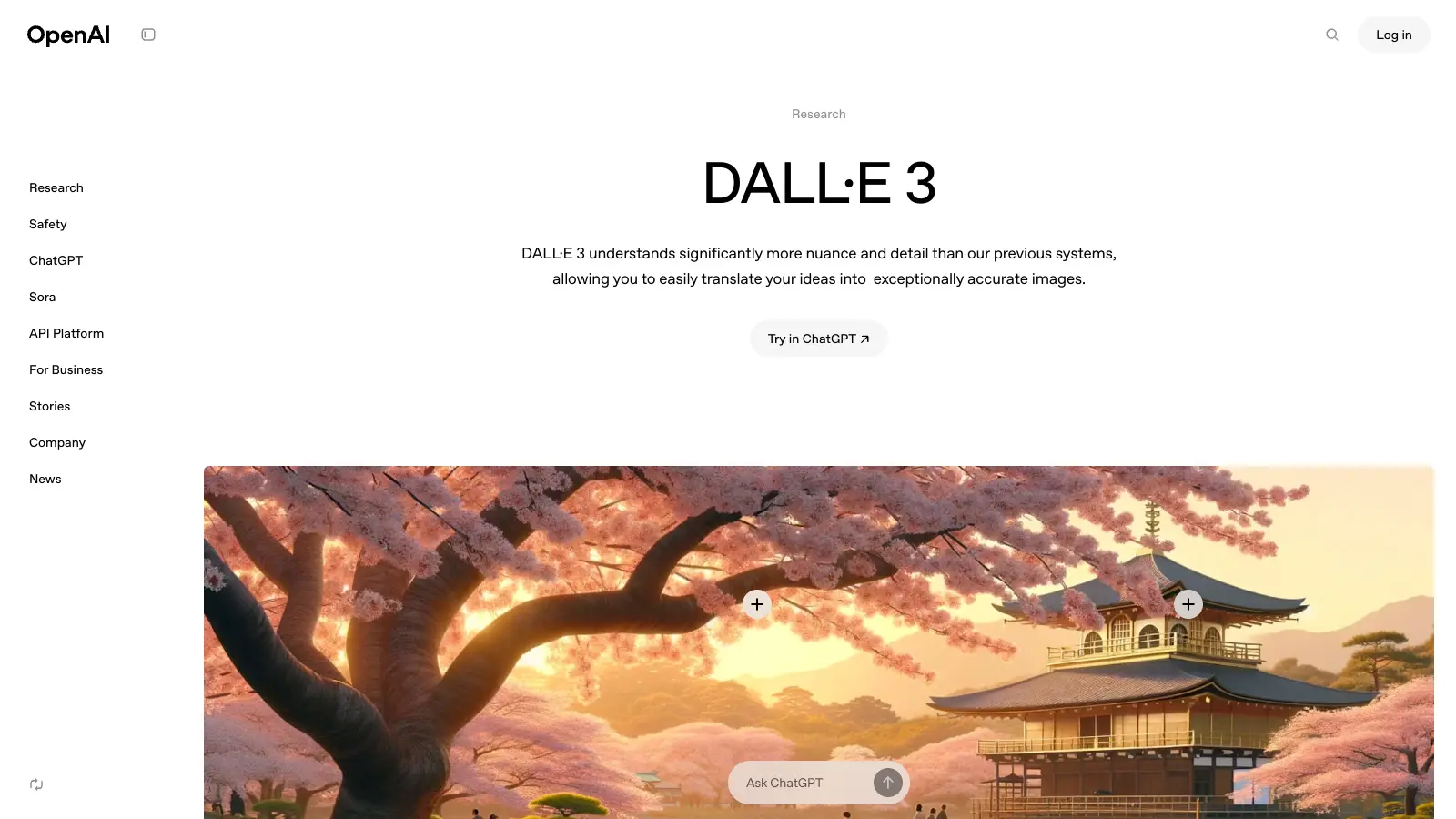
DALL-E 3 was officially deprecated in early 2026. The API still exists for backward compatibility, but new features, improvements, and model training all go to GPT Image 1 and its variants. If you're using ChatGPT Plus and generating images, you're using GPT Image 1 — not DALL-E 3, and certainly not DALL-E 4.
The confusion is understandable. OpenAI's branding has shifted from product names (DALL-E) to model architecture names (GPT Image). It's the same transition that happened with GPT-3 → GPT-4 → GPT-4o. The "DALL-E" brand had equity, but OpenAI chose consistency over marketing clarity. The result? Millions of users searching for a product that doesn't exist while the real product sits unnoticed in their chat interface.
GPT Image 1: The Real Engine Behind ChatGPT
GPT Image 1 is fundamentally different from DALL-E 3. Where DALL-E was a standalone image generation model called by ChatGPT, GPT Image 1 is natively integrated into GPT-4o's multimodal architecture. This means the same neural network handles text, code, and images — and crucially, it understands the conversation context when generating images.
Here's what that means in practice: You can describe a blog post concept in ChatGPT, ask it to generate a featured image, then say "make it more cinematic" or "add the company logo in the corner" — and the model understands the entire conversation history. It doesn't treat each image generation as an isolated prompt. It builds on what you've already discussed. This conversational refinement loop is something no standalone image generator can replicate.
Conversational Refinement
Describe changes in natural language: "make it more cinematic," "add a logo," "change the lighting." The model understands context across the entire conversation.
Text Rendering
Significantly improved text in images compared to DALL-E 3. Signs, labels, book covers, and infographics are now reliably readable — though not perfect.
Multi-Object Scenes
Handles complex prompts with 10-20 objects simultaneously. Spatial relationships are more coherent, and physical plausibility has improved.
Native Inpainting
Select regions of generated images and describe changes. "Change the background to a sunset" or "Remove the second person." Built-in, no external tools.
Style Consistency
Generate a series of images in the same style by referencing previous outputs. Useful for blog illustrations, social media series, and brand assets.
ChatGPT Integration
Generate images alongside text, code, and analysis in the same conversation. Draft a blog post, create the featured image, write social copy — all in one session.
What Changed from DALL-E 3 to GPT Image 1
The upgrade from DALL-E 3 to GPT Image 1 is meaningful but not revolutionary. Here's the honest breakdown:
| Feature | DALL-E 3 (2023) | GPT Image 1 (2026) |
|---|---|---|
| Architecture | Standalone diffusion model | Native to GPT-4o multimodal |
| Max Resolution | 1024×1024 | Up to 1792×1792 |
| Text in Images | ★★★☆☆ Good but inconsistent | ★★★★☆ Significantly improved |
| Prompt Following | ★★★★☆ Literal interpreter | ★★★★★ Better context understanding |
| Generation Speed | ~30-60 seconds | ~1-2 minutes (slower!) |
| Conversational Editing | ❌ Limited | ✅ Full conversation context |
| Multi-Object Scenes | Tended to lose elements | 10-20 objects, coherent spatial relationships |
| Hands & Faces | Occasional artifacts | Improved but still occasional issues |
| Artistic Quality | ★★★☆☆ Clean but generic | ★★★★☆ Better but still "AI aesthetic" |
Pricing: The $20 ChatGPT Plus Reality
GPT Image 1 isn't sold as a standalone product. It's bundled into ChatGPT Plus at $20/month, alongside text generation, code execution, web browsing, and file analysis. For users already paying for ChatGPT Plus, image generation is essentially "free" — but the usage limits are opaque and dynamic.
| Plan | Price | Image Generation | The Reality |
|---|---|---|---|
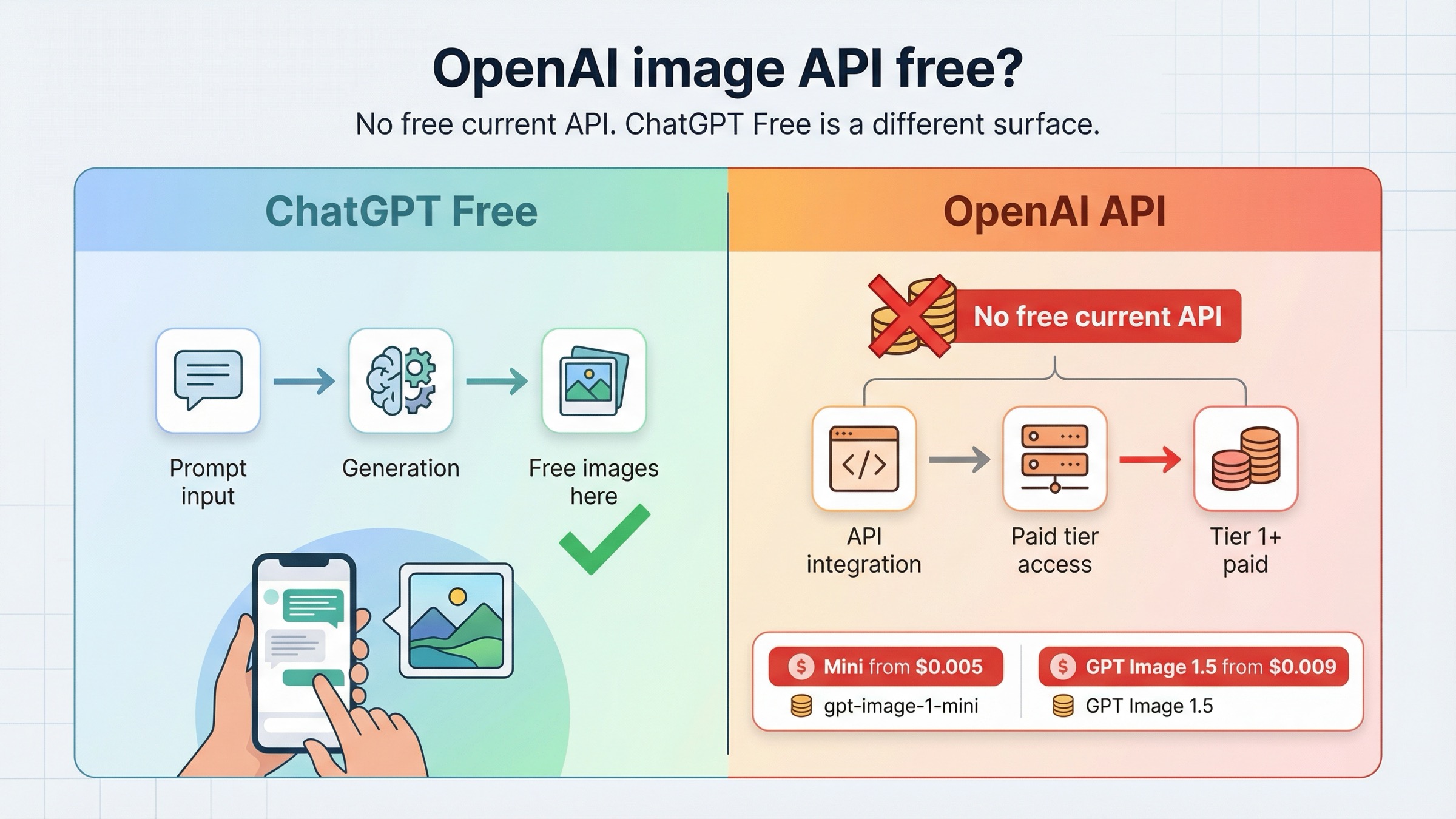
| ChatGPT Free | $0 | Limited (varies by demand) | ~5-15 images/day during peak hours. Heavily throttled. Often unavailable. |
| ChatGPT Plus | $20/mo | ~200/day theoretical | ~80-150 real-world. 4 "windows" of 50 images with 3-hour cooldowns. Dynamic throttling. |
| ChatGPT Pro | $200/mo | Higher limits | 2x-3x Plus limits. Still not unlimited. Primarily for o1 reasoning model access. |
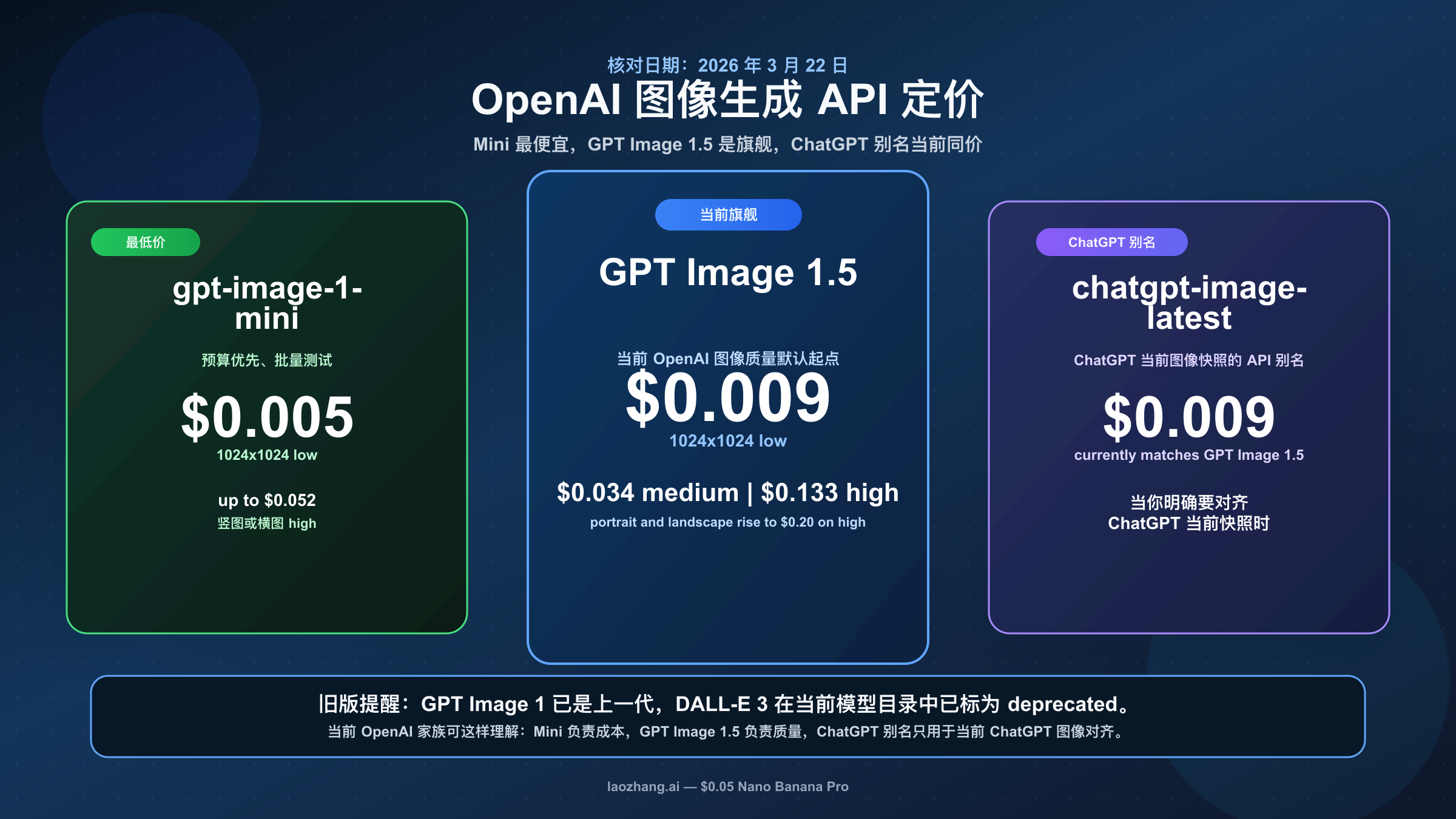
| API (gpt-image-1) | $0.009-0.167/image | Pay-per-use | Mini: $0.005-0.052. Image 1.5: $0.009-0.133. Portrait/landscape high-res up to $0.20. No subscription required. |
GPT Image 1 vs Midjourney vs Flux vs Imagen 4
The AI image landscape in 2026 is fragmented. No single model wins everything. Here's how GPT Image 1 actually compares:
| Category | GPT Image 1 | Midjourney v7 | Flux 2 | Imagen 4 |
|---|---|---|---|---|
| Photorealism | ★★★★☆ | ★★★★☆ | ★★★★★ | ★★★★☆ |
| Artistic Quality | ★★★☆☆ | ★★★★★ | ★★★★☆ | ★★★☆☆ |
| Text Rendering | ★★★★☆ | ★★★☆☆ | ★★★★☆ | ★★★★★ |
| Prompt Accuracy | ★★★★★ | ★★★★☆ | ★★★★☆ | ★★★★☆ |
| Speed | ★★★☆☆ (1-2 min) | ★★★★☆ (30-60 sec) | ★★★★☆ (seconds) | ★★★★☆ |
| Ease of Use | ★★★★★ | ★★★☆☆ (Discord learning curve) | ★★★★☆ | ★★★★☆ |
| Workflow Integration | ★★★★★ (ChatGPT native) | ★★★☆☆ | ★★★★☆ | ★★★★☆ |
| Starting Price | $0 (Free tier) / $20/mo | $10/mo | API usage-based | Usage-based |
| Best For | ChatGPT users, quick iterations | Artistic, cinematic work | Photorealism, volume | Text-heavy, product shots |
💡 Real User Pulse: What Reddit Actually Says
The Reddit consensus on GPT Image 1 is surprisingly nuanced. It's not the tool people love — it's the tool people use because it's already there.
Pros & Cons
✓ What GPT Image 1 Gets Right
- ✅ Zero learning curve: type a description in ChatGPT, get an image. No prompt engineering, no separate tools.
- ✅ Conversational refinement is unmatched — iterate through natural language in the same chat session.
- ✅ Included in ChatGPT Plus at $20/month alongside text, code, and analysis — best value for existing users.
- ✅ Text rendering in images is significantly improved over DALL-E 3 — readable signs, labels, infographics.
- ✅ Multi-object scene composition handles 10-20 objects with coherent spatial relationships.
- ✅ Native inpainting: select regions and describe changes without leaving the chat interface.
- ✅ API access from $0.005/image enables cost-effective programmatic generation for applications.
✗ Where It Falls Short
- ❌ Generation speed of 1-2 minutes per image is significantly slower than competitors (30-60 seconds).
- ❌ Artistic quality and aesthetic refinement fall behind Midjourney for creative, cinematic work.
- ❌ Usage limits are opaque, dynamic, and unpredictable — no fixed quota, no way to check remaining credits.
- ❌ The recognizable "GPT-generated" aesthetic makes output identifiable to experienced designers.
- ❌ No granular controls: no seed values, negative prompts, or aspect ratio presets that power users need.
- ❌ DALL-E 3 API deprecation (scheduled May 2026) creates uncertainty for existing workflows.
- ❌ Photorealism lags behind Flux 2 and Imagen 4 for professional photography use cases.
- ❌ Character consistency across separate generations is unreliable — no built-in character reference system.
Who Should Use It?
Best Fit: ChatGPT users who need images as part of broader workflows. If you already use ChatGPT for writing, analysis, or coding, adding image generation to the same conversation creates a seamless workflow that no standalone tool can match. Marketers, educators, and business users who prioritize speed and accessibility over peak artistic quality will find GPT Image 1 genuinely useful for social media graphics, blog illustrations, presentation visuals, and internal materials.
Hold Off If: You need the highest artistic quality for professional creative work (Midjourney produces more refined aesthetics). You need pixel-perfect text in images (Imagen 4 leads with 90%+ accuracy). You need commercially safe images with zero copyright risk (Adobe Firefly trains exclusively on licensed content). You need fast batch generation for high-volume production (Flux 2 and dedicated generators offer better throughput). You need character consistency across a series (Midjourney's --cref parameter is superior).
Alternative Path: For pure image generation at scale, the OpenAI API (gpt-image-1) at $0.005-0.167/image is more predictable than ChatGPT Plus. For artistic work, Midjourney at $10-30/month is the industry standard. For photorealism, Flux 2 via API or Cliprise ($9.99/month multi-model access) offers better quality. For text-heavy work, Imagen 4 is unmatched. Many professionals use GPT Image 1 for quick iterations and concept drafts, then switch to specialized tools for final production.
Expert Editorial Opinion
I've been testing AI image generators since DALL-E 2's waitlist days. I've watched the landscape fragment from "one model to rule them all" into a specialized ecosystem where each tool dominates a specific niche. GPT Image 1's position in this ecosystem is unique: it's not the best at anything, but it's the most accessible at everything.
Here's what I've learned after 500+ generations across all major platforms: GPT Image 1's conversational refinement is genuinely revolutionary. Being able to say "make it more like the third one but with warmer lighting and add a coffee cup in the foreground" and having the model understand the entire conversation history — that's not a gimmick. It's a workflow transformation. For iterative design processes, nothing else comes close.
But the speed is a real problem. At 1-2 minutes per image, I'm generating 30-40 images per hour. With Midjourney, I get 120-240. With Flux via API, I get 300+. For high-volume production work, GPT Image 1's slowness is a productivity tax that adds up fast. And the opaque limits? I've hit the wall mid-project three times. That's three deadlines nearly missed because I couldn't predict my own tool's capacity.
The "AI aesthetic" is also real and problematic. GPT Image 1 has a recognizable look — clean, slightly synthetic, professionally competent but rarely stunning. For internal materials and social media, this is fine. For client work where visual impact matters, it's a liability. I've had art directors reject GPT-generated images specifically because they "look like AI" — a judgment that doesn't apply to Midjourney's more organic, cinematic output.
My recommendation? Use GPT Image 1 for what it's best at: rapid iteration within ChatGPT workflows, concept visualization, and collaborative brainstorming where the conversation matters more than the pixel perfection. For final production assets, switch to Midjourney for artistic work, Flux for photorealism, or Imagen for text-heavy designs. The $20 ChatGPT Plus subscription is justified by the text AI alone — image generation is a valuable bonus, not the primary product. Just don't expect it to replace your specialized image tools.
Final Verdict
DALL-E 4 doesn't exist, and the sooner everyone stops searching for it, the better. What does exist — GPT Image 1 — is a competent, accessible, and genuinely useful image generator with one superpower that no competitor can match: conversational refinement within the world's most popular AI chat interface.
For 200 million ChatGPT users, GPT Image 1 is the default choice not because it's the best, but because it's already there. And for many use cases — blog featured images, social graphics, quick concept visualization, educational materials — "good enough and already there" beats "best but requires another tool." The $20/month ChatGPT Plus subscription is justified by text AI capabilities; image generation is a valuable bonus that pays for itself in saved tool-switching time.
But the limitations are real and significant. The speed is slow. The limits are opaque. The artistic ceiling is lower than Midjourney. The photorealism lags behind Flux. The text rendering isn't as precise as Imagen. And the recognizable "AI aesthetic" limits its use in professional creative work where originality matters.
The bottom line: GPT Image 1 is the best generalist in a world of specialists. It's the Swiss Army knife of AI image generation — capable of many tasks, master of none. For ChatGPT users who need images as part of broader workflows, it's an easy recommendation. For professional designers, artists, and high-volume producers, it's a starting point, not a destination. Use it for iteration. Switch to specialists for final output. And stop searching for DALL-E 4 — it's not coming.
🔑 Related Keywords
Related Reads: Want to see how the competition stacks up? Check our deep dives on Midjourney, Flux.1, and AI image generators. For video generation, see our Runway Gen-4 review and Sora analysis.
So here's my question for you: Are you still searching for DALL-E 4 — or have you accepted that GPT Image 1 is the future of OpenAI image generation? And more importantly: is "good enough and already in my chat app" worth more than "best but requires another subscription"? Drop your take in the comments. 👇
Comments
Post a Comment