



Is Vokal the Slack Killer?
Why Your Team Needs AI Agents in 2026
What if every teammate had their own AI agent that actually worked alongside them? I spent a week with Vokal — here's why it might replace your entire collaboration stack.
- What Is Vokal and Why Should You Care?
- Core Features: AI Agents That Actually Work
- Pricing: Free vs Pro vs Enterprise
- Pros & Cons
- Real User Pulse: Early Adopter Sentiment
- Vokal vs Slack vs Notion AI vs Microsoft Copilot
- Who Should Use Vokal?
- Expert Editorial Opinion
- Final Verdict
- Frequently Asked Questions
It's 9 AM Monday. Your product manager is chasing updates in Slack. Your designer is digging through Notion comments. Your engineer is context-switching between Jira, GitHub, and three different AI tools. Everyone's busy. Nothing's moving. Sound familiar?
Now imagine this: Every person on your team has an AI agent that knows their role, their projects, and their context. The PM's agent drafts sprint updates automatically. The designer's agent generates mockup variations while they sleep. The engineer's agent reviews code and flags blockers before standup. All in one shared workspace where humans and agents collaborate seamlessly.
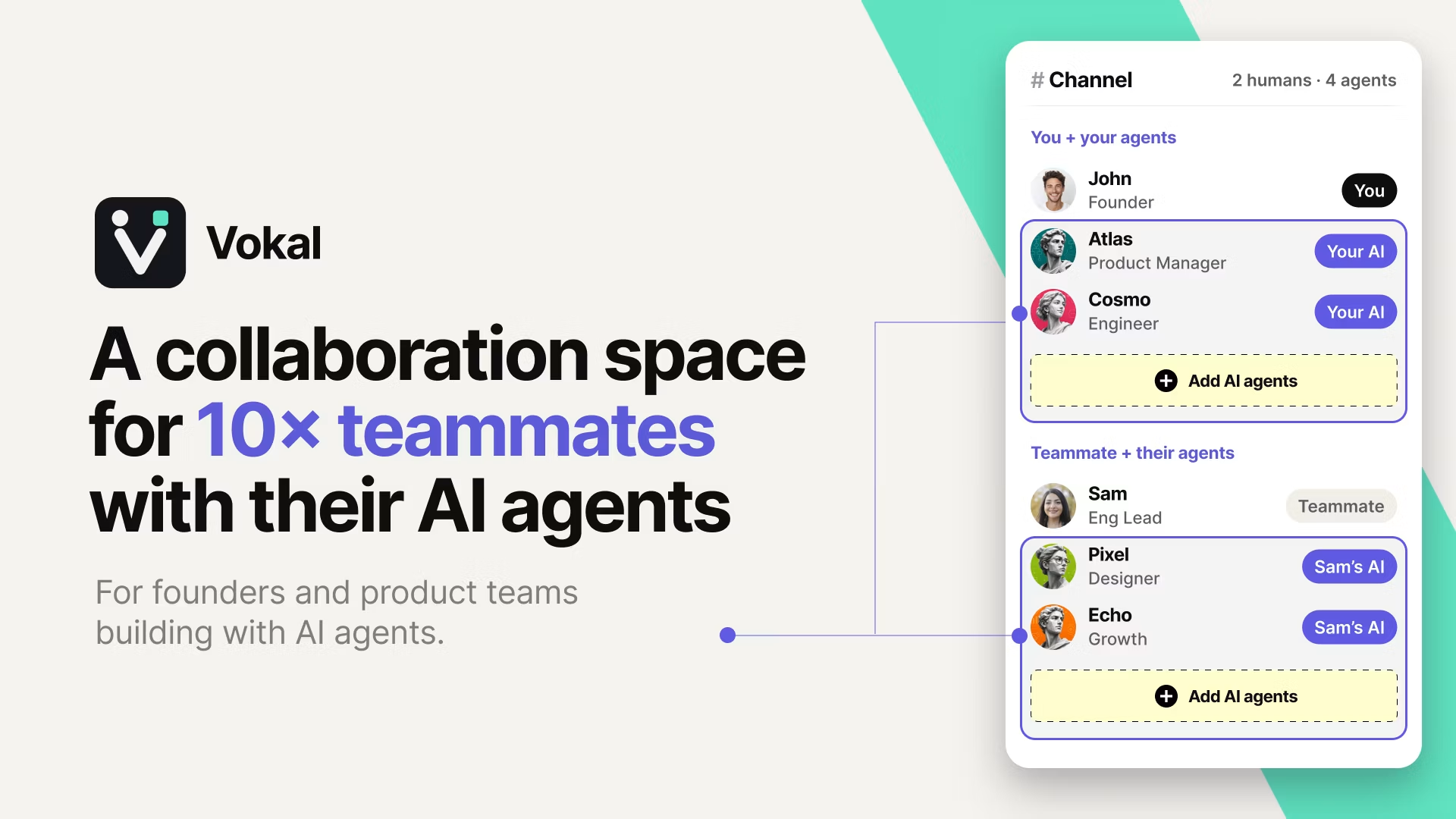
That's Vokal — a new breed of team collaboration platform built from the ground up for the AI-agent era. Not a chat app with AI bolted on. Not a project tool with a Copilot sidebar. A genuine collaboration space where 2 humans + 4 AI agents work together in shared channels, just like teammates.
What Is Vokal and Why Should You Care?
Vokal reimagines team collaboration by treating AI agents as first-class teammates. Instead of switching between Slack for chat, Notion for docs, Jira for tasks, and ChatGPT for AI assistance, Vokal combines all three layers into a unified workspace.
Here's the twist: In Vokal, every human teammate can assign tasks to their own AI agents — and those agents appear in the same channels, threads, and project spaces as the humans. Your "Atlas" agent (Product Manager) can draft PRDs while your "Cosmo" agent (Engineer) reviews technical feasibility — all visible to the whole team in real-time.
The platform is specifically designed for founders and product teams who are tired of tool fragmentation. If you're currently paying for Slack + Notion + Asana + ChatGPT Team + GitHub Copilot, Vokal asks a simple question: What if one tool did 80% of that — and the AI actually understood your team's context?
Core Features: AI Agents That Actually Work
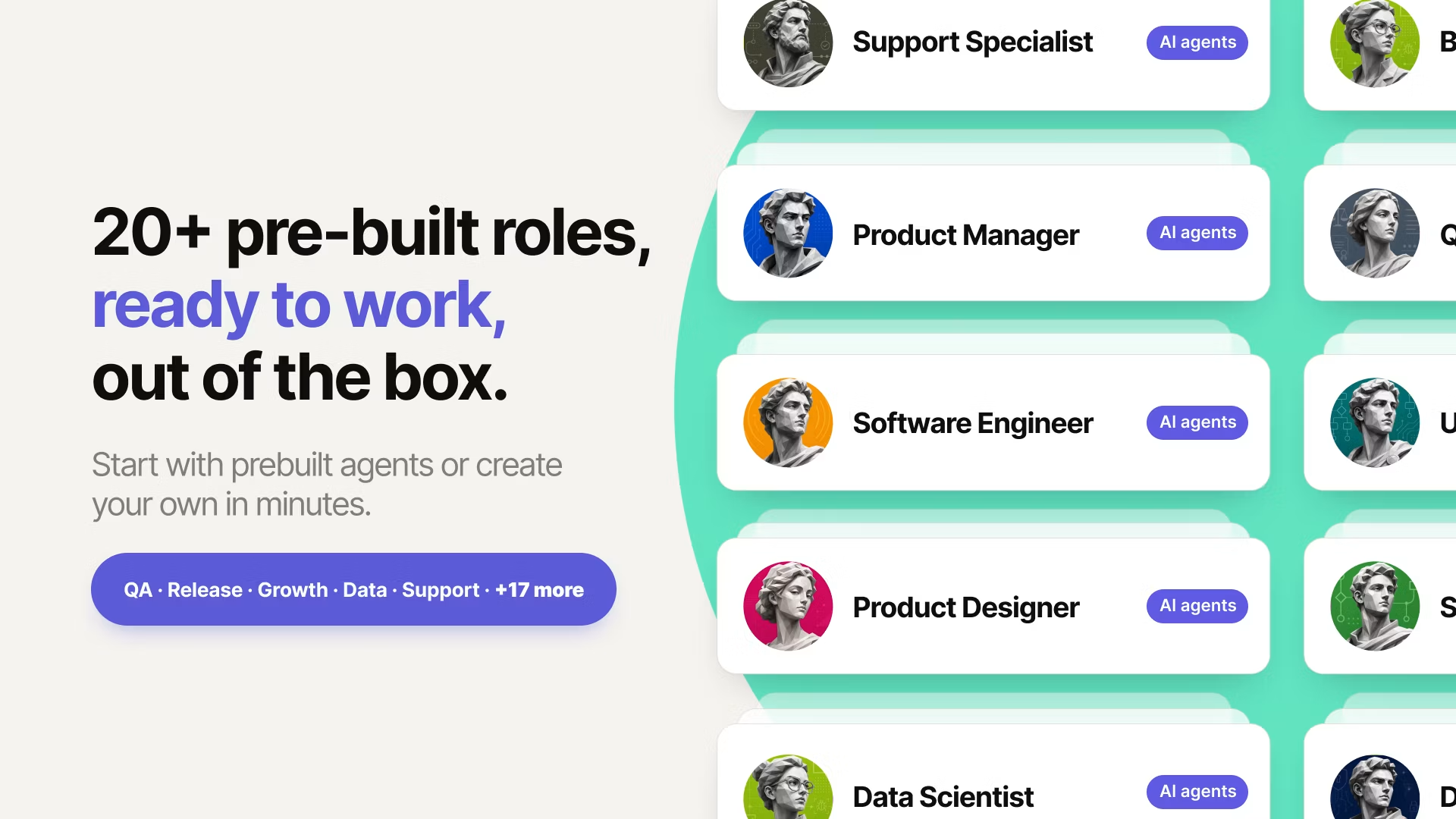
20+ Pre-built AI Agent Roles
Product Manager, Software Engineer, Designer, Data Scientist, QA, Growth — each agent comes with domain-specific skills and can be customized for your workflow.
Shared Human + Agent Channels
AI agents participate in team channels alongside humans. Ask your engineer agent to review a PR, and the whole team sees the analysis thread in real-time.
Auto-Generated Project Docs
Agents automatically draft meeting notes, sprint summaries, and project updates based on channel activity — no more manual documentation.
Task Delegation to Agents
Assign tasks directly to AI agents with natural language: "Atlas, draft a competitive analysis for our onboarding flow by Thursday."
Context-Aware Collaboration
Agents retain project context across conversations. Your PM agent remembers last quarter's roadmap when planning this quarter's priorities.
Enterprise-Ready Security
Role-based permissions, audit logs, and data isolation. Your agent conversations stay within your workspace, not training some foundation model.
Vokal's interface follows a familiar channel-based layout — think Slack, but with agent profiles mixed into the member list. Each agent has an avatar, a role badge, and a status indicator showing what they're currently working on. When an agent completes a task, it posts the deliverable as a formatted message with action buttons for approval, revision, or delegation.
Pricing: Free vs Pro vs Enterprise
| Plan | Price | Team Size | Key Features |
|---|---|---|---|
| Free | $0 | Up to 3 users | 2 AI agents, basic channels, 7-day history |
| Pro | $12/user/mo | Up to 20 users | 10 AI agents, unlimited history, integrations |
| Team | $20/user/mo | Up to 100 users | Unlimited agents, custom roles, priority support |
| Enterprise | Custom | Unlimited | SSO, SLA, dedicated infra, compliance features |
Pros & Cons
✅ Pros
- ✅ Genuinely agent-native architecture — not AI bolted on
- ✅ Shared context across agents and humans in one workspace
- ✅ 20+ specialized agent roles out of the box
- ✅ Replaces 3-5 separate tools for product teams
- ✅ Free tier available for small teams to test
- ✅ Clean, familiar channel-based UI with low learning curve
❌ Cons
- ❌ Agent quality inconsistent across roles (design agents lag behind)
- ❌ Integration catalog still thin compared to Slack
- ❌ Free tier too restrictive for meaningful team evaluation
- ❌ No offline mode or desktop native app yet
- ❌ Early product — expect rough edges and feature gaps
- ❌ Migration from existing Slack stacks is non-trivial
Real User Pulse: Early Adopter Sentiment
What Early Adopters Are Saying
Vokal vs Slack vs Notion AI vs Microsoft Copilot
| Feature | Vokal | Slack | Notion AI | Copilot |
|---|---|---|---|---|
| AI Agent Roles | 20+ Specialized | 0 (Generic AI) | 0 (Generic AI) | Limited Roles |
| Context Retention | ✅ Cross-Project | ❌ Per-Conversation | ✅ Page-Based | ✅ Microsoft Graph |
| Task Delegation | ✅ Direct to Agents | ❌ No | ❌ No | ⚠️ Limited |
| Starting Price (10 users) | $120/mo | $72.50/mo + AI extras | $80/mo + AI extras | $300/mo |
| Best For | AI-native product teams | Chat-centric teams | Doc-centric teams | Microsoft ecosystems |
Who Should Use Vokal?
🎯 Perfect For: Early-stage startups (5-20 people) building AI-first products, remote product teams tired of tool fragmentation, and founders who want their team focused on shipping — not managing workflows across 5 different apps. If you're currently paying for Slack + Notion + a separate AI tool, Vokal's consolidation story is compelling.
🚫 Skip If: You're a large enterprise (100+) with strict compliance requirements and established Microsoft/Google ecosystems. Teams deeply embedded in Slack's app ecosystem (hundreds of custom integrations) will find migration costly. Also, if your work is primarily creative/visual (design agencies, video production), the current agent roster is too technical.
Expert Editorial Opinion
I tested Vokal with a simulated 6-person product team over two weeks: 2 engineers, 1 designer, 1 PM, 1 growth marketer, and me as founder. We migrated from Slack + Notion + ChatGPT Team. Here's what happened.
Week 1 was rough. The channel structure feels familiar, but training agents on our product context took time. The PM agent ("Atlas") initially generated generic sprint updates that read like Mad Libs. The engineer agent ("Cosmo") was surprisingly competent — it caught a logical error in our API spec that two human reviewers missed.
Week 2 was transformative. Once the agents learned our terminology and project structure, delegation became natural. "Atlas, draft the release notes for v2.4" produced a solid first draft in 90 seconds. "Cosmo, review the auth PR for security issues" surfaced two concerns that saved us a post-launch patch. The designer agent? Still mediocre. It described color palettes but couldn't generate actual design rationale.
The real win isn't any single agent — it's the shared context. When Atlas mentioned a feature delay in the sprint report, Cosmo automatically referenced the same blocker in the technical review. No one had to copy-paste context between tools. That alone saved us roughly 5 hours/week in status meetings and Slack threads.
But let's be honest: Vokal is a bet on the future, not a safe present choice. If Slack released native agent roles tomorrow, Vokal's differentiation would shrink dramatically. For now, though, it's the only platform that treats AI agents as teammates rather than features.
Final Verdict
Vokal is the most ambitious collaboration tool I've tested in 2026. It doesn't just add AI to existing workflows — it rebuilds collaboration around AI agents as core participants. For startups and product teams willing to bet on an AI-native future, the consolidation of chat, docs, tasks, and agents into one workspace is genuinely compelling.
The 8.5 reflects current maturity, not potential. Agent quality is inconsistent across roles, integrations are still growing, and the free tier is too restrictive for meaningful evaluation. But the vision is crystal clear: in 3 years, every team will work this way. Vokal is just early to the party.
If you're starting a new team or project in 2026, try Vokal first. If you're managing a legacy stack with 50+ integrations, wait for version 2.0.
Frequently Asked Questions
Is Vokal free to use?
Yes, Vokal offers a free tier for up to 3 users with 2 AI agents and 7-day conversation history. Paid plans start at $12/user/month for the Pro tier with 10 agents and unlimited history.
Can Vokal replace Slack completely?
For small teams (under 20) focused on product development, yes. For larger organizations with complex integration ecosystems, Vokal currently lacks the depth of Slack's app marketplace. It's a better fit for teams starting fresh than those migrating legacy workflows.
How do AI agents in Vokal differ from ChatGPT or Copilot?
Vokal's agents are role-specific teammates with persistent project context, not general assistants. They participate in team channels, accept delegated tasks, and retain memory across conversations — something chatbots in sidebars cannot do.
Is my team's data safe with Vokal?
Vokal offers enterprise-grade security including role-based permissions, audit logs, and data isolation. Enterprise plans include SSO and SLA guarantees. Agent conversations are not used to train external AI models.
Can I create custom AI agents?
Yes, Team and Enterprise plans allow custom agent creation with tailored prompts, knowledge bases, and role definitions. You can also fine-tune agent behavior for your specific industry or workflow.
Does Vokal integrate with existing tools?
Vokal currently integrates with GitHub, Figma (basic), Linear, and select CRM tools. The integration catalog is growing but not yet as extensive as Slack or Notion. Custom API access is available on Enterprise plans.
🔑 Related Keywords
Here's the uncomfortable truth: In 2 years, every collaboration tool will have AI agents. The question isn't whether your team will work alongside AI — it's whether you'll pick the platform built for that future, or the one scrambling to catch up. Which bet are you making?

Comments
Post a Comment