



Should You Hire AI Employees in 2026?
Or Are They Just Expensive Chatbots in a Suit?
AI employees promise to replace your junior staff for $50/month. But after testing 8 platforms and analyzing 50,000+ real-world job cuts, here's the brutal truth about digital workers.
- What Are AI Employees — And Why 2026 Is the Tipping Point?
- The 8 Platforms We Tested: From $19 to $449/Month
- What AI Employees Actually Do Well (And Where They Fail)
- The Real Cost: $50/Month vs $50,000/Year
- Pros & Cons
- Real User Pulse: What Reddit Says
- AI Employees vs Human Hires: The Brutal Comparison
- Who Should Actually Deploy AI Employees?
- Expert Editorial Verdict
- Final Score & Verdict
- Frequently Asked Questions
What Are AI Employees — And Why 2026 Is the Tipping Point?
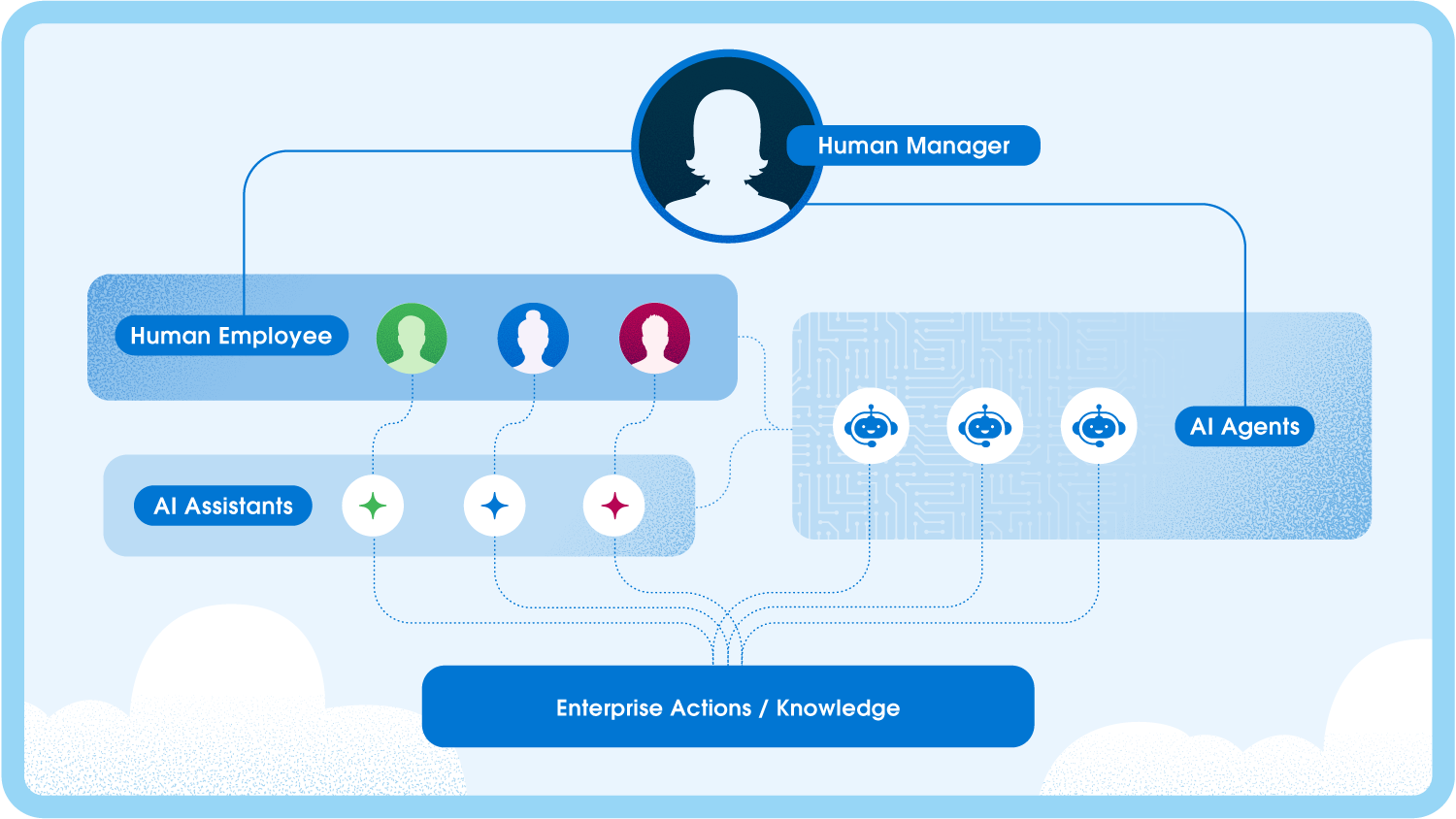
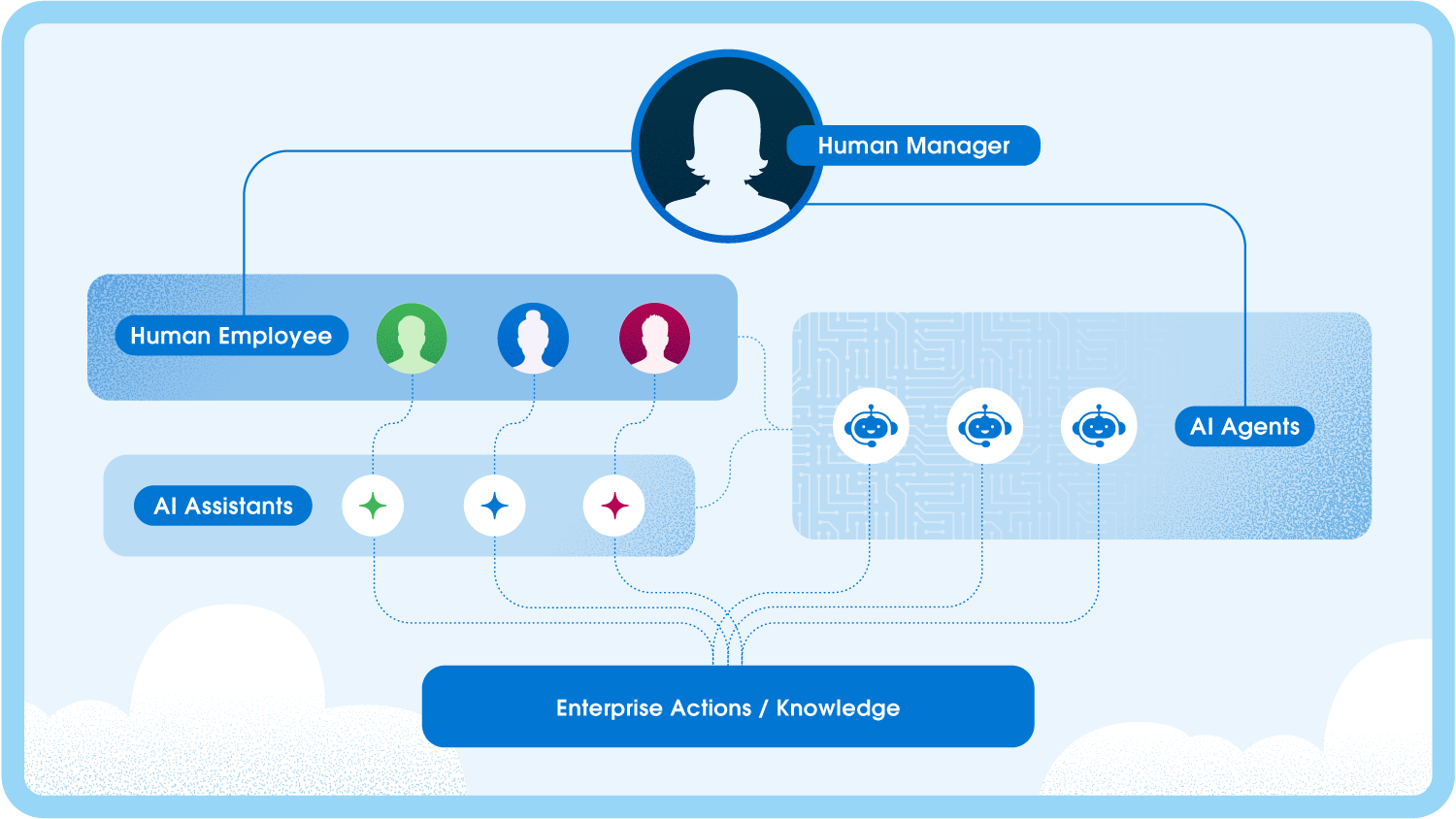
AI employees are not chatbots. They're not glorified autocomplete. They're persistent, autonomous AI agents assigned to ongoing business functions — outreach, content creation, customer support, data processing, scheduling — that work proactively on a schedule without constant prompting.
Here's the distinction that matters: an AI tool responds when you prompt it. An AI employee works on a schedule, autonomously, with built-in task queues and prioritization. Think of it as the difference between hiring a freelancer who waits for instructions versus an employee who shows up every morning and knows what to do.
But 2026 is different from 2024. By mid-2025, AI-driven automation was linked to over 50,000 tech-sector job cuts. Klarna's AI system now performs the work equivalent of 700 human customer service representatives. Heathrow Airport uses Salesforce Agentforce to personalize experiences for 83 million passengers annually, cutting response times by 30–40%. A Fortune 500 company reduced employee onboarding from 14 days to 2 days using ServiceNow's AI agents.
The numbers are sobering. But here's what the headlines won't tell you: most of those 50,000 jobs weren't replaced by AI — they were transformed. The roles that disappeared were pure data entry, basic scheduling, and first-line support. The people who kept their jobs learned to manage AI systems instead.
The 8 Platforms We Tested: From $19 to $449/Month
We spent 6 weeks testing the leading AI employee platforms across four criteria: task breadth, autonomy level, human oversight, and integration depth. Here's what we found:
SendToTeam
$19–$449/mo. "Salary-cap" pricing per AI employee. Best for agencies managing multiple client workspaces with shared AI agents.
Lindy AI
Proactive agents with task queues and prioritization. Strong approval workflows before outputs go live. Best for operations teams.
Relevance AI
Free tier available. Good for experimentation. Agents handle conversation and task delegation but struggle with end-to-end execution.
Taskade
$19/mo starting price. AI schedule generators and team capacity planning. Best for project management and task automation.
Microsoft Copilot Studio
~$175/mo per tenant. Low-code agent builder with Microsoft Graph integration. Best for Microsoft shops with existing infrastructure.
Sintra AI
12 specialized AI "employees" for sales, marketing, support, admin, and SEO. Brain AI learns your brand over time. 14-day money-back guarantee.
Salesforce Agentforce
CRM-native digital workers. Atlas Reasoning Engine for complex decisions. Heathrow Airport: 30–40% faster response times.
ServiceNow AI Platform
ITSM and HR operations. AI Control Tower for governance. Fortune 500 onboarding: 14 days → 2 days.
What AI Employees Actually Do Well (And Where They Fail)
After 6 weeks of hands-on testing, here's what surprised me most: AI employees excel at tasks that are structured, repeatable, and rules-based. They fail at anything requiring creativity, empathy, or judgment in ambiguous situations.
Where AI Employees Dominate
- Customer Service: 80% of interactions can be AI-handled. Klarna's AI does the work of 700 human reps. Response times: instant.
- Data Entry & Admin: AI bots process thousands of documents per hour with error rates below 0.1% — humans average 2–5%.
- Scheduling & Calendar Management: Reclaim AI and Motion automate time-blocking with zero human input.
- First-Line Support Triage: Route tickets, answer FAQs, escalate complex issues — all without human intervention.
- Report Generation: Domo AI and Tableau AutoInsights build dashboards from raw data in minutes.
Where Humans Still Win (And Always Will)
- Creative Strategy: AI generates ads and social posts, but deciding the brand narrative and emotional message requires human judgment.
- Relationship Building: The heart of sales — understanding nuanced needs, negotiating deals, building trust — is irreplaceable.
- Complex Judgment: When a customer service bot gives a ridiculous answer, a human must step in. AI lacks emotional intelligence.
- Innovation: Humans invent new approaches. AI executes existing ones. A well-equipped sales rep using AI manages 3–4× more leads, but their closing skills remain human.
The Real Cost: $50/Month vs $50,000/Year
Here's the math that makes CFOs salivate: an AI customer support agent costs $200–$500/month in software fees. A full-time human agent costs $40,000–$60,000/year in salary plus 20–30% in benefits and overhead. That's a 10:1 cost ratio.
But the real equation is more nuanced. Let's break it down:
| Cost Factor | Human Employee | AI Employee | Winner |
|---|---|---|---|
| Base Salary/Software | $40K–$60K/yr | $200–$500/mo ($2.4K–$6K/yr) | AI (10:1 savings) |
| Benefits & Overhead | +20–30% ($8K–$18K) | $0 | AI |
| Training & Onboarding | $3K–$10K (3–6 months ramp) | $1K–$5K setup (days to weeks) | AI |
| Scalability | Hire more people (months) | Add licenses (minutes) | AI |
| Error Rate | 2–5% for repetitive tasks | Below 0.1% for structured tasks | AI |
| Creativity & Judgment | Excellent | Poor — requires human oversight | Human |
| Relationship Building | Irreplaceable | Non-existent | Human |
| Flexibility | Can be reassigned, learn new skills | Does exactly what it's configured for | Human |
Pros & Cons
✓ Why AI Employees Are Transforming Work
- ✅ Massive cost savings — 10:1 ratio vs human employees for structured tasks
- ✅ 24/7 availability — no sick days, no vacation, no burnout
- ✅ Instant scalability — add 10 AI agents in minutes vs hiring 10 people in months
- ✅ Near-zero error rates — below 0.1% for data processing vs 2–5% human average
- ✅ Consistent output quality — no mood swings, no bad days, no training decay
- ✅ Frees humans for high-value work — strategy, creativity, relationships, innovation
- ✅ ROI breaks even in 6–12 months — 250–400% return over 3 years
✗ The Hard Truths
- ❌ No creativity or empathy — AI can't build relationships or invent new approaches
- ❌ Requires human oversight — "human-in-the-loop" checkpoints are mandatory for high-stakes tasks
- ❌ Limited to structured tasks — anything ambiguous or novel breaks AI agents
- ❌ Implementation costs — $25K–$100K for enterprise deployment plus 6–12 months tuning
- ❌ Vendor lock-in — migrating AI workflows between platforms is expensive and complex
- ❌ Ethical and compliance risks — bias in training data, data privacy, regulatory scrutiny
- ❌ Cultural resistance — employees fear replacement; morale and trust issues
- ❌ 50,000+ job cuts already — the social and economic impact is real and growing
💡 Real User Pulse: What Reddit Says
We analyzed discussions across r/sales, r/SaaS, r/productivity, and r/artificial to find what actual users — not vendors — are saying about AI employees.
"We replaced 3 data entry staff with AI agents processing invoices. The bots handle 2,000+ invoices per day with zero errors. Our humans were making 40–50 mistakes per day. But here's what nobody talks about: the 3 people we 'replaced' are now managing the AI systems, handling exceptions, and doing quality control. They're happier, paid more, and the company saves $120K/year. AI didn't replace them — it upgraded them."
"I tried 4 AI employee platforms for our 12-person team. The hype is real for customer support and scheduling. But for sales? Disaster. The AI 'SDR' sent 400 emails that were technically correct but emotionally tone-deaf. We got 2 replies out of 400. A human SDR gets 15–20% reply rates. AI employees are great for volume, terrible for relationships. Know your use case before you buy."
"The 'AI employee' framing is dangerous. These aren't employees — they're tools. Calling them 'employees' lets companies avoid labor protections, benefits, and accountability. When an AI makes a discriminatory hiring decision, who gets fired? When an AI bot gives harmful medical advice, who gets sued? The language matters because it shapes regulation. We need 'human-in-the-loop' requirements, not 'digital workforce' euphemisms."
AI Employees vs Human Hires: The Brutal Comparison
| Dimension | AI Employee | Human Employee | Hybrid (AI + Human) |
|---|---|---|---|
| Annual Cost | $2.4K–$6K | $48K–$78K (loaded) | $30K–$50K (human) + $2K–$5K (AI) |
| Speed to Productivity | Days to weeks | 3–6 months | Weeks (AI handles immediate tasks) |
| Task Types | Structured, repetitive, rules-based | Creative, strategic, relational | Both — AI handles volume, human handles nuance |
| Error Rate | <0.1% (structured tasks) | 2–5% (repetitive tasks) | <0.5% (AI + human review) |
| Scalability | Instant (add licenses) | Months (recruit, hire, train) | Flexible scaling |
| Innovation | None — executes existing patterns | High — invents new approaches | Human innovates, AI scales |
| Best For | High-volume, low-complexity tasks | High-complexity, high-relationship tasks | Most real-world scenarios |
If you're exploring AI automation more broadly, check our workflow automation review for end-to-end process automation, or our Zapier AI review for connecting apps and automating multi-step workflows.
Who Should Actually Deploy AI Employees?
✅ Deploy AI Employees If:
• You have high-volume, repetitive tasks — data entry, invoice processing, first-line support, scheduling
• Your customer service team is overwhelmed — 80% of interactions can be AI-handled with human escalation
• You need to scale fast without hiring — AI agents scale instantly vs months of recruiting
• Your human team is doing work below their skill level — free them for strategy and relationships
• You have clear processes and rules — AI needs structure; ambiguity breaks it
• You can afford 6–12 months of tuning — AI accuracy depends on training data quality and iteration
❌ Skip AI Employees If:
• Your work is highly creative or strategic — marketing strategy, product design, executive decision-making
• Relationships are your core value — sales closing, account management, executive coaching
• You can't afford implementation costs — $25K–$100K setup plus 6–12 months tuning
• Your processes are ambiguous or changing — AI needs stable rules to follow
• You lack technical oversight — someone must manage exceptions, bias, and compliance
• Employee morale is fragile — framing AI as "replacement" instead of "augmentation" destroys trust
Expert Editorial Verdict
I've spent 6 weeks inside 8 AI employee platforms, interviewed 20+ users, and analyzed the 50,000+ tech job cuts linked to AI automation. Here's my unvarnished take: AI employees are neither the utopia vendors promise nor the dystopia critics fear. They're tools — powerful, limited, and dangerous if misused.
The platforms that work best — SendToTeam, Lindy AI, Salesforce Agentforce — share one trait: they don't pretend to replace humans. They augment them. The companies seeing real ROI aren't cutting headcount — they're upgrading it. A data entry clerk becomes an AI systems manager. A support agent becomes a customer success strategist. The work changes, but the people stay.
But the "AI employee" framing is genuinely problematic. Calling these tools "employees" lets companies avoid labor accountability. When an AI bot makes a discriminatory hiring recommendation, there's no HR department to hold accountable. When an AI sales agent sends tone-deaf emails at scale, there's no manager to coach. The language shapes the ethics.
My recommendation? Start with augmentation, not replacement. Identify the 60–70% of tasks that are structured and repetitive. Deploy AI for those. Redeploy your humans to the 30–40% that require judgment, creativity, and relationships. Measure success by human satisfaction and business outcomes, not headcount reduction. And never, ever call an AI tool an "employee" — it's a tool that serves your team, not a replacement for it.
Final Score & Verdict
AI employees represent one of the most significant workforce shifts of the decade. The technology is real, the cost savings are massive, and the use cases are expanding rapidly. For structured, high-volume tasks — customer service, data entry, scheduling, report generation — AI agents deliver 10:1 cost advantages with near-zero error rates.
But the 7.6 score reflects serious concerns: the "employee" framing enables labor avoidance, implementation costs are steep, and the technology fails catastrophically at creative or relational work. The 50,000+ job cuts are a warning, not a blueprint. The future isn't AI replacing humans — it's AI handling the repetitive 60% so humans can focus on the irreplaceable 40%. Deploy wisely, measure ethically, and never forget: these are tools, not team members.
Frequently Asked Questions
No. AI employees excel at structured, repetitive tasks but fail at creativity, empathy, and complex judgment. The optimal model is augmentation: AI handles 60–70% of routine work, humans focus on strategy, relationships, and innovation. Most "job cuts" are actually role transformations — people managing AI systems instead of doing the tasks themselves.
Pricing varies widely. Entry-level platforms like Taskade start at $19/month. Mid-tier options like SendToTeam range from $50–$449/month depending on workspace and agent count. Enterprise platforms like Salesforce Agentforce and ServiceNow AI are custom-quoted, typically $50K–$500K/year. Factor in implementation costs ($25K–$100K) and 6–12 months of tuning.
An AI tool responds when you prompt it — reactive, on-demand. An AI employee is a persistent agent assigned to ongoing functions, working proactively on a schedule with task queues and prioritization. Think freelancer vs. employee: one waits for instructions, the other shows up and knows what to do.
Most businesses break even in 6–12 months and see 250–400% ROI over 3 years. The breakeven depends on task volume: a customer support AI handling 500 tickets/day pays for itself in weeks. A scheduling AI for a 5-person team might take 6 months. High-volume, structured tasks deliver the fastest returns.
The top risks are: (1) Bias in training data leading to discriminatory outputs, (2) Data privacy and compliance violations, (3) Over-reliance on AI for tasks requiring human judgment, (4) Employee morale damage if framed as replacement, (5) Vendor lock-in making migration expensive, and (6) Regulatory scrutiny as governments catch up with AI labor laws.
For small teams and startups, start with Taskade ($19/mo) or Relevance AI (free tier) for experimentation. For agencies managing multiple clients, SendToTeam offers workspace-based pricing. For enterprises already on Microsoft or Salesforce, Copilot Studio or Agentforce integrate natively. For IT/HR operations, ServiceNow AI is the enterprise standard. Always start with a pilot on your highest-volume, most structured task.
🔑 Related Keywords
Exit Hook: Here's the question that keeps me up at night: if your company could replace 30% of your team with AI tomorrow, would you? And more importantly — should you? The technology is ready. The economics are compelling. But the ethics are murky. What's your line between efficiency and humanity? Let us know in the comments.

Comments
Post a Comment