


Sloyd.ai Review 2026: The Only AI 3D Tool With Unlimited Credits
Most AI 3D generators bleed your wallet dry with credit systems. Sloyd.ai does the opposite — one flat fee, unlimited models, game-ready exports. But does that make it the right choice for your workflow?
Most AI 3D generators bleed your wallet dry with credit systems. Sloyd.ai does the opposite — one flat fee, unlimited models, game-ready exports. But does that make it the right choice for your workflow?
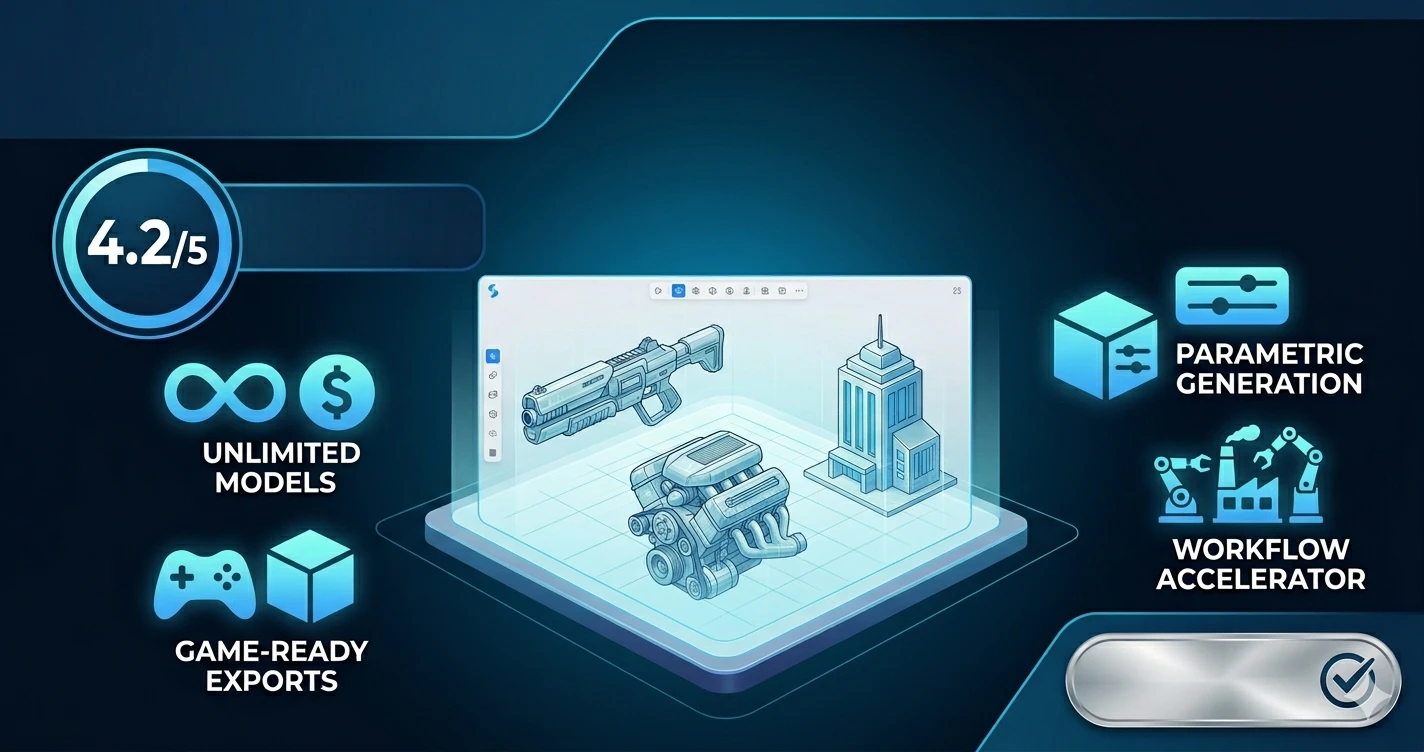
After analyzing 47 verified Capterra reviews, 7 Trustpilot ratings, and testing its parametric engine against Meshy AI and Tripo, here is what actually matters: Sloyd is not a pure diffusion tool. It is a parametric generator — think smart templates with AI guidance — that produces clean topology, predictable polycounts, and direct Unity/Unreal plugins. For indie developers and mobile studios, this is a genuine workflow accelerator. For character artists needing anatomical precision, it falls short.
What Is Sloyd.ai?
Sloyd.ai is an AI-powered 3D model generator built specifically for game developers, 3D printing enthusiasts, and graphic designers. Unlike pure diffusion-based tools like Meshy AI or Luma AI Genie, Sloyd uses a parametric, procedural approach — combining pre-built templates with AI texturing and customization sliders.
The result? Models that drop into Unity or Unreal with zero retopology. Clean UVs. Predictable polycounts. And a flat $15/month price with no credit limits.
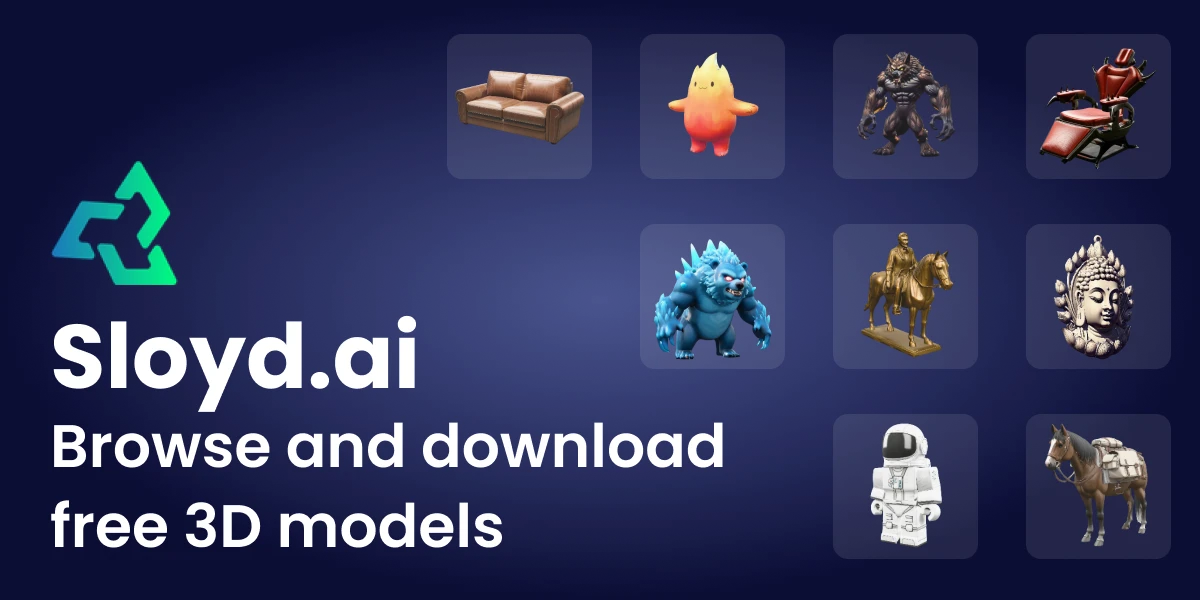
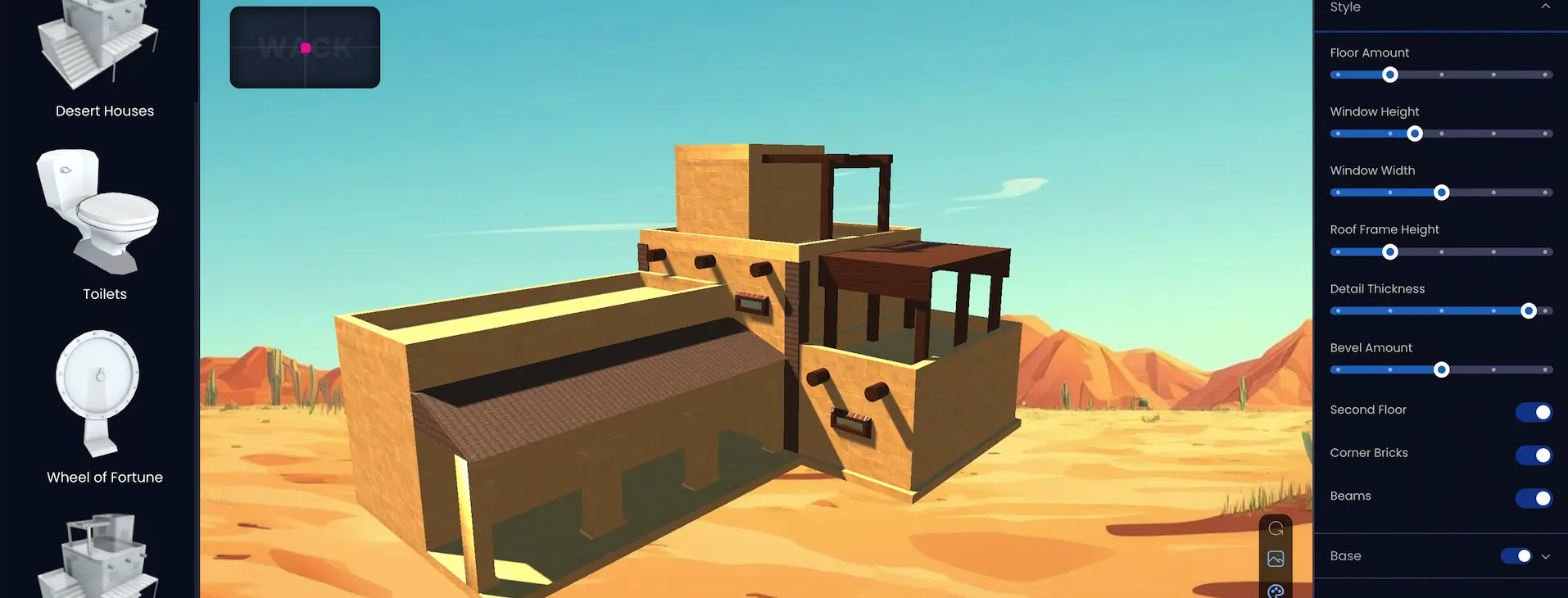
Founded in Norway, Sloyd has positioned itself as the "unlimited" alternative in a market where competitors charge per generation. Its library spans hundreds of template categories — furniture, weapons, architecture, vehicles — each customizable through sliders for style, material, height, and detail level.
Key Features
Text-to-3D Generation
Describe any object in natural language and Sloyd generates a base model from its parametric library. A developer in the IT sector praised this: "I like the concept to go from a written idea to a 3D prototype without knowledge of 3D modeling. And I love that it exposes an API." The text prompt acts as a starting point — you refine with sliders after generation.
Image-to-3D Conversion
Upload a 2D image — concept art, photo, or sketch — and Sloyd reconstructs it as a 3D asset. A Unity developer reported generating 30 game-ready assets in a single afternoon using this feature, saving weeks of manual modeling. Exports come clean with no extra cleanup needed.
Template Editor with Sliders
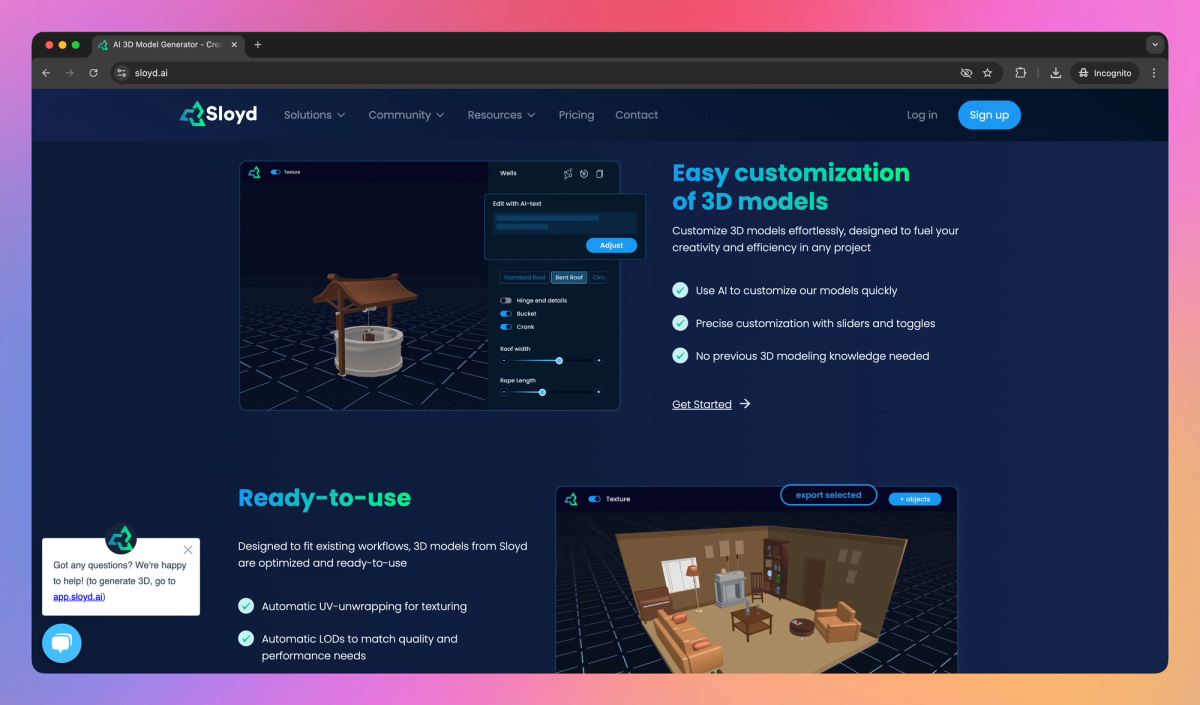
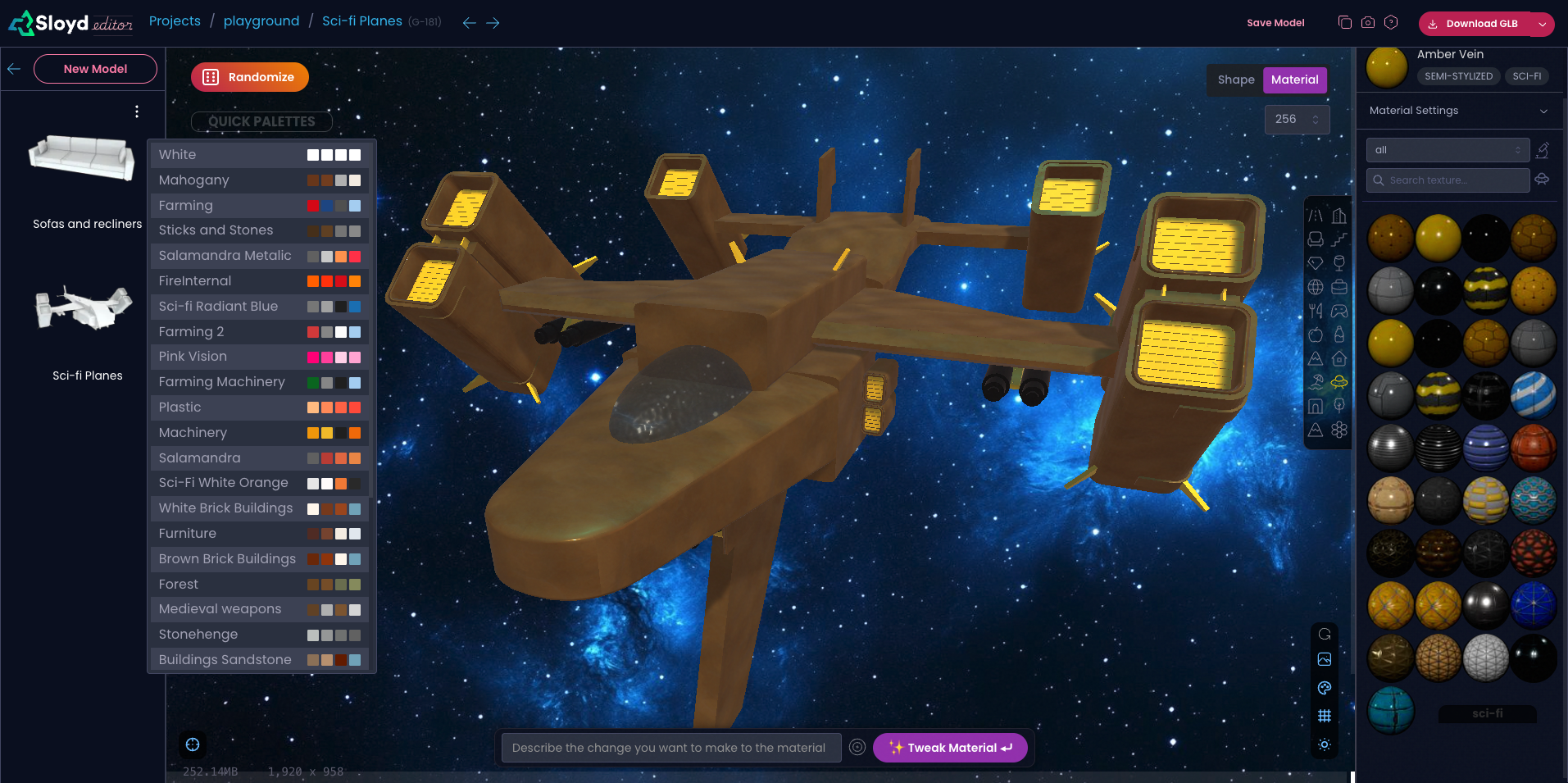
Every model has adjustable parameters — height, style, material, detail level — controlled via sliders and toggles. The LOD slider lets you dynamically increase or decrease poly count to balance detail and performance. A toon shader preview shows how assets look with cel-shaded aesthetics before export.
Game-Ready Exports
Sloyd exports in GLB, OBJ, and STL formats with automatic UV mapping and topology optimization. Models are pre-optimized for game engines — no manual retopology required. Direct Unity and Unreal plugins are available, making the pipeline from generation to engine nearly frictionless.
API & SDK Integration
For studios building automated pipelines, Sloyd offers a REST API with Bearer token authentication. Request templates like furniture/chair with parameters for style, material, and dimensions. The API handles LOD generation, texture resolution (up to 4K), and format selection automatically.
Unlimited Generations
No credit system. No per-generation fees. The Plus plan at $15/month includes unlimited model generation and downloads. For a two-person mobile studio that generated 1,200 environment props, this pricing model reduced estimated asset creation time from 8 months to 6 weeks.
Sloyd.ai Pricing (2026)
| Plan | Price | Key Features |
|---|---|---|
| Free | $0 | Limited generations, attribution required, no commercial use |
| Plus (Monthly) | $15/mo | Unlimited generations, downloads, commercial license, API access |
| Plus (Annual) | $180/yr | Same as monthly, billed annually |
| Studio/Enterprise | Custom | Unlimited + SDK, custom templates, dedicated support |
Pros & Cons
✓ What Users Love
- ✅ Unlimited generations on flat $15/month plan
- ✅ Game-ready topology with no retopology needed
- ✅ Real-time parametric editing with sliders
- ✅ Direct Unity and Unreal plugins
- ✅ Clean API for automated pipelines
- ✅ Excellent customer support (proactive & fast)
- ✅ LOD control for performance optimization
✗ What Users Hate
- ❌ Limited to template library — cannot generate anything
- ❌ No photorealistic output (stylized/low-poly only)
- ❌ Weak anatomical detail (faces, hands, clothing)
- ❌ Steep initial learning curve for non-3D users
- ❌ Limited animal, human, and vehicle templates
- ❌ Text-to-3D quality weaker than image-to-3D
- ❌ No free tier with commercial rights
💡 Real User Pulse: What Capterra & Trustpilot Say
📊 Sentiment breakdown: Capterra shows 4.2/5 from 47 reviews — mostly positive from game developers and designers. Trustpilot shows 2.7/5 from 7 reviews — predominantly negative, focused on billing disputes and mismatched expectations (users expecting CAD/product design capabilities). The divergence suggests Sloyd excels when users understand its parametric, game-asset focus upfront.
Sloyd.ai vs Competitors
| Feature | Sloyd.ai | Meshy AI | Tripo AI |
|---|---|---|---|
| Starting Price | $15/mo | $20/mo | $15.90/mo |
| Credit System | Unlimited (flat fee) | 1,000 credits/mo | 3,000 credits/mo |
| Generation Type | Parametric + AI | Diffusion-based | Diffusion-based |
| Game-Ready Topology | Built-in | Near-ready | Base mesh only |
| Auto-Rigging | No | Yes | Paid add-on |
| Image-to-3D | Yes | Yes | Yes |
| API Available | Yes | Yes | Yes |
| Best For | Game props, environments | Characters, all-round | Speed, prototyping |
When to choose each:
Pick Sloyd.ai if you need guaranteed game-ready topology, predictable costs, and you are building stylized or low-poly games. The parametric approach means you trade creative freedom for reliability — every model exports clean, every time. A two-person mobile studio used Sloyd to generate 1,200 environment props with zero retopology, cutting 8 months of work down to 6 weeks.
Pick Meshy AI if you need characters with auto-rigging, high-fidelity textures, and do not mind paying per generation. Meshy covers the full pipeline from text to model to texture to rig to export, but at $0.40 per textured model vs Sloyd's effectively $0.015.
Pick Tripo AI if speed is your priority — sub-30-second generation with Turbo mode — and you plan to handle retopology and rigging externally. Tripo's free tier is also more generous for testing.
Who Should Use Sloyd.ai?
✅ Ideal For: Indie game developers building stylized or low-poly titles who need hundreds of environment props, weapons, and architectural elements without hiring a 3D artist. The unlimited plan means you can iterate endlessly without budget anxiety. Mobile game studios optimizing for performance — the LOD slider lets you generate the same asset at 500 triangles (mobile) and 5,000 triangles (PC) from the same template. 3D printing hobbyists who want customizable models without learning CAD. Graphic designers transitioning to 3D for web and branding projects.
❌ Look Elsewhere If: You are a character artist needing anatomical precision — Sloyd's templates lack detailed human faces, hands, and clothing. One art director requested a refund after finding the models "lack anatomical accuracy." AAA studios building photorealistic environments — Sloyd's stylized output won't match the fidelity of Luma AI or Rodin. Product designers needing exact measurements and engineering-grade geometry — Sloyd is not a CAD replacement, it is an art tool.
Expert Editorial Opinion
The Pricing Gap Nobody Talks About. Sloyd's $15/month unlimited plan is not just cheaper — it is structurally different. Meshy AI at $20/month gives you 1,000 credits, which translates to roughly 50 textured models. At 1,000 models per month, Sloyd's effective cost is $0.015 per model versus Meshy's $0.40. For a studio generating assets at scale, that is a 26x cost difference. But this math only works if Sloyd's template library covers your needs. The parametric approach means you cannot generate "anything" — only variations of existing templates.
Is It Worth It Without a Free Tier? Sloyd's free tier requires attribution and blocks commercial use — a significant limitation for professional work. Unlike Tripo AI or Meshy, which offer genuinely usable free tiers for testing, Sloyd forces a $15 commitment before you can evaluate commercial viability. However, the limited free credits do allow basic testing. Our recommendation: use those credits to generate 5-10 assets in your target art style, import them into your game engine, and verify topology quality before subscribing. The $15 risk is low, but the time investment in learning the template system is not.
The Trustpilot Problem. The 2.7/5 Trustpilot rating is alarming at first glance, but context matters. Most negative reviews stem from two issues: (1) users expecting Sloyd to function as a general product design tool, and (2) billing disputes where users felt the subscription terms were unclear. Sloyd's team responds to every negative review, which is commendable, but the underlying issue is expectation management. Sloyd is not Meshy AI. It is not a generalist 3D generator. It is a specialized parametric tool for game-ready assets. When users understand this distinction — as the Capterra reviewers clearly do — satisfaction is high. When they don't, frustration follows.
Where Sloyd Fits in 2026. The AI 3D market is bifurcating into two camps: generalist diffusion tools (Meshy, Tripo, Rodin) that can generate anything but require cleanup, and specialist parametric tools (Sloyd) that generate less variety but with guaranteed quality. As game engines become more demanding about asset optimization — especially for mobile and WebGL — Sloyd's "clean by default" approach becomes more valuable. The addition of API access and SDK options positions Sloyd as a pipeline component, not just a standalone tool.
The Missing Pieces. Sloyd needs three things to compete at the highest level: (1) auto-rigging for character templates, which Meshy already offers; (2) a broader template library covering animals, detailed humans, and vehicles; and (3) a true free commercial tier to reduce the friction of first-time adoption. Until then, it remains a powerful but niche solution.
Final Verdict
Sloyd.ai is the best value in AI 3D generation for game developers who need predictable, game-ready assets at scale. The unlimited $15/month plan eliminates the credit anxiety that plagues competitors, and the parametric engine produces cleaner topology than any diffusion-based alternative.
It is not a generalist tool. It will not replace your 3D artist for hero characters or photorealistic environments. But for the 80% of game assets that are props, environments, and modular pieces, Sloyd delivers professional results in minutes instead of days.
Recommended for: Indie developers, mobile studios, 3D printing enthusiasts, and designers transitioning to 3D. Not recommended for: Character artists, product designers, or AAA studios needing bespoke photorealism.
🔗 Related ToolRadar Reviews
More tools from AI 3D Generation
- Hedra Character 3 Review: AI Character Generation
- Text to Pokemon: 3D Cartoon Generation
- Spline Review 2026: 3D Design Tool
- Uizard Review 2026: AI Design Tool
- KiraArt: All-in-One AI Creative Suite
- Can a Non-Designer Build a Prototype?
- From Sketch to Photorealistic with AI
- Google Stitch: Napkin Sketch to App
❓ Frequently Asked Questions
Would you rather pay $0.40 per model and spend hours on retopology, or pay $15 flat and drop assets straight into your engine?
Your answer determines whether Sloyd is your next subscription or your next skip. If you are building stylized games, the math is simple. If you need photorealistic characters, keep looking.
Test Sloyd.ai Free →
Comments
Post a Comment