


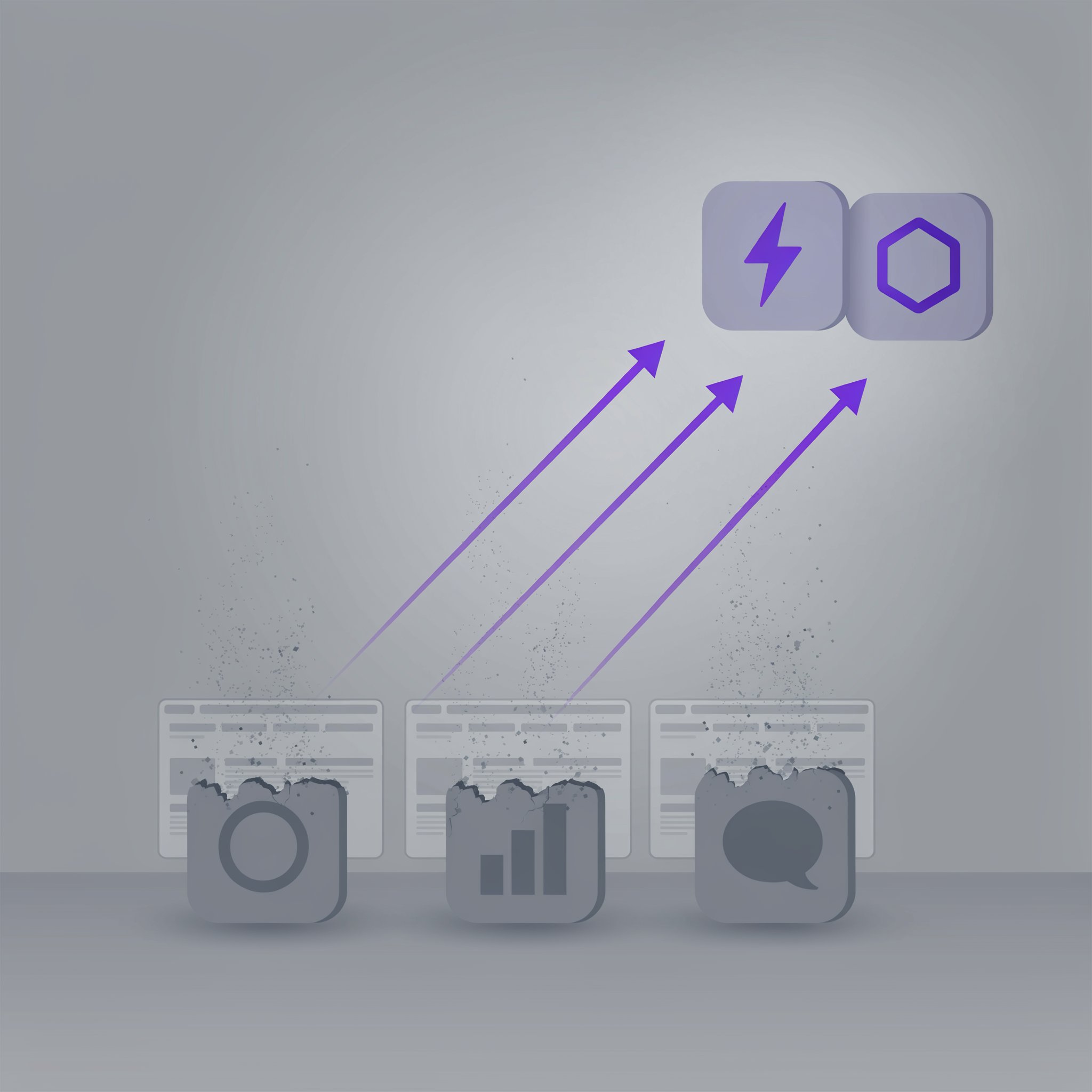
The AI Tools That Died in 2026 (and What Replaced Them)
Sora's app, ChatGPT Atlas, and the workflow platform Relay.app all shut down this year — two of them with no public reason given at all. Verified shutdown dates, straight from each vendor's own notice, and where their users actually went next.
📋 Table of Contents
Two of the five products in this roundup shut down without their maker ever explaining why. That's not a conspiracy — it's just how it works now. A company can rack up a paying user base, get written up in "best AI tools" roundups (including some of ours), and still post a two-paragraph farewell notice eight months later with no post-mortem attached. If you built a workflow on any of these, the reason mattered less than the deadline did.
This roundup covers five real, dated shutdowns from 2026 — not rumors, not "may be discontinued" speculation. Each entry includes the vendor's own announced date, what the company said (or didn't say) about why, and where documented user migration actually went. Two of these tools already have a full ToolRadar postmortem of their own, linked below instead of repeated here.
The Five Cases
Sora (OpenAI) — the video app that outgrew its own compute budget
OpenAI's own help center confirms the Sora web and app experiences were discontinued on April 26, 2026, with the API following on September 24, 2026. Sora's generation features live on inside ChatGPT Images, and the standalone video-generation space it briefly dominated is now split between Google's Veo, Kling, and Runway. If you reviewed Sora with us earlier this year expecting it to still be live, this is the update: it isn't, as a standalone product.
ChatGPT Atlas — the shortest-lived major AI browser
OpenAI announced on July 9, 2026 that its standalone macOS browser would stop working on August 9 — about 9.5 months after its October 2025 launch. The company folded Atlas's page-aware assistant and agent mode into the main ChatGPT desktop app and a Chrome extension instead of continuing it as a separate browser. Users who wanted a dedicated AI-first browser instead of an extension moved largely to Perplexity's Comet, with Dia, Brave, and Sigma Browser also picking up share.
Relay.app — the one that died with no reason given
Relay.app, a no-code AI workflow automation platform benchmarked directly against Zapier, Make, and n8n, told customers on July 16, 2026 that it was shutting down — free accounts closed August 15, paid accounts followed September 14. The announcement gave no cause. What's publicly known: founder Jacob Bank and several staff joined Google's Chrome team days later, though Google has not confirmed acquiring the product itself. Documented alternatives for displaced users include Zapier, Make, and n8n for general automation, and Gumloop for AI-specific workflow building.
DALL-E (inside ChatGPT) — retired in two stages
OpenAI shut down the standalone dall-e-2 and dall-e-3 API models on May 12, 2026, then retired the DALL-E tool inside ChatGPT itself on August 30, 2026. Image generation didn't disappear from the product — it moved to ChatGPT Images, built on OpenAI's newer gpt-image-2 model, available on every ChatGPT tier including Free.
Phind — already covered in full
We wrote a dedicated postmortem on Phind's shutdown earlier this year, so we won't repeat it here — see the link in Related Reviews below for the full story and where its developer-search users migrated.
Shutdown Dates & Replacements
| Tool | What It Was | Shutdown Date | Where Users Went |
|---|---|---|---|
| Sora (app/web) | AI video generation app | Apr 26, 2026 (API: Sep 24) | ChatGPT Images, Veo, Kling, Runway |
| ChatGPT Atlas | Standalone AI browser | Aug 9, 2026 | ChatGPT desktop app, Perplexity Comet, Dia |
| Relay.app | No-code AI workflow automation | Aug 15 / Sep 14, 2026 | Zapier, Make, n8n, Gumloop |
| DALL-E (in ChatGPT) | Built-in image generation | Aug 30, 2026 (API: May 12) | ChatGPT Images (gpt-image-2) |
| Phind | AI developer search engine | See full postmortem | Covered in linked article |
Who This Affects Most
Hit hardest: Teams that wired a discontinued tool deep into a daily workflow — Relay.app users with client-facing automations, or Atlas users who leaned on browser memory and saved agent sessions with no export path for open tabs or logins.
Barely affected: Casual users who tried a tool once or twice and never built anything permanent around it — for them, a shutdown notice is a mild inconvenience, not a scramble.
Warning Signs vs. Safe Bets
⚠️ Signs a tool might be next
No clear path to profitability beyond a single large funding round, a product that's a thin wrapper around a foundation model's own new feature, or a company that goes quiet on updates for months before an announcement.
✅ Signs a tool is a safer long-term bet
A defensible niche the big labs are unlikely to build in-house, real paying enterprise customers rather than just free-tier volume, and a track record of shipping steady updates rather than one big launch followed by silence.
Expert Editorial Opinion
The pattern across these five cases isn't "bad products." It's misplaced position in the stack.
Sora and DALL-E didn't fail — their capabilities live on, just absorbed into ChatGPT itself rather than kept as separate products. That's a consolidation story, not a failure story: OpenAI decided a standalone video app and a standalone image tool were worth less than the same features folded into its main assistant. Atlas is a variation on the same theme — a genuinely capable browser that lost to the gravitational pull of where users already were, sitting inside Chrome rather than switching away from it.
Relay.app is the harder case, because it's the one where "why" was never answered. A product with real paying customers, benchmarked seriously against Zapier and n8n, closed with a two-sentence notice and no acquisition announcement — just a founder who happened to land at Google days later. That gap between what got shipped and what got explained should bother anyone building a business process on top of a venture-funded tool: the company owes you uptime until the day they don't, and there's rarely a contractual guarantee that "don't" comes with much warning.
Here's the uncomfortable read for anyone shopping for a new AI tool right now: virality and funding rounds are not the signal to watch. A tool surviving eighteen months with a boring, unglamorous niche the foundation-model companies have no reason to build in-house is a better bet than a tool that launched to fanfare solving a problem OpenAI, Google, or Anthropic could fold into their own product with one feature update.
None of that means avoid new AI tools — it means budget for the possibility that any given one won't be there in a year, and don't build anything you can't export.
Final Verdict
Two of these five deaths were consolidation, not failure — Sora and DALL-E's capabilities moved inside ChatGPT rather than disappearing. Atlas lost a genuine feature fight to platform gravity. Relay.app is the real cautionary tale: a working product with paying customers, gone with no stated reason. The practical lesson holds across all five — treat every AI subscription as rented, not owned, and know your export options before you need them, not after.
Could you export everything today?
Pick the AI tool your work would suffer most without, and check right now whether it has a real data-export option. If you're not sure, that uncertainty is the actual risk — not the tool itself.
❓ Frequently Asked Questions
🔗 Related ToolRadar Reviews
Official sources: OpenAI on the Atlas shutdown · Relay.app's shutdown notice
Comments
Post a Comment