


The AI Code Reviewer That Only Charges for Developers Who Actually Open Pull Requests
CodeRabbit Review 2026: connected to more than 2 million repositories and over 13 million pull requests reviewed, CodeRabbit bills per PR author rather than per seat — and just renamed its entire pricing lineup.
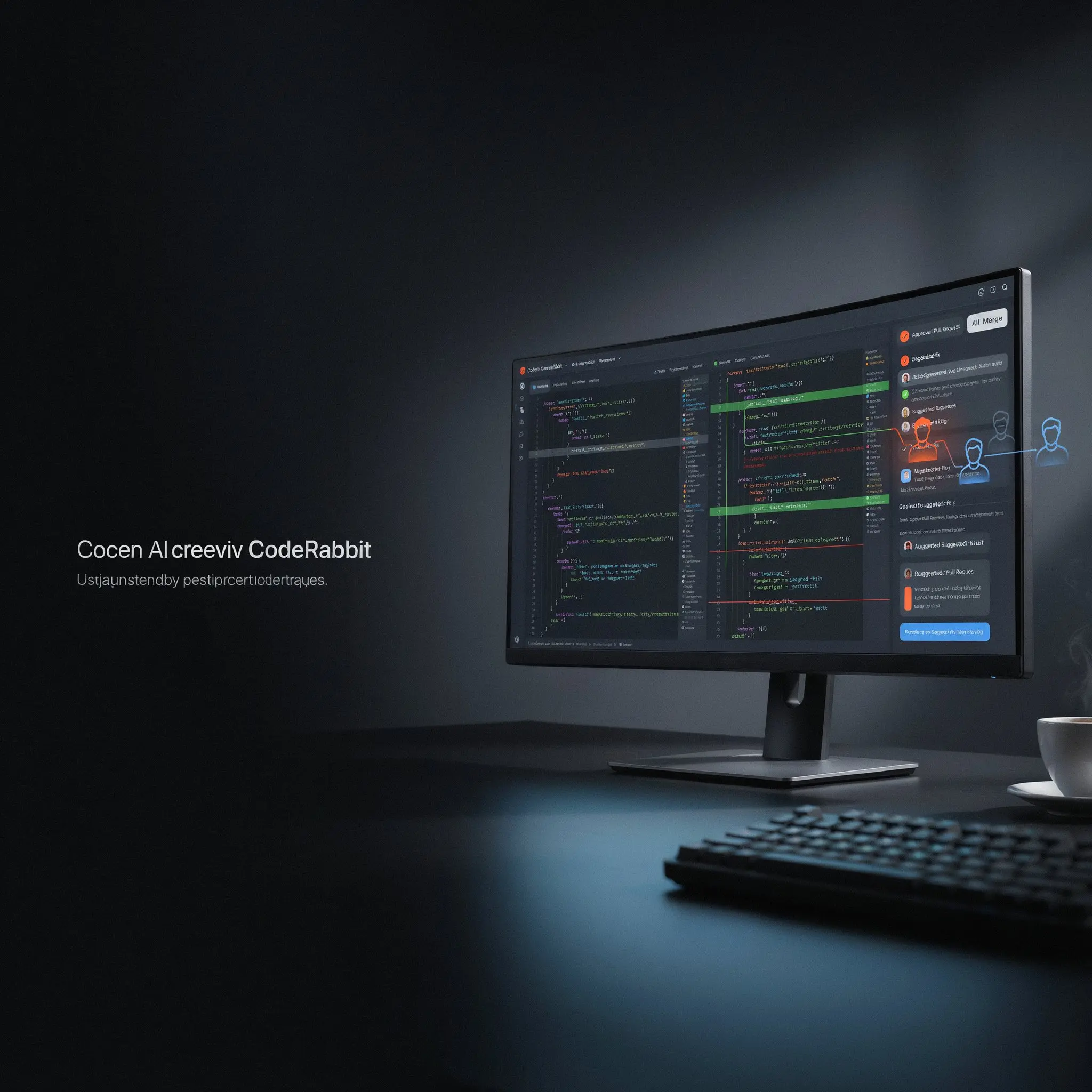
CodeRabbit installs on a GitHub or GitLab repository in two clicks and starts leaving line-by-line comments, PR summaries, and release-note drafts on every new pull request — the pitch is senior-engineer-quality review feedback at bot speed, without a human reviewer's queue delaying a merge. It's become, by connected-repository count, one of the most widely installed tools in this category: more than 2 million repositories connected and over 13 million pull requests reviewed as of mid-2026.
What's worth knowing before checking pricing is that CodeRabbit quietly renamed its entire plan lineup at some point in 2026. If you've seen "Pro" or "Pro Plus" mentioned in an older article or a colleague's Slack message, those names no longer appear on the current pricing page — the underlying plans and prices carried over, but the labels changed, and this review uses the current names throughout.
Features
Line-by-line AI review
Automated comments on every pull request covering bugs, style, and design concerns, plus one-click fixes that apply a suggested change directly rather than just describing it.
PR summaries & release notes
Auto-generated high-level summaries of what changed and why, plus draft release notes pulled from merged PR history — reducing the manual writeup work around every release.
CLI and coding-agent integration
A CLI tool that runs the same analysis locally before a push, designed to integrate with AI coding agents like Claude Code, Cursor CLI, and Gemini so code gets reviewed before it ever reaches a PR.
Security scanning
AI-native scanning that traces data flow across a codebase to surface exploitable vulnerabilities, available as continuous monitoring on higher-tier plans or as a separate usage-based full-codebase scan.
A newer addition, CodeRabbit Agent, runs coding tasks in the cloud and works inside Slack and custom automations, billed separately by the minute rather than bundled into the per-developer plan price.
Pricing (After the 2026 Rename)
| Plan | Price | Includes |
|---|---|---|
| Free | $0, forever | Unlimited reviews on public repositories, no credit card required |
| Essentials (formerly Pro) | $30/dev/mo, or $24/dev/mo billed annually | PR + CLI reviews, one-click fixes, learnings, coding-agent loops, built-in pre-merge checks |
| Team (formerly Pro Plus) | $60/dev/mo, or $48/dev/mo billed annually | Everything in Essentials, plus Triage, custom pre-merge checks, unit-test generation, merge-conflict resolution, issue planning |
| Advanced / Enterprise | Custom, contact sales | Continuous security monitoring, SSO, audit logging, self-hosting option |
The billing model is the detail worth understanding before comparing sticker prices: CodeRabbit charges only for developers who actually open pull requests, not for every person with repository access. On a paid plan, CodeRabbit Agent is billed separately at $0.40 per agent-minute for cloud coding tasks, Slack usage, and automations, on top of the base per-developer price.
Pros & Cons
CodeRabbit vs GitHub Copilot vs Qodo vs Sourcery
| Tool | Pricing model | Best for |
|---|---|---|
| CodeRabbit | Free; $24-$48/dev/mo annual | Teams wanting dedicated, cross-platform AI code review |
| GitHub Copilot | Bundled with Copilot plans; consumes Actions minutes for private repos since June 2026 | Teams already paying for Copilot who want review as an add-on, not a dedicated tool |
| Qodo (formerly Codium AI) | $0-$45/user/month, base plus metered credits | Teams wanting AI review alongside AI-assisted test generation |
| Sourcery | Free for open source; paid for private repos | Python-focused teams wanting lighter-weight automated refactoring suggestions |
The clearest distinction is between dedicated review tools and bundled features. CodeRabbit and Qodo are built specifically around code review as the core product, while GitHub Copilot's review capability is one feature inside a much broader coding-assistant subscription — a reasonable choice if a team is already paying for Copilot anyway, but a less focused tool if code review specifically is the priority. Sourcery stays narrower and lighter-weight, a fit for smaller Python-heavy teams that don't need CodeRabbit's full cross-platform, multi-language feature set.
Who It's For
Choose CodeRabbit if: your team wants a dedicated AI reviewer on every pull request across GitHub, GitLab, Azure DevOps, or Bitbucket, and you'd rather pay only for developers actively opening PRs than for a flat per-seat license covering your whole repository access list.
Look elsewhere if: you're already paying for GitHub Copilot and want review folded into that existing subscription, you need AI-assisted test generation bundled with review (Qodo), or your team is small, Python-focused, and doesn't need CodeRabbit's broader multi-language, multi-platform scope.
Expert Editorial Opinion
The per-PR-author billing model is the most genuinely interesting decision CodeRabbit has made, and it's easy to undersell in a features list. Most SaaS tools price by seat count regardless of actual usage; CodeRabbit's model means a repository with thirty people who have read access but only ten who actually open pull requests pays for ten, not thirty. That's a real, quantifiable difference in total cost, not just a marketing angle.
The 2026 rename is a smaller story but a real one for anyone researching pricing right now. Essentials and Team are new labels on the same underlying Pro and Pro Plus plans at the same rates, which CodeRabbit states plainly in its own FAQ — but it means a meaningful share of what's currently indexed online about CodeRabbit's pricing uses outdated tier names, and at least one competitor comparison site found circulating online lists incorrect dollar figures alongside the correct rename information. Worth checking CodeRabbit's own pricing page directly rather than trusting the first comparison article that shows up in a search.
The genuinely open question is Advanced and Enterprise pricing, which remains quote-only. For a team evaluating whether continuous security monitoring is worth the jump from Team, that's a real information gap — reasonable for enterprise-tier features that vary by deployment scale, but still a point where a prospective buyer has to start a sales conversation before knowing the real number.
Final Verdict
CodeRabbit earns a strong score on the strength of a genuinely fair billing model and real, verified adoption scale — over 2 million connected repositories and 13 million reviewed pull requests isn't a marketing number, it's a usage pattern. The deductions are narrow: a confusing mid-2026 tier rename that's scattered inconsistent pricing information across the web, and unpublished Advanced/Enterprise pricing that requires a sales call. For teams wanting dedicated, cross-platform AI code review with cost tied to actual contributor activity, it's a strong, well-adopted choice.
❓ Frequently Asked Questions
🔗 Related ToolRadar Reviews
Official app and current pricing: coderabbit.ai/pricing. Given the 2026 tier rename, verify current plan names and rates directly on this page rather than relying on older third-party comparisons, including some of the sources referenced in this review.

Comments
Post a Comment