


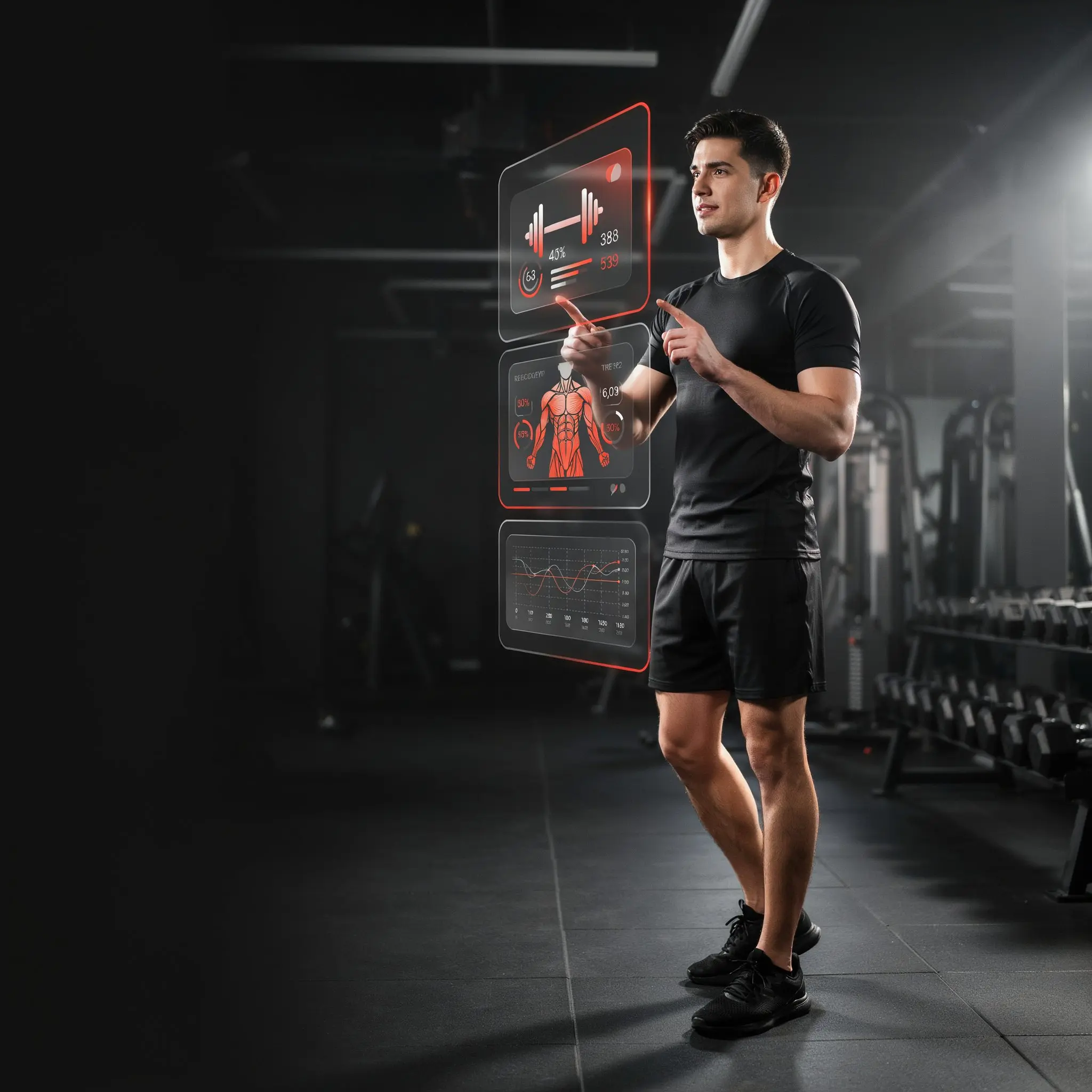
The AI Gym App That Rebuilds Your Next Workout Around What You Actually Did Last Time
Fitbod Review 2026: rather than handing out a fixed 8-week program, Fitbod recalculates your next session from your logged sets, estimated strength, and estimated muscle recovery — every single time you train.
Most workout apps fall into one of two categories: a static program you follow for 8 to 12 weeks regardless of how you're actually performing, or a template library you browse and pick from yourself. Fitbod sits in a third category — it builds one session at a time, and every workout you log becomes an input for the next one. That loop, more than the word "AI" on the App Store listing, is the actual product.
It's worth being precise about what kind of AI this is, since the term gets used loosely. Fitbod isn't a chatbot generating workout advice from a prompt the way ChatGPT would. According to the company's own September 2026 documentation, it runs on machine learning and an adaptive system it calls mStrength™, pulling from your training history, equipment, goals, and an estimated recovery score to select and adjust exercises — closer to an adaptive training engine than a conversational assistant.
How Fitbod Actually Builds a Workout
The build loop: Plan → Workout → Log → Adjust
Starting from your My Plan settings and training history, Fitbod selects exercises that fit your goal and available equipment, sizes the session to your time window, and sets suggested sets, reps, and weight. Every session you log feeds back into the next recommendation — the plan isn't fixed, it's continuously rebuilt.
Muscle recovery — an estimate, not a measurement
Each muscle group gets a recovery percentage from 0% (fatigued) to 100% (fully recovered), used to help prioritize which muscles the next workout should target. Fitbod is explicit that this is an estimate based on logged training data, not a physiological measurement — it doesn't know your real muscle state the way a lab test would. The company also notes recovery can take up to roughly a week depending on training intensity and the individual, and activity that happens outside the app may not automatically factor in unless it syncs through Apple Health or Health Connect.
Estimated Strength and progressive overload
Fitbod recalculates an Estimated Strength figure — its read on your current one-rep-max potential — from the sets, reps, and weight you actually log, then adjusts future weight recommendations accordingly rather than applying a fixed progression schedule to everyone. The company states this is an estimate, not a tested 1RM, and that Max Effort Days are its more accurate way to recalibrate. If you take time off, recommendations can step back down rather than assuming you're exactly where you left off.
Equipment-aware, with a 1,000+ exercise library
You tell Fitbod what equipment you have — a full commercial gym, a home setup with dumbbells and a bench, or nothing at all — and it builds around that rather than assuming universal gym access. The exercise library runs past 1,000 movements across strength, cardio, mobility, and bodyweight categories, each with instructional video.
Fitbod also uses what it describes as non-linear periodization — deliberately varying the training stimulus over time rather than repeating the same weight, reps, and volume every session — and the system adjusts based on your own overrides too: skip or swap an exercise, and that feedback can shape future recommendations rather than being ignored. You can also manually adjust a muscle group's recovery percentage yourself if you feel the estimate doesn't match how you actually feel, which keeps a human override in the loop rather than leaving every decision to the model.
Pricing
| Plan | Price | Notes |
|---|---|---|
| Monthly | $15.99/month | Billed monthly |
| Annual | $95.99/year | Works out to about $8/month, the cheaper option long-term |
| Family (Duo) | Annual, custom rate | 2 people, each with separate logs and recommendations |
| Family (up to 5) | Annual, custom rate | Up to 5 people, individual tracking per person |
Pricing checked September 2026, taken from Fitbod's own website. App Store and Google Play pricing can differ by region and platform, which isn't a contradiction — it's normal marketplace pricing variance rather than inconsistent information.
Getting Started
The initial setup asks for your goal, experience level, available equipment, and schedule — a few minutes of input before the first generated workout. Where the real learning curve sits is less about the interface and more about trusting the loop: the system only gets more accurate the more consistently you log, so the first couple of weeks are the least representative of what Fitbod eventually recommends once it has real performance data to work from. Someone who logs sporadically will get noticeably less precise recommendations than someone who logs every session.
Pros & Cons
How This Compares to Other Ways to Plan a Workout
| Method | How the next workout gets decided |
|---|---|
| Fixed PDF program | Predetermined for everyone, regardless of your actual performance |
| YouTube workout video | Generally the same routine for every viewer |
| A ChatGPT prompt | Depends entirely on what information you think to provide, with no persistent training log |
| Traditional tracking app | Templates plus manual logging, but the plan itself usually doesn't rebuild automatically |
| Fitbod | Continuously rebuilt from your logged performance, estimated recovery, equipment, and goal |
The point of this comparison isn't that Fitbod is objectively superior to every alternative — a fixed program from an experienced coach who's watching you train in person has context Fitbod simply doesn't have. Its defining difference is narrower and more concrete: how continuously it adapts the next workout to your actual logged training data, rather than to a template written before it ever saw you train.
Who It's For
Choose Fitbod if: you train with resistance regularly, want a program that responds to your actual performance rather than a fixed schedule, don't want to design every session yourself, and are consistent enough about logging to give the system real data to work from.
Look elsewhere if: you're mainly interested in yoga, running, or another non-resistance-training focus, you need sport-specific coaching, you're working through an injury or rehabilitation program, or you want a human trainer actively watching your form in real time. Fitbod is not a substitute for a doctor, physical therapist, or in-person coach, particularly around pain, injury, or diagnosed health conditions.
Expert Editorial Opinion
The most common failure mode in AI-fitness marketing is treating "adaptive" as a synonym for "accurate," and Fitbod's own documentation is worth crediting for not making that leap. Calling the recovery score an estimate rather than a measurement, and Estimated Strength a model output rather than a tested max, is a level of precision most consumer fitness apps skip in favor of a cleaner pitch.
What actually distinguishes Fitbod from a template library is the closed loop between logging and the next recommendation. A fixed program can't tell the difference between a user who's crushing every session and one who's quietly regressing; Fitbod's model, at least by its own description, narrows that gap by recalculating from what you actually did rather than what a program assumed you'd do. Whether that matters to a given person depends entirely on how consistently they log — the system's real limitation isn't the algorithm, it's that its intelligence is bounded by the data a user actually feeds it.
The honest caveat worth sitting with is what the model can't see: sleep quality, psychological stress, soreness that isn't logged, and any physical activity that happens outside the app and isn't synced through Apple Health or Health Connect. None of that makes the recovery model useless — it's a reasonable proxy built from real training data — but it's a proxy, not a sensor, and treating it as anything more precise than that would be the review overselling a product that's actually being fairly transparent about its own limits.
Final Verdict
Fitbod earns its score through a genuinely functional adaptive loop — exercise selection, sets, reps, and weight all respond to logged performance and estimated recovery, not just a template swapped in by a marketing team. The deductions reflect real, disclosed limitations rather than hidden ones: recovery and strength figures are estimates dependent on consistent logging, not physiological measurements, and the app isn't built for non-resistance training, rehabilitation, or anything requiring professional medical oversight. For a consistent lifter who wants a program that actually responds to their training, it's a well-built, honestly-documented tool.
❓ Frequently Asked Questions
🔗 Related ToolRadar Reviews
Official app and current pricing: fitbod.me. Verify current trial terms and Family plan pricing directly on the site or in your app store, since fitness-app pricing and trial offers change by platform and region.

Comments
Post a Comment