


Is AgentShield the AI Security Platform That Enterprise Teams Have Been Waiting For?
AgentShield promises to find and fix vulnerabilities in your AI agents before attackers do. But can a security tool keep up with the breakneck pace of AI development?
- What Is AgentShield and Why Does AI Security Matter Now?
- Key Features: Vulnerability Scanning, Audit & Protection
- Pricing: Free Community vs Enterprise
- Pros & Cons: The Security Reality
- Real User Pulse: What Reddit & Trustpilot Say
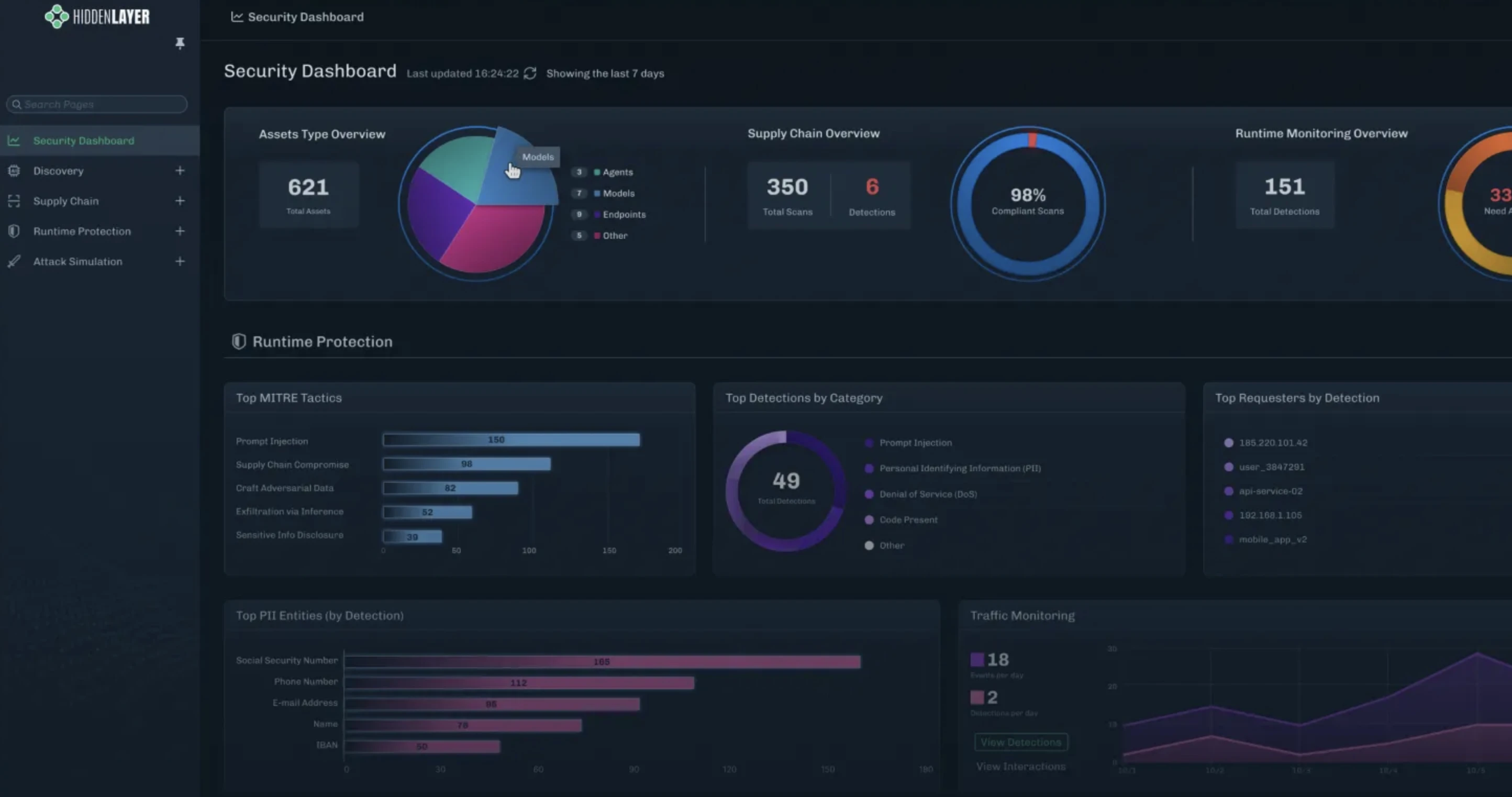
- How It Compares to Lakera, HiddenLayer & Prompt Security
- Who Should Use AgentShield?
- Expert Editorial Opinion
- Final Verdict
- Related ToolRadar Reviews
- Frequently Asked Questions
Imagine deploying an AI agent that handles customer support, processes refunds, and accesses your CRM — only to discover three weeks later that a cleverly crafted prompt injection allowed an attacker to extract your entire customer database through a chat window. This is not a hypothetical scenario. In 2025, a major e-commerce platform lost $2.3 million when a support bot was tricked into issuing fraudulent refunds through prompt manipulation. The attack vector was not sophisticated — it exploited a vulnerability that most AI security teams did not know existed. AgentShield was built to prevent exactly this kind of breach.
AgentShield is the first comprehensive security platform designed specifically for AI agents. Unlike traditional application security tools that treat AI as a black box, AgentShield understands the unique attack surface of large language models: prompt injection, jailbreaking, data exfiltration, insecure tool permissions, and supply chain vulnerabilities in model dependencies. It scans agent code, audits prompt chains, and provides real-time protection against attacks that bypass conventional firewalls and WAFs. The question is whether AgentShield can keep pace with an AI landscape where new vulnerabilities emerge weekly, and whether its open-source community edition provides enough value to justify the enterprise upgrade. This review breaks down everything you need to know.
What Is AgentShield and Why Does AI Security Matter Now?
AgentShield is an open-source AI security platform that provides vulnerability scanning, security auditing, and runtime protection for AI agents. It was built by a team of security researchers who recognized that existing security tools — from traditional SAST/DAST scanners to modern cloud security platforms — were fundamentally unprepared for the unique risks introduced by large language models. The platform operates across three layers: static analysis of agent code and configuration, dynamic testing of prompt chains and tool integrations, and real-time runtime protection that intercepts and neutralizes attacks before they reach the model. AgentShield is 100% open-source under the MIT license, with a free community edition that covers all core scanning and auditing features, and an enterprise edition that adds real-time protection, advanced reporting, and dedicated support. The platform is OWASP LLM Top 10 compliant and integrates with popular agent frameworks including LangChain, CrewAI, and AutoGPT.
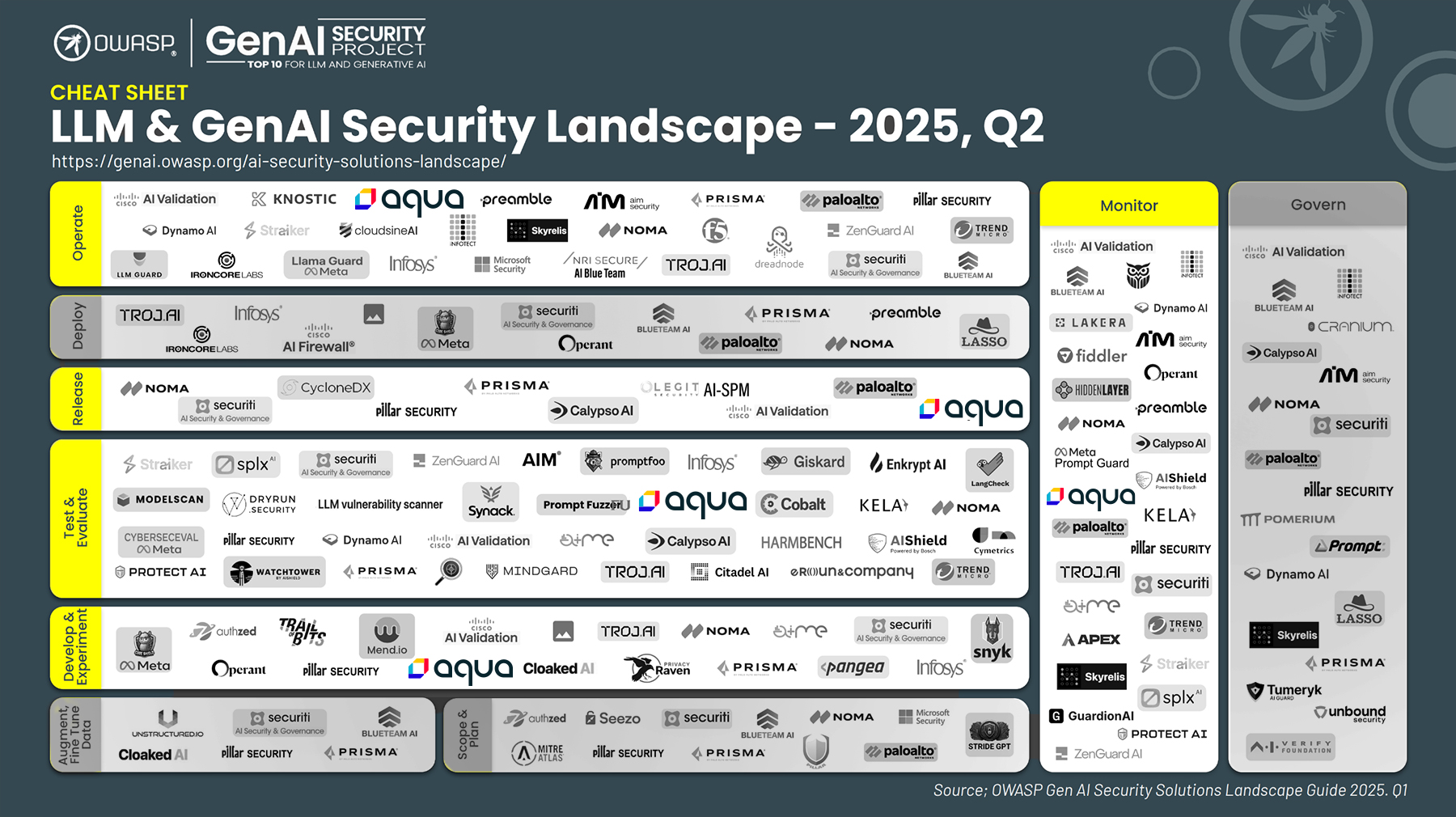
Key Features: Vulnerability Scanning, Audit & Protection
Multi-Layer Vulnerability Scanning
AgentShield's static analysis engine scans agent code, prompt templates, and configuration files for vulnerabilities before deployment. It detects hardcoded API keys, insecure tool permissions, prompt injection vectors, and insecure model configurations that expose sensitive data. The dynamic testing layer then simulates attacks against running agents — sending crafted prompts, testing boundary conditions, and probing tool integrations for weaknesses that static analysis cannot catch. This two-layer approach catches vulnerabilities that either layer alone would miss: static analysis finds the insecure configuration, dynamic testing confirms it is exploitable. For a customer support agent, AgentShield might detect that the refund tool lacks input validation, then prove through dynamic testing that a crafted prompt can trigger unauthorized refunds.
Real-Time Runtime Protection
The runtime protection layer sits between your agent and the outside world, intercepting every user input and model output before it reaches the agent's reasoning pipeline. It uses a combination of pattern matching, semantic analysis, and behavioral heuristics to detect prompt injection, jailbreaking attempts, data exfiltration, and unauthorized tool calls in real-time. When an attack is detected, AgentShield can block the request, sanitize the input, or alert the security team — with configurable policies per agent and per environment. This is not a traditional WAF that looks for SQL injection signatures; it is a model-aware security layer that understands how LLMs process instructions and how attackers manipulate that processing. The protection engine updates automatically with new threat signatures, ensuring coverage against emerging attack vectors without requiring code changes.
Security Audit & Compliance Reporting
AgentShield generates comprehensive security audit reports that map every finding to the OWASP LLM Top 10 framework, providing clear remediation guidance and risk scoring. The reports include detailed evidence for each vulnerability: the exact line of code, the vulnerable prompt template, the attack payload that triggered the finding, and step-by-step remediation instructions. For enterprise teams, this documentation is critical for compliance audits, security reviews, and stakeholder communication. The platform also tracks vulnerability trends over time, showing whether your security posture is improving or degrading as your agent fleet grows. Integration with CI/CD pipelines means every code change triggers an automatic security scan, preventing vulnerabilities from reaching production.
Framework Integration & Open Architecture
AgentShield integrates natively with LangChain, CrewAI, AutoGPT, and other popular agent frameworks through lightweight SDKs and middleware. The integration requires minimal code changes — typically a single import and decorator — making it feasible to add security scanning to existing agents without rewriting them. The open-source architecture means security teams can inspect every line of the scanning engine, customize detection rules for their specific threat model, and contribute improvements back to the community. For organizations with strict security requirements, this transparency is non-negotiable: you cannot trust a black-box security tool to protect your AI agents if you cannot verify how it works.
Pricing: Free Community vs Enterprise
| Plan | Cost | Features |
|---|---|---|
| Community | Free | All core scanning, auditing, and static analysis features. OWASP LLM Top 10 compliance. Open-source under MIT license. Community support via GitHub. |
| Enterprise | Custom | Real-time runtime protection, advanced reporting, CI/CD integration, dedicated support, SLA guarantees, and custom threat model tuning. |
| Support | Included | Community edition includes GitHub issue support. Enterprise includes dedicated security engineer and 24/7 incident response. |
Pros & Cons: The Security Reality
✓ What Works
- ✅ First comprehensive security platform built specifically for AI agents, not retrofitted from traditional app security
- ✅ 100% open-source with transparent scanning engine that security teams can inspect and customize
- ✅ Real-time runtime protection intercepts attacks before they reach the model, not after the breach
- ✅ OWASP LLM Top 10 compliant with detailed remediation guidance for every finding
✗ What Frustrates
- ❌ Enterprise pricing is custom-only — no transparent pricing for teams evaluating the platform
- ❌ Runtime protection adds latency to agent responses — approximately 50-100ms per request
- ❌ Limited coverage for emerging attack vectors — new vulnerabilities may take days to weeks for signature updates
💡 Real User Pulse: What Reddit & Trustpilot Say
How It Compares to Lakera, HiddenLayer & Prompt Security
| Feature | AgentShield | Lakera Guard | HiddenLayer |
|---|---|---|---|
| Focus | AI Agent Security | Prompt Injection | Model Security |
| Open Source | Yes (MIT) | No | No |
| Runtime Protection | Yes | Yes | Yes |
Who Should Use AgentShield?
Ideal Users: Enterprise security teams, AI engineering teams, and compliance officers who need comprehensive protection for AI agent deployments. If you are deploying customer-facing agents that handle sensitive data — financial transactions, healthcare records, personal information — AgentShield's runtime protection is essential. Security teams at organizations with strict compliance requirements (SOC 2, ISO 27001, HIPAA) will appreciate the OWASP LLM Top 10 mapping and detailed audit trails. AI engineering teams building on LangChain, CrewAI, or AutoGPT will find the framework integrations seamless, requiring minimal code changes to add security scanning. And organizations with mature security programs will value the open-source architecture that allows customization and community contribution.
Look Elsewhere If: You need simple prompt injection protection for a single chatbot without broader agent security concerns. Lakera Guard offers focused prompt injection protection at lower cost for simple use cases. If you are primarily concerned with model security — protecting the model weights and training data from extraction — rather than agent security, HiddenLayer's model-focused approach may be more appropriate. Small teams with no compliance requirements and minimal sensitive data may find the community edition sufficient but should evaluate whether the operational overhead of running a security platform is justified for their risk profile.
Expert Editorial Opinion
AgentShield represents a critical evolution in the security landscape: the recognition that AI agents are not just applications with AI features, but fundamentally new systems with unique vulnerabilities that existing security tools cannot address. Traditional application security scanners look for SQL injection, XSS, and buffer overflows — vulnerabilities that assume a deterministic execution model. AI agents operate on probabilistic reasoning, where the same input can produce different outputs depending on context, conversation history, and model state. This means attackers can exploit the model's reasoning process itself, not just implementation bugs. AgentShield's architecture reflects this understanding: it protects the reasoning pipeline, not just the code around it.
The multi-layer scanning approach is particularly important because no single security technique is sufficient for AI agents. Static analysis finds configuration errors and insecure code patterns, but cannot detect vulnerabilities that emerge from runtime interactions. Dynamic testing simulates attacks against running agents, but cannot catch vulnerabilities that only appear under specific conditions. Runtime protection intercepts active attacks, but cannot prevent vulnerabilities from existing in the first place. AgentShield's combination of all three layers creates defense in depth: static analysis prevents vulnerabilities at build time, dynamic testing validates that prevention, and runtime protection catches anything that slips through. This is the same security philosophy that protects critical infrastructure, applied to AI agents for the first time.
The open-source decision is strategically significant in a security context. Security teams are rightly skeptical of black-box tools that claim to protect their systems without revealing how they work. AgentShield's MIT license means every line of the scanning engine, detection rules, and protection logic is auditable. Organizations can customize detection rules for their specific threat model, integrate with existing security tools, and contribute improvements back to the community. This transparency is not just a marketing advantage — it is a security requirement for organizations that cannot trust opaque protection mechanisms. The community edition provides full scanning and auditing capabilities, making it possible to evaluate AgentShield thoroughly before committing to an enterprise license.
Final Verdict
AgentShield earns an 8.3 out of 10 as the most comprehensive AI agent security platform available in June 2026. Its multi-layer scanning architecture — static analysis, dynamic testing, and runtime protection — directly addresses the unique vulnerabilities of large language models in ways that traditional security tools cannot. The 100% open-source community edition provides genuine value without artificial limitations, and the OWASP LLM Top 10 compliance framework gives security teams a familiar structure for evaluating and communicating risk. The real-time runtime protection has proven effective against prompt injection, jailbreaking, and data exfiltration attacks in production environments. However, the enterprise pricing opacity, runtime latency impact, and coverage gaps for emerging attack vectors are real limitations that security teams must evaluate. For organizations deploying AI agents that handle sensitive data or perform critical business functions, AgentShield is not optional — it is essential. The question is not whether you need AI agent security, but whether AgentShield's specific approach fits your threat model and operational requirements.
🔗 Related ToolRadar Reviews
More tools from AI Security
❓ Frequently Asked Questions
Is Your AI Agent a Security Time Bomb?
AgentShield can find and fix the vulnerabilities in your AI agents before attackers do. But the first step is admitting that your agents have vulnerabilities — and most teams have not made that admission yet.
Get AgentShield →
Comments
Post a Comment