


LangWatch Review 2026: The Open-Source Platform Turning LLM Traces Into Agent Test Suites
Built in Amsterdam with MIT licensing, LangWatch combines OpenTelemetry tracing, AI Gateway governance, and Scenario-based agent simulations — all for €29 per seat. Is it the LLMOps platform teams have been waiting for?
- What Is LangWatch and Why Does It Matter in 2026?
- Core Features: From Traces to Agent Simulations
- Pricing Breakdown: The €29 Reality Check
- Pros and Cons: Where LangWatch Wins and Where It Stumbles
- Community Feedback: What Real Users Say
- LangWatch vs LangSmith vs Langfuse: The 2026 Showdown
- Who Should Use LangWatch (and Who Should Skip It)
- Expert Editorial Opinion
- Final Verdict
- Related ToolRadar Reviews
- Frequently Asked Questions
Every AI team that has shipped an LLM application to production knows the same sequence of events. The demo works beautifully. The internal tests pass. Then real users arrive — and the agent starts making inexplicable tool calls, hallucinating on edge-case queries, and burning through API credits on infinite loops. The problem is not the model. The problem is that most teams ship without systematic pre-production testing, and the observability tools they adopt afterward only tell them what went wrong, not how to prevent it from happening again.
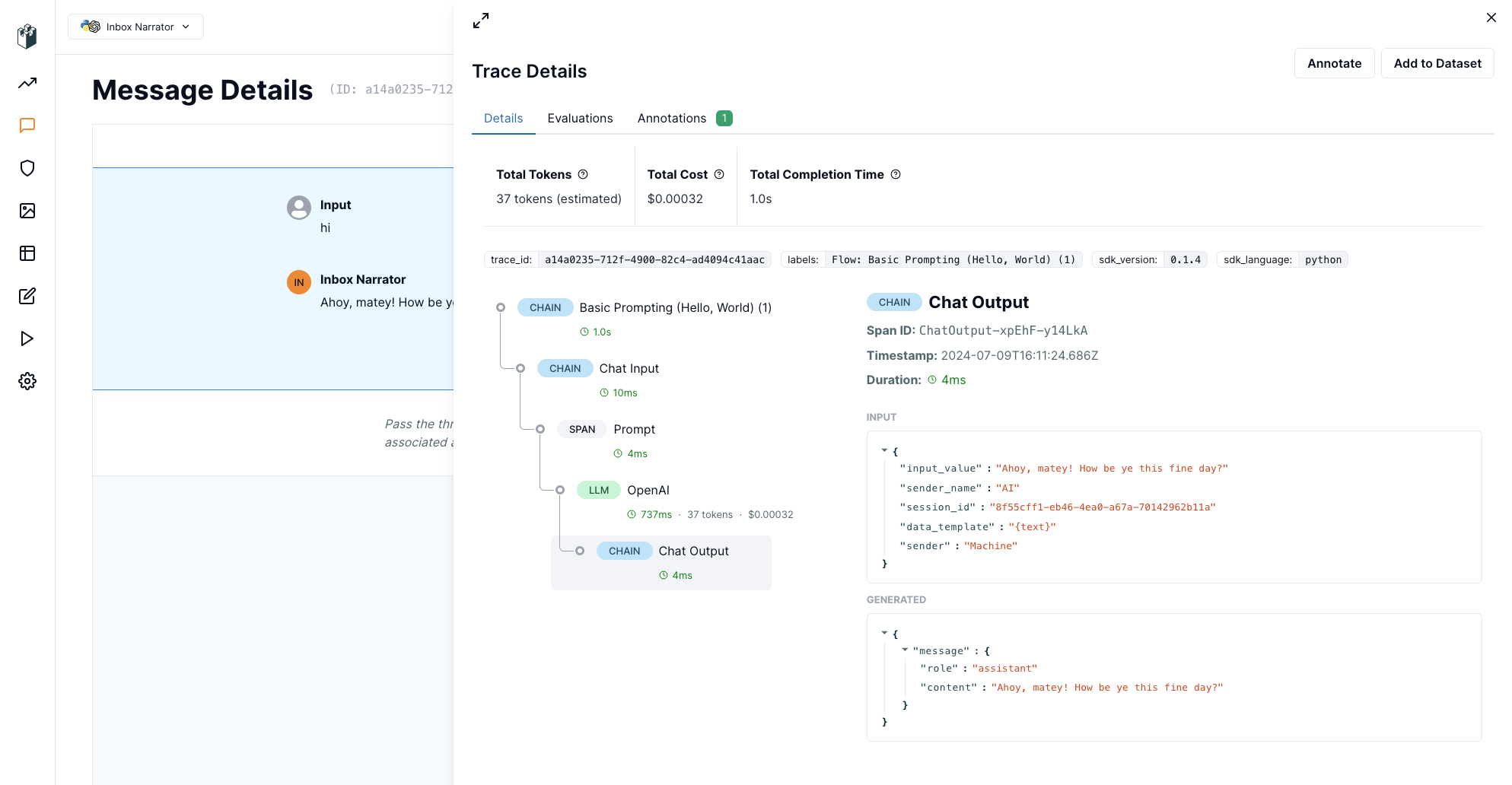
LangWatch, built in Amsterdam and released under the MIT license, is betting that the solution is not better dashboards — it is better testing. The platform closes the loop from production trace to regression test: you capture a failure, turn it into a dataset, run an evaluation, optimize the prompt with DSPy, then re-test — all inside one platform instead of stitching together three different tools. Its signature feature, Agent Simulations (codenamed Scenario), runs thousands of synthetic multi-turn conversations across scenarios, languages, and edge cases before an agent ever reaches a real user. Updated July 2026, this review examines whether LangWatch's simulation-first approach justifies its seat-based pricing against the usage-based models of Langfuse and the LangChain-centric ecosystem of LangSmith.
What Is LangWatch and Why Does It Matter in 2026?
LangWatch is an all-in-one open-source platform for LLM observability, evaluation, and AI agent testing. Founded in Amsterdam, the Netherlands, it is designed for teams that need regression testing, simulations, and production observability without building custom tooling. The platform is built on a microservices architecture comprising the LangWatch App (UI), LangEvals service for running built-in evaluators, LangWatch NLP for workflows and custom evaluators, background Workers for trace processing, Redis for queue coordination, Elasticsearch/OpenSearch for trace storage, and PostgreSQL for metadata. This is not a lightweight logging wrapper — it is an enterprise-ready system that can handle millions of traces at scale.
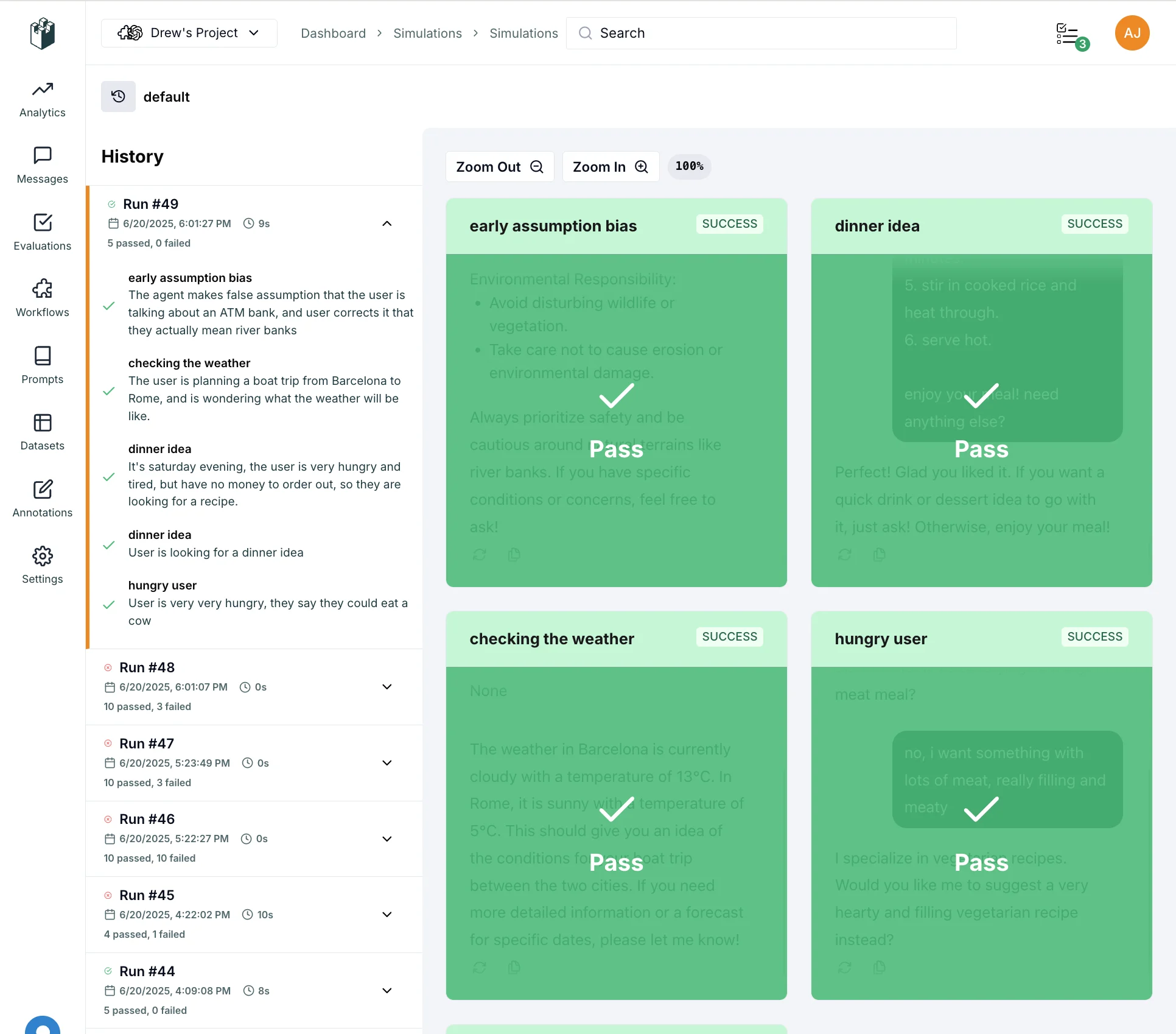
The platform's philosophy is explicitly team-centric. For developers, it offers detailed traces showing exactly what happened in each LLM call, enabling rapid root cause analysis. For domain experts, non-technical reviewers can annotate messages and provide quality feedback through an intuitive UI, bridging the gap with engineering. For business teams, custom dashboards track user analytics, conversation metrics, and costs, enabling data-driven decisions about AI investments. This three-role design is intentional — LangWatch recognizes that shipping reliable AI agents requires collaboration across technical and non-technical stakeholders, not just engineering visibility.
What makes LangWatch particularly relevant in 2026 is the industry's shift toward agentic AI. Single-turn LLM completions are increasingly rare; most production systems now involve multi-step agents that use tools, maintain state across conversations, and handle unpredictable user inputs. Traditional observability tools trace what happened but cannot simulate what might happen. LangWatch's Scenario framework fills this gap by running realistic multi-turn simulations against the full agent stack — tools, state, user simulator, and judge — pinpointing exactly where and why an agent breaks down to each individual decision. In a world where "vibes-based" agent development is no longer acceptable, this capability is becoming non-negotiable for teams shipping autonomous systems.
Core Features: From Traces to Agent Simulations
Agent Simulations (Scenario)
Run thousands of synthetic multi-turn conversations across scenarios, languages, and edge cases before agents reach production. Test the full stack — tools, state, user simulator, and judge — to pinpoint exactly where and why your agent breaks down to each decision.
Closed-Loop Optimization
Trace → dataset → evaluate → optimize prompts/models with DSPy → re-test. No glue code, no tool sprawl. Production failures become regression tests automatically, creating a continuous improvement cycle where real-world data drives systematic agent refinement.
AI Gateway for Governance
OpenAI/Anthropic-compatible proxy with virtual keys, hierarchical budgets, inline guardrails, and automatic fallback across providers. Only ~700ns hot-path overhead. Ships as a separate Go binary with Helm sub-chart for independent deployment.
OpenTelemetry-Native Tracing
Framework- and LLM-provider agnostic by design. Works with any OTel-compatible stack. Integrates with LangChain, LangGraph, Vercel AI SDK, Mastra, CrewAI, Google ADK, AWS Bedrock, OpenAI Agents SDK, LiteLLM, DSPy, and Pydantic AI out of the box.
Collaborative Workflows
Domain experts label edge cases with annotations and queues. Prompts are versioned in Git via GitHub integration and linked directly to traces. Non-technical reviewers can run structured tests without code changes, bridging the engineering-domain gap.
LangWatch Skills & MCP
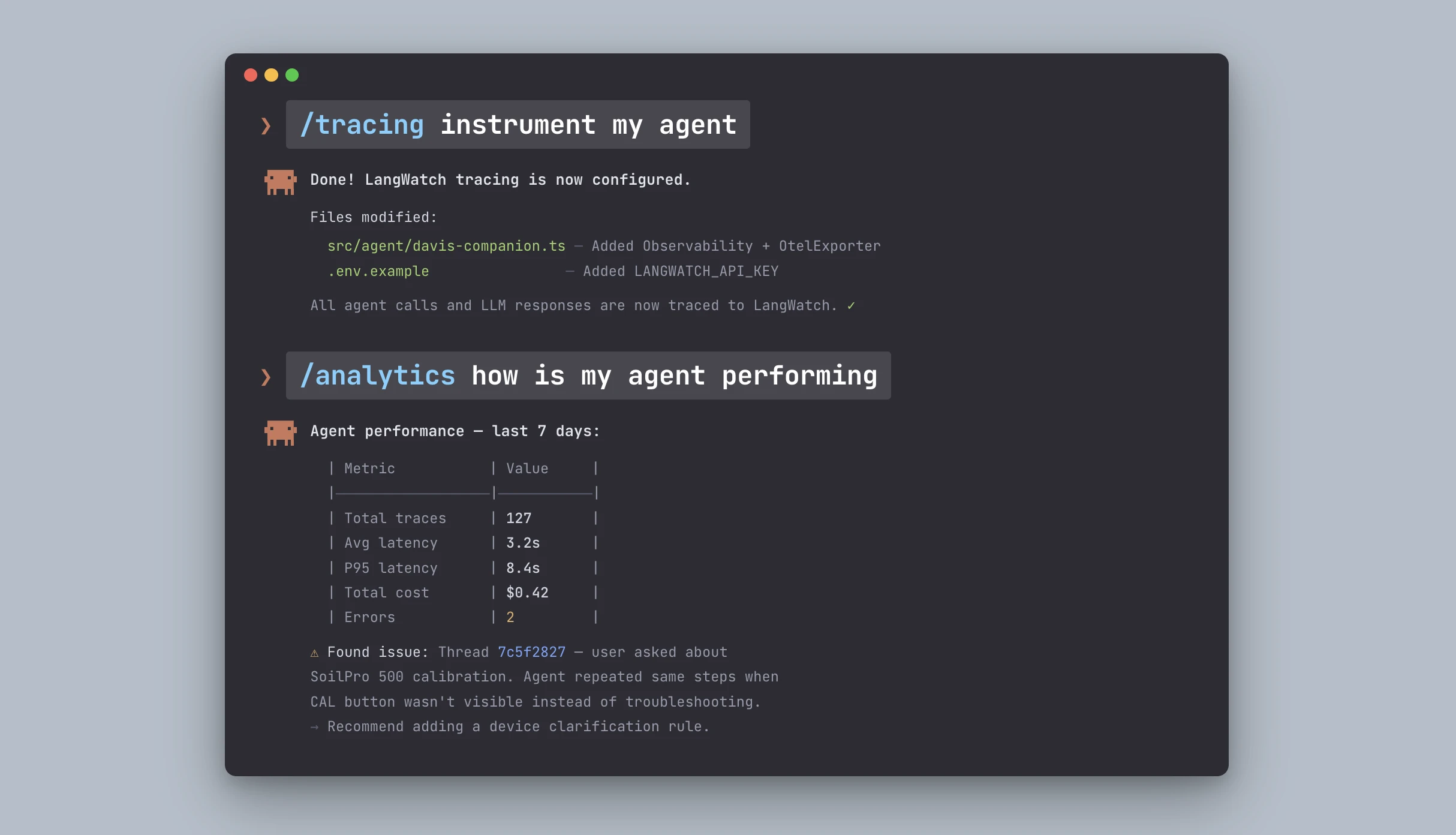
LangWatch Skills lets your coding agent instrument your LLM agent, check production performance, and run tests automatically. The MCP server enables building, versioning, and running evaluations directly from Claude, Cursor, or Copilot without leaving your editor.
Pricing Breakdown: The €29 Reality Check
| Plan | Price | What's Included |
|---|---|---|
| Developer (Free) | €0 | Core observability, tracing, basic evaluations, self-hosted option, unlimited lite seats for stakeholders |
| Team | €29 / seat / month | Unlimited evaluations, DSPy optimization, agent simulations, AI Gateway, 200K free events/month, unlimited lite seats |
| Enterprise | Custom | SSO, advanced RBAC, dedicated support, on-prem/VPC/air-gapped deployment, ISO 27001/SOC2 certified, AWS Marketplace billing |
| Overages | $1 / 100K events | Billed per additional 100,000 events beyond the 200K monthly free allocation on Team plans |
LangWatch's pricing model underwent a significant revision in early 2026, shifting from usage-heavy billing to a per-seat model designed to align costs with team growth rather than API volume. At €29 per seat per month with unlimited lite seats for stakeholders, the Team plan includes unlimited evaluations, DSPy optimization, agent simulations, and the AI Gateway, plus 200,000 free events monthly. Additional events cost $1 per 100,000 — a rate that undercuts most competitors for high-volume applications.
The free Developer tier is genuinely usable: it includes core observability, tracing, basic evaluations, and the self-hosted option with no feature gating. This is not a crippled trial — it is a production-viable starting point for small teams and solo developers. The Enterprise tier adds SSO, advanced role-based access control, dedicated support, and deployment options including on-premise, VPC, and air-gapped environments, all backed by ISO 27001 and SOC 2 certification. For teams handling sensitive data or operating under strict compliance regimes, the self-hosting path is free and includes full feature parity with the cloud version, a significant advantage over LangSmith's enterprise-locked self-hosting option.
Try LangWatch Free →Pros and Cons: Where LangWatch Wins and Where It Stumbles
✓ What Works
- ✅ Agent Simulations (Scenario) are unique — no competitor offers native multi-turn conversation simulation at this depth
- ✅ AI Gateway with ~700ns overhead provides real governance and cost control, not just monitoring
- ✅ Fully open source (MIT) with free self-hosting that includes full feature parity with cloud
- ✅ OpenTelemetry-native and framework-agnostic — works with any stack, not just LangChain
✗ What Hurts
- ❌ Complexity is non-trivial for smaller teams — the breadth of features requires a dedicated engineer to configure effectively
- ❌ Per-seat pricing can become expensive for large teams compared to Langfuse's usage-based, no-per-seat model
- ❌ Some users report high-touch outreach during trials; the marketing tone can feel aggressive
💡 Community Feedback: What Real Users Say
LangWatch vs LangSmith vs Langfuse: The 2026 Showdown
| Feature | LangWatch | LangSmith | Langfuse |
|---|---|---|---|
| Open Source License | MIT (Full) | Closed Source | MIT (Full) |
| Self-Hosting Cost | Free (Full Parity) | Enterprise License Only | Free (Full Parity) |
| Agent Simulations | Native (Scenario) | Not Available | Not Available |
| AI Gateway / Cost Control | Built-in (~700ns) | Not Available | Not Available |
| Custom Dashboards | Built-in | 3rd Party Only | 3rd Party Only |
| Pricing Model | €29/seat + $1/100K events | $39/seat + usage | Usage-based, no per-seat |
| Framework Agnostic | Yes (OTel Native) | LangChain Optimized | Yes (OTel Native) |
| Production Alerting | Built-in | Native + PagerDuty | Metrics API / Webhooks |
| Guardrails / PII Redaction | Built-in | Not Available | Not Available |
| DSPy Optimization | Built-in | Not Available | Not Available |
The 2026 comparison reveals three distinct philosophies. LangWatch bets on simulation and closed-loop optimization — it is the only platform that can generate thousands of synthetic multi-turn conversations, evaluate them, and feed insights back into prompt optimization before deployment. LangSmith bets on vertical integration with the LangChain ecosystem — it offers the deepest native support for LangChain and LangGraph, managed agent deployment, and a 30+ evaluator template library, but requires an Enterprise license for self-hosting and is closed source. Langfuse bets on openness and cost efficiency — it is fully open source with free self-hosting, usage-based pricing with no per-seat fees, and 100+ framework integrations, but lacks native simulation, production alerting, and advanced RBAC.
For teams shipping complex, multi-turn conversational agents, LangWatch's Scenario framework is a genuine differentiator that neither competitor can match. The ability to simulate an entire user journey — including tool calls, state changes, and edge-case branches — before exposing the agent to real users reduces production incidents dramatically. For teams fully committed to the LangChain ecosystem, LangSmith's managed deployment and deep framework integration justify its closed-source model and higher per-seat cost. For teams prioritizing cost control, data sovereignty, and framework flexibility above all else, Langfuse's no-per-seat, usage-based pricing and first-class self-hosting remain the most economically rational choice. The decision tree is clear: choose LangWatch for agentic AI testing, LangSmith for LangChain-centric managed deployment, and Langfuse for open, cost-efficient observability.
Who Should Use LangWatch (and Who Should Skip It)
LangWatch is built for: Teams shipping multi-turn conversational AI agents that require systematic pre-production testing, engineering teams that need end-to-end observability plus optimization in one platform rather than stitching tools together, organizations with compliance requirements that demand self-hosted or air-gapped deployment (ISO 27001/SOC 2 certified), and product teams where domain experts need to review and annotate agent conversations without writing code. It is especially compelling for teams currently paying for separate observability, evaluation, and prompt management tools — LangWatch's unified platform can consolidate three subscriptions into one.
Look elsewhere if: You are a small team or solo developer who needs simple tracing and basic evaluation without the complexity of a full microservices platform, your budget is tight and per-seat pricing would strain your team (Langfuse's usage-based model may be cheaper), you are fully invested in the LangChain ecosystem and want the deepest possible native integration (LangSmith wins here), or you need immediate, out-of-the-box production alerting with PagerDuty integration (LangSmith's native alerting is more mature). LangWatch rewards teams that have the engineering capacity to configure and maintain a comprehensive LLMOps platform; it is not a lightweight drop-in solution.
Expert Editorial Opinion
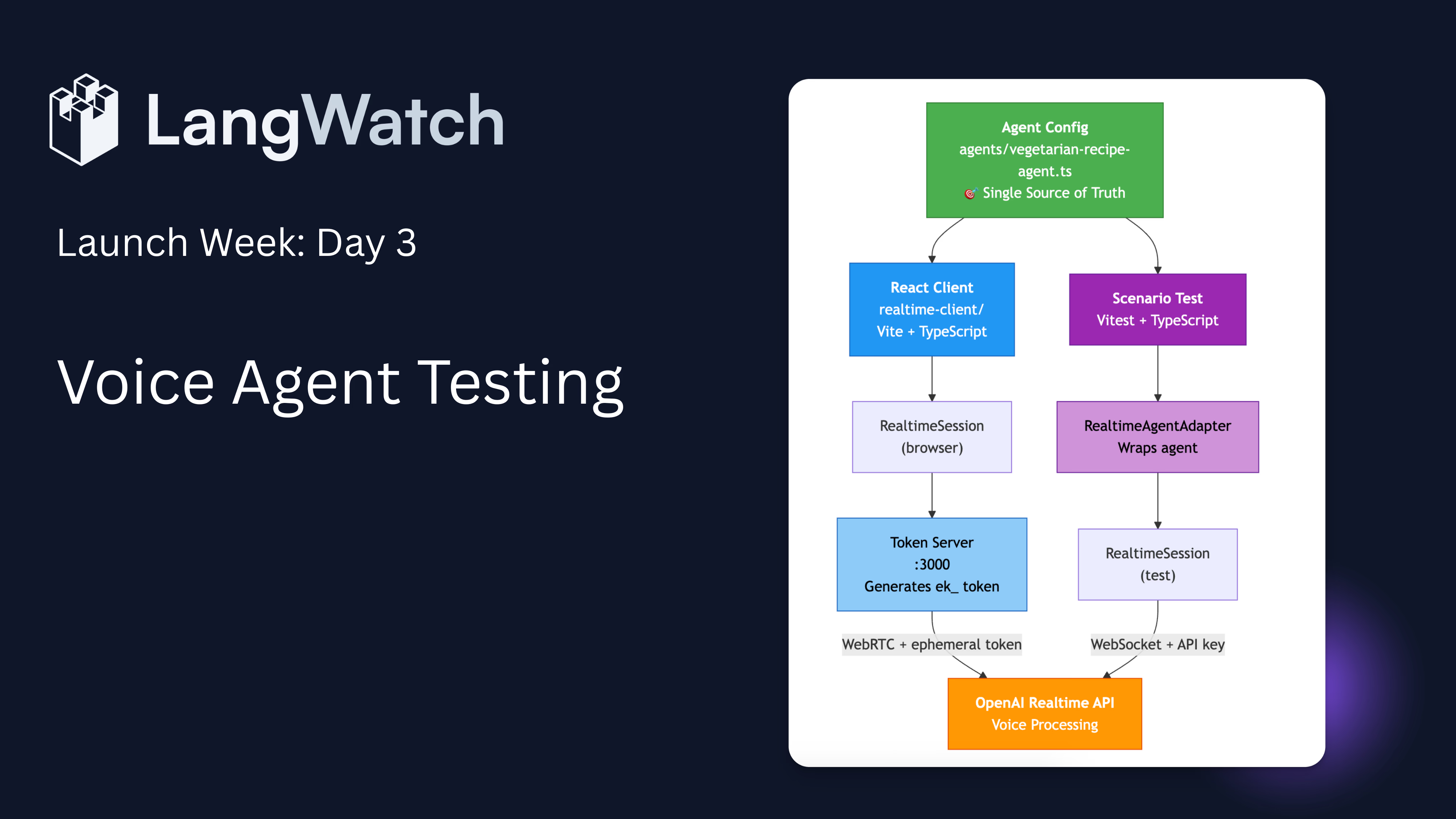
LangWatch represents the most architecturally ambitious open-source LLMOps platform available in 2026. Its microservices design — Elasticsearch for traces, PostgreSQL for metadata, Redis for queues, and dedicated NLP workers — signals that the team is building for enterprise scale from day one, not bolting on scalability after the fact. The Agent Simulations feature is not a marketing add-on; it is a genuinely unique capability that addresses the single biggest gap in the current LLMOps landscape: the inability to test multi-turn, stateful agent behavior before production exposure. In an industry where most teams still ship agents with zero systematic testing, LangWatch's Scenario framework is a paradigm shift.
The pricing evolution in early 2026 is also strategically intelligent. By shifting to a per-seat model with unlimited lite seats for stakeholders, LangWatch aligns its revenue with team adoption rather than API volume. This makes the platform more predictable for finance teams while still undercutting LangSmith's $39 per seat. However, the per-seat model creates a pricing gap versus Langfuse's usage-based approach. For a 20-person engineering team, LangWatch costs €580 per month before overages, while Langfuse could cost significantly less if usage is moderate. The crossover point depends on team size and event volume, but the general pattern holds: LangWatch is priced for teams that value simulation and optimization over raw cost minimization.
The AI Gateway is an underappreciated feature that deserves more attention. At ~700ns hot-path overhead, it is effectively invisible to application latency while providing governance controls that most teams currently implement through fragile middleware or manual API key rotation. The virtual keys, hierarchical budgets, and automatic fallback across providers solve real operational problems that observability-only platforms cannot address. For teams running multiple LLM providers in production, the Gateway's cost-control features can save thousands of dollars monthly by preventing runaway agent loops and enforcing spend limits at the team or project level.
Is LangWatch worth using without a free tier? The Developer tier is genuinely free and production-viable, so the question is somewhat moot. But for teams considering the Team plan at €29 per seat, the value proposition depends on current tool sprawl. If you are currently paying for LangSmith Plus ($39/seat), a separate prompt management tool, and a custom evaluation framework, LangWatch's consolidation can reduce total cost of ownership while improving workflow integration. If you are a lean startup with one engineer and a simple RAG app, the free tier is sufficient, and the Team plan may be overkill until agent complexity justifies the investment.
The competitive risk for LangWatch is execution speed. Langfuse has a two-year head start on community building and framework integrations. LangSmith has the LangChain ecosystem's gravitational pull. LangWatch's simulation advantage is defensible technically but requires continuous innovation to maintain. If Langfuse or LangSmith add native simulation in 2026 or 2027, LangWatch's differentiation narrows significantly. For now, it is the best platform for teams that treat AI agents as software that needs testing, not as black boxes that need monitoring. That is a large and growing market segment.
Final Verdict
LangWatch earns an 8.1 out of 10 for delivering the most complete open-source LLMOps platform in 2026. The Agent Simulations framework is a genuine industry first, the AI Gateway provides real governance at negligible latency cost, and the closed-loop optimization workflow (trace → dataset → evaluate → DSPy optimize → re-test) eliminates the tool sprawl that plagues most AI teams. The OpenTelemetry-native, framework-agnostic architecture ensures no lock-in, and the free self-hosting option with full feature parity is a significant advantage over LangSmith's enterprise-locked model. The deduction reflects real complexity — smaller teams may find the microservices architecture overwhelming, and per-seat pricing can exceed Langfuse's usage-based model for large, low-usage teams. For teams shipping multi-turn agents who need systematic pre-production testing, LangWatch is the best tool in its class. For simple RAG apps or LangChain-only shops, LangSmith or Langfuse may be faster to adopt. Updated July 2026.
🔗 Related ToolRadar Reviews
More tools from LLM Observability & AI Infrastructure
- I Replaced My Operations Team With AI — Here\'s What Survived
- Build a Complete App From a Single Prompt: The New Standard?
- Why Developers Are Switching From VS Code in 2026
- Gumloop: Build AI Workflows Without Writing Code
- Can an AI Agent Really Replace Your DevOps Engineer?
- Zapier AI Review 2026: Automation Tool or Overpriced Connector?
- Devin Costs Hundreds. OpenHands Costs Nothing. We Tested Both.
- Is Aider the Best Free AI Coding Assistant in 2026?
❓ Frequently Asked Questions
Would you let an AI agent talk to your customers without testing it first?
Most teams do exactly that — and then wonder why production incidents keep happening. The tools to test before you ship exist. The only question is whether you will use them.

Comments
Post a Comment