


Modal Review 2026: The $4.65B Serverless GPU Platform Cutting AI Inference Boot Times by 40x
Founded by a former Spotify engineering leader, Modal lets you run Python functions on H100s with a single decorator. No YAML. No idle charges. Just code.
- What Is Modal and Why Does It Matter in 2026?
- Core Features That Define the Platform
- Pricing Breakdown: Pay-Per-Second Reality Check
- Pros and Cons: The Honest Tradeoffs
- Community Feedback: What Real Users Say
- Modal vs RunPod vs Lambda Labs: Head-to-Head
- Who Should Use Modal (and Who Should Skip It)
- Expert Editorial Opinion
- Final Verdict
- Related ToolRadar Reviews
- Frequently Asked Questions
Imagine writing a Python function, adding one decorator, and watching it execute on an H100 GPU seconds later — no Dockerfiles, no Kubernetes manifests, no capacity planning spreadsheets. That is the promise Modal has been selling since 2021, and in 2026, the company has turned that promise into a $4.65 billion reality. Founded by Erik Bernhardsson, former engineering leader at Spotify and Better.com, alongside CTO Akshat Bubna, Modal Labs has become the default reference point developers use when evaluating any serverless GPU platform.
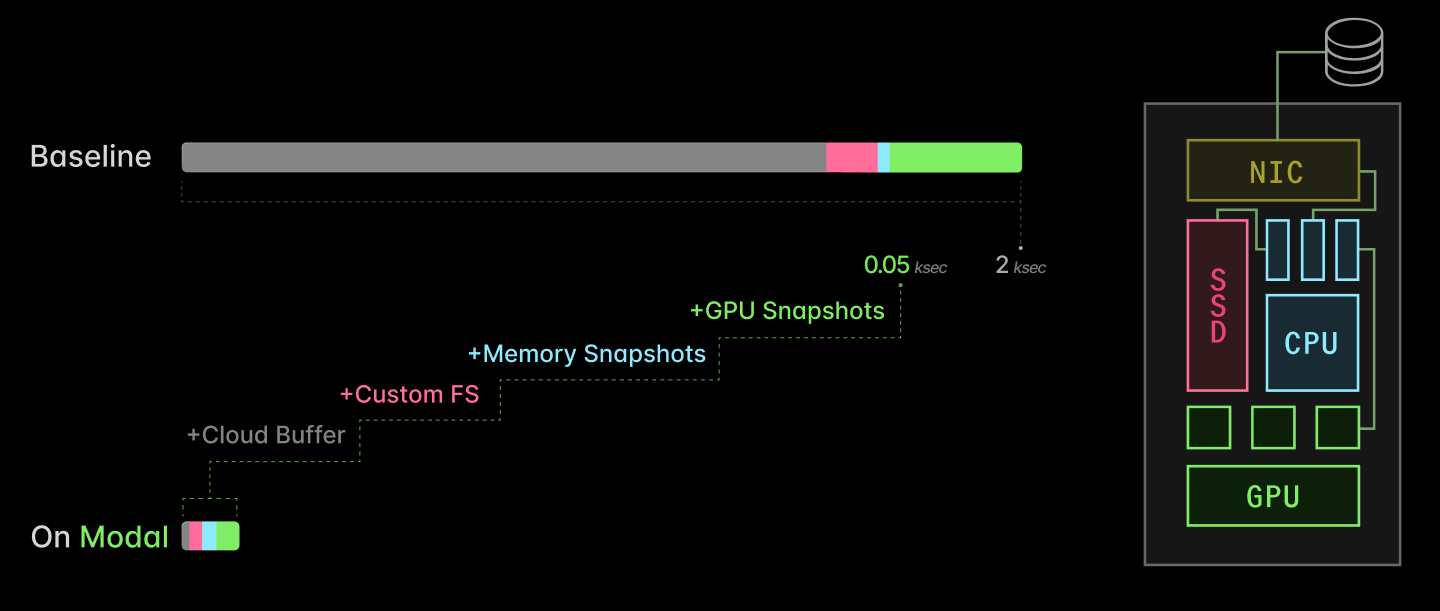
What separates Modal from the crowded field of cloud GPU providers is not just convenience — it is deep engineering. The team spent years solving the "truly serverless GPU" cold-start problem through a custom content-addressed container filesystem cache and CPU- and GPU-side checkpoint/restore mechanisms. The result: inference replica scaling dropped from roughly 2,000 seconds to about 50 seconds, a 40x acceleration that changes the economics of bursty AI workloads. Updated July 2026, this review draws on Modal\'s official documentation, independent pricing benchmarks, and verified community feedback to answer one question: is Modal the right infrastructure layer for your next AI project?
What Is Modal and Why Does It Matter in 2026?
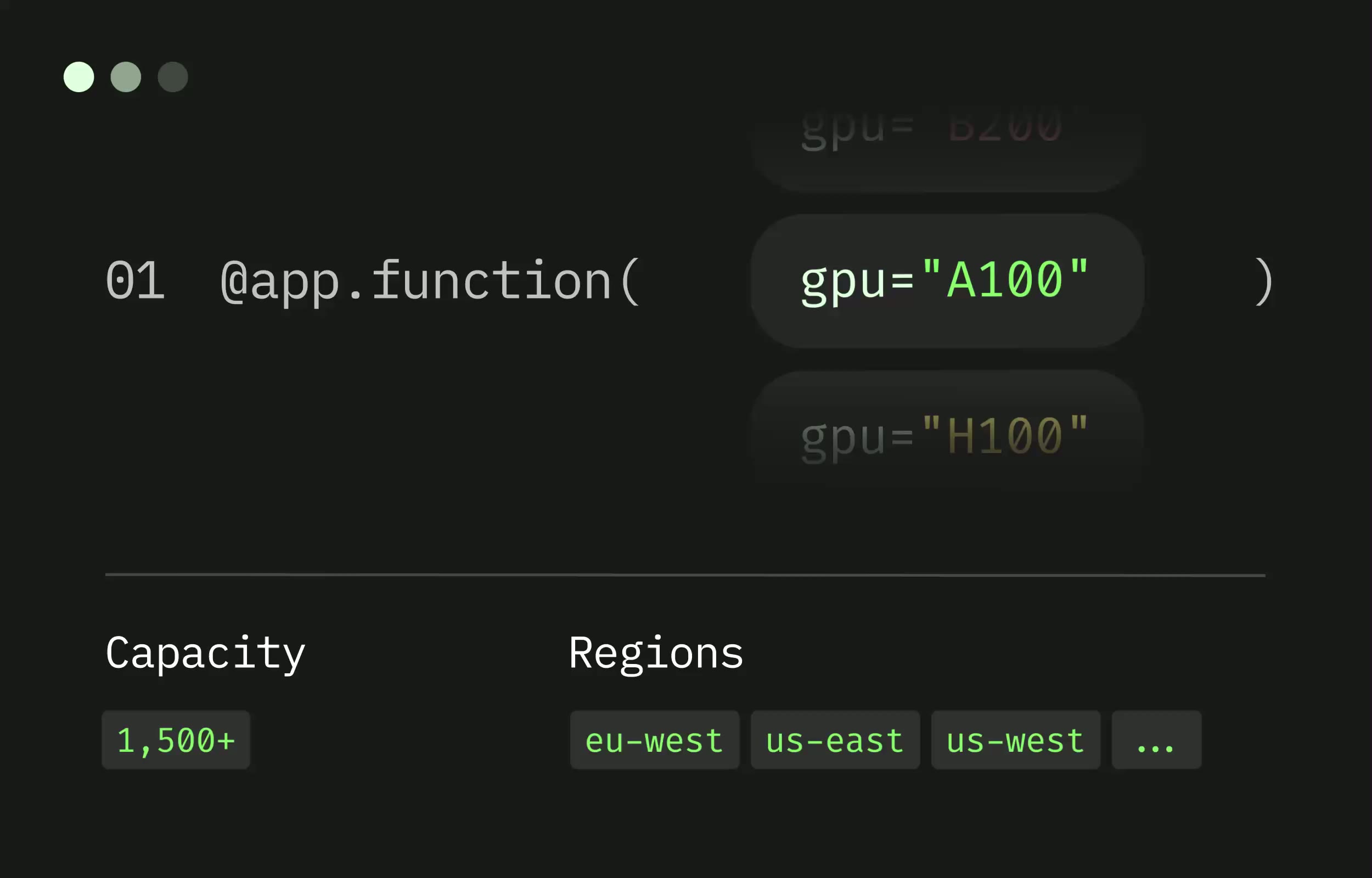
Modal is a serverless cloud platform purpose-built for AI and machine learning workloads. Unlike traditional cloud providers where you rent a VM, configure drivers, and manage containers manually, Modal abstracts the entire infrastructure layer behind Python decorators. A developer writes @app.function(gpu="A100") above a standard Python function, and Modal automatically builds the container from the local environment, schedules execution on the requested hardware, and streams logs back in real time. There are no YAML configuration files, no Terraform modules, and no DevOps team required to get a GPU workload running.
The platform supports a wide spectrum of AI use cases: deploying and scaling inference for large language models, audio generation, image synthesis, and video rendering; fine-tuning open-source models on single or multi-node clusters; and running programmable Sandboxes — secure, ephemeral environments for untrusted code with sub-10ms overhead latency and built-in token streaming, WebRTC, and WebSocket support. For enterprise-scale training, Modal offers access to up to 128 B200 GPUs with 3,200 Gbps InfiniBand networking, all gang-scheduled in a single line of code. That is not marketing fluff — it is the architecture that companies like Substack and Ramp have built production systems on top of.
Core Features That Define the Platform
Instant GPU Routing
Route workloads across clouds and regions with zero commitments or capacity planning. Modal handles scheduling automatically, so you never over-provision or wait in a queue. A job requesting an H100 spins up in seconds, not minutes.
Python-Native Serverless
No YAML, no Dockerfiles, no infrastructure boilerplate. Define compute requirements through Python decorators like @app.function(gpu="H100"). Modal builds containers from your local environment and handles the rest.
Secure Sandboxes
Programmable, ephemeral environments for running untrusted code with sub-10ms overhead. Out-of-the-box support for token streaming, WebRTC, and WebSocket connections makes Modal ideal for interactive AI applications.
Multi-Node Training at Scale
Access up to 128 B200 GPUs with 3,200 Gbps InfiniBand networking, gang-scheduled in one line of code. Fine-tune open-source models on single or multi-node clusters without managing MPI or network topology yourself.
Real-Time Observability
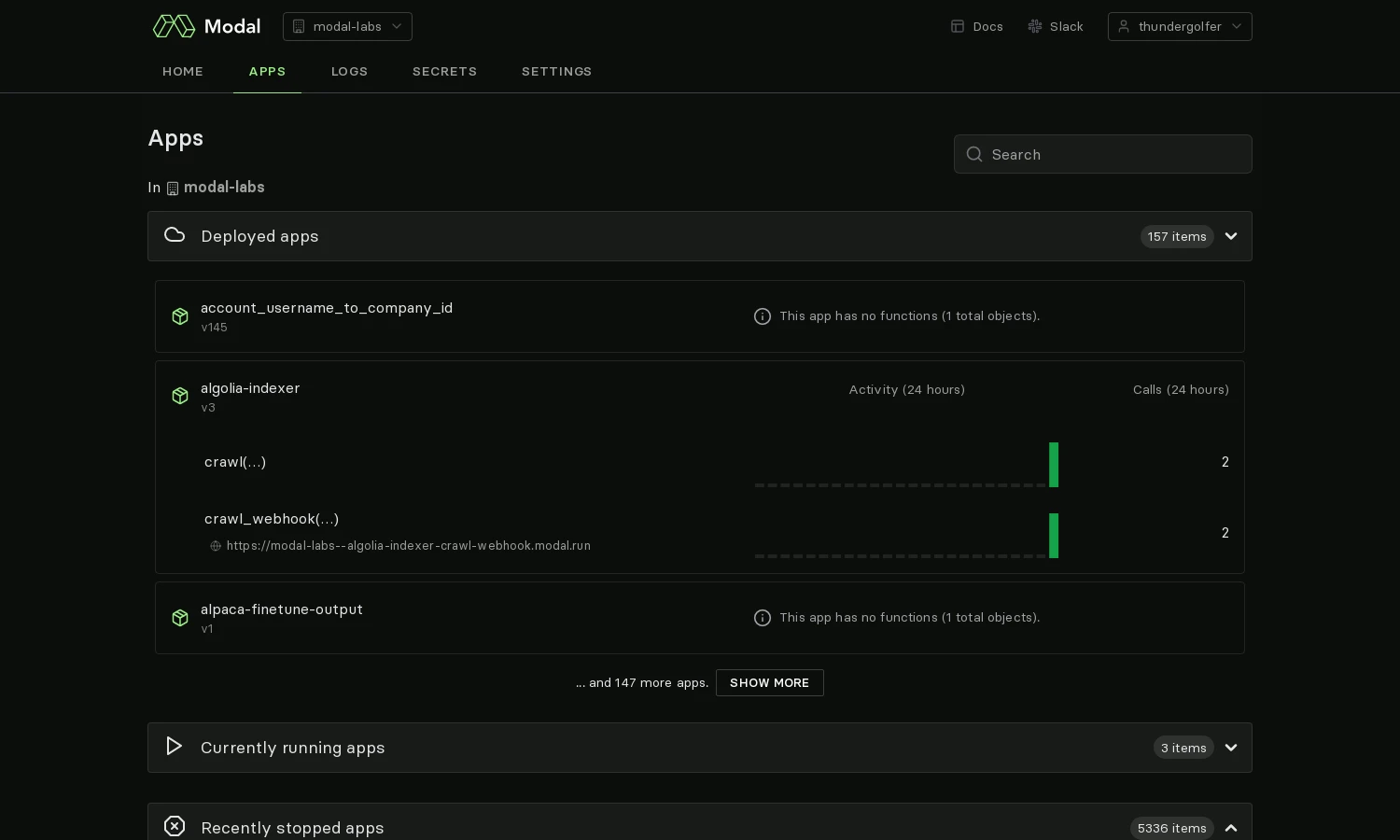
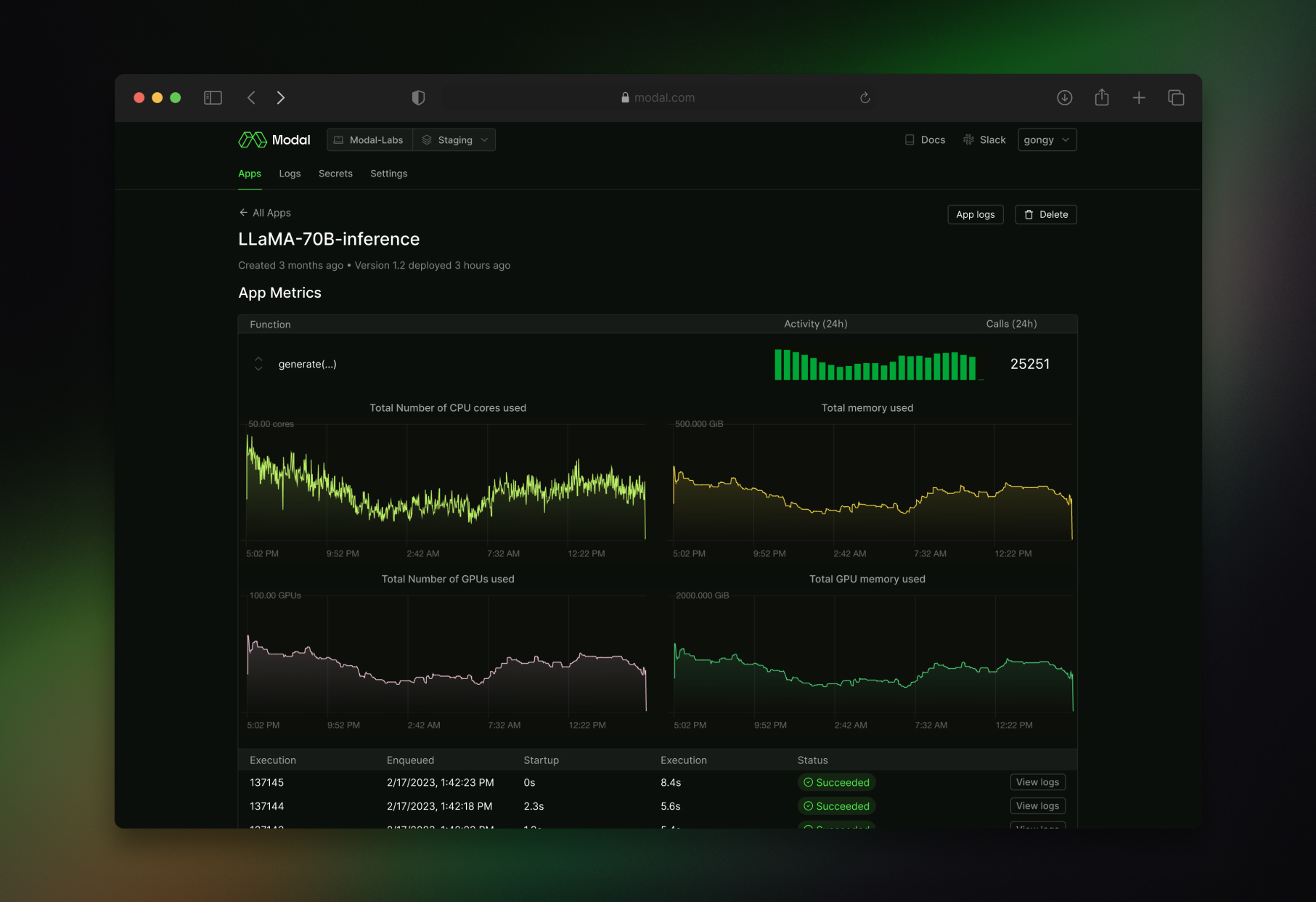
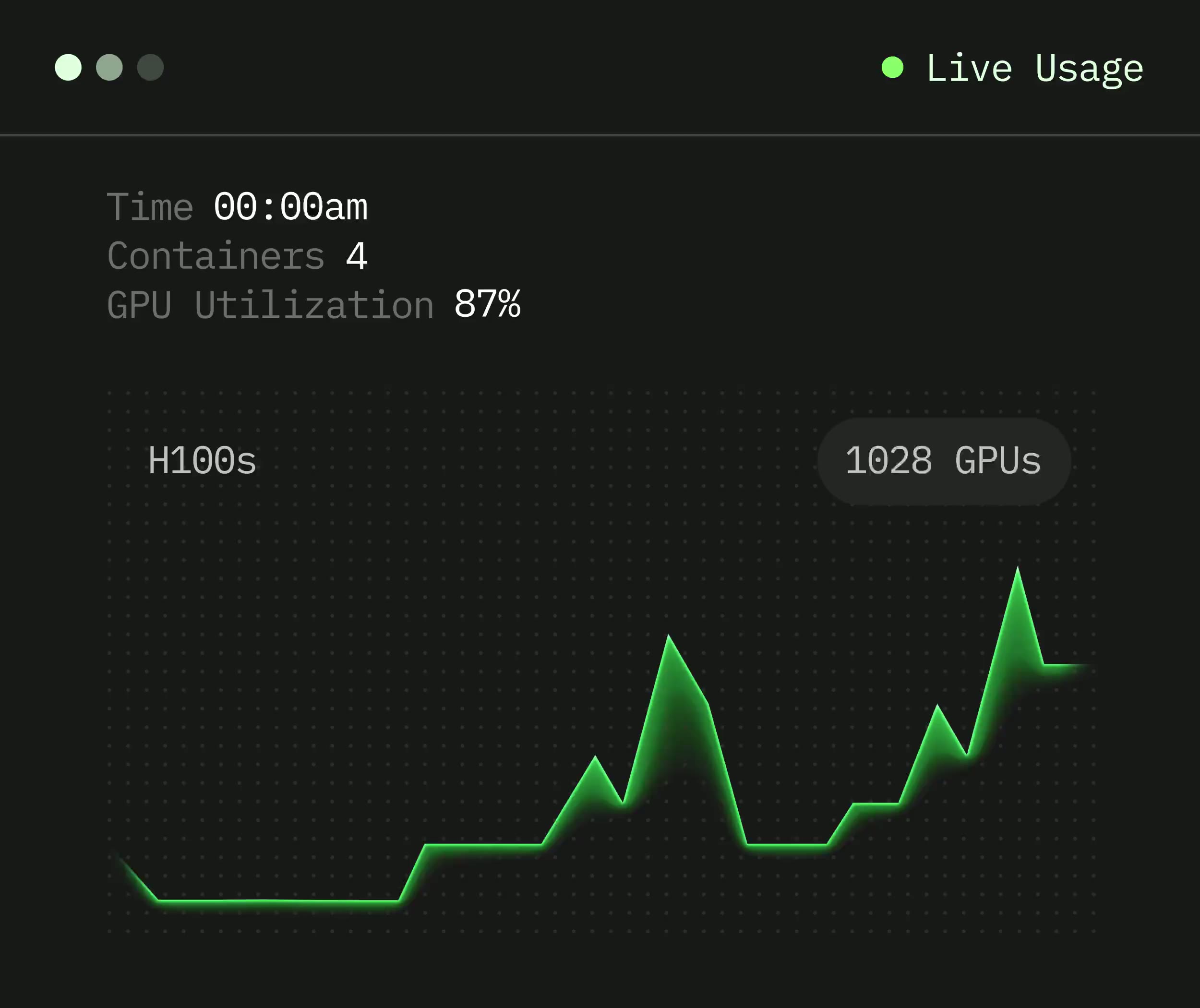
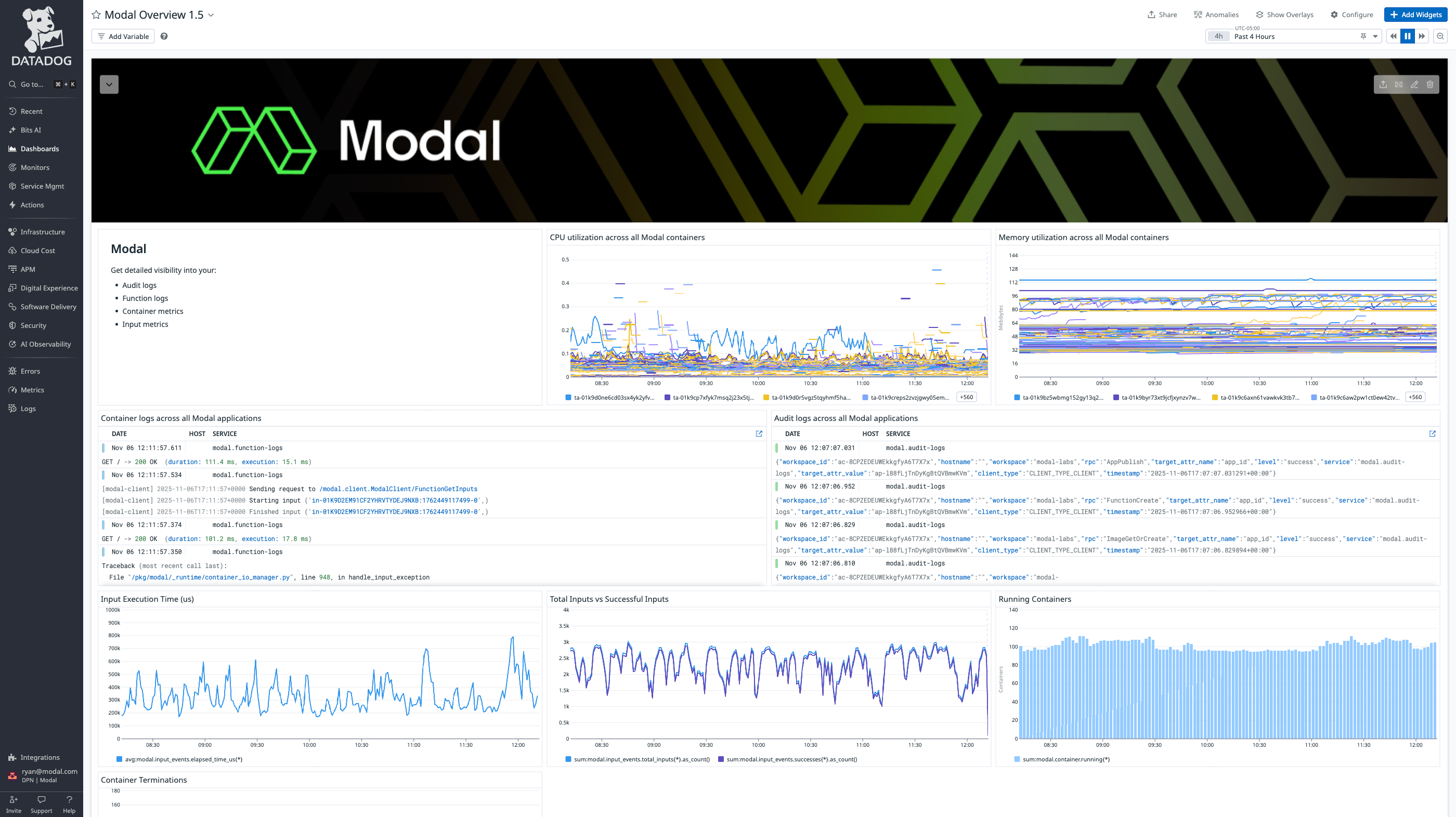
Stream logs back in real time through the Modal dashboard. Monitor CPU, memory, and GPU utilization across all running containers with granular execution metrics and automatic audit logging.
Enterprise Compliance
SOC 2 Type I compliant since June 2023 and HIPAA-ready since September 2024. Multi-cloud integration includes Oracle Cloud Infrastructure, giving enterprises flexibility without sacrificing security posture.
Pricing Breakdown: Pay-Per-Second Reality Check
| GPU Type | Rate (per hour) | Best For |
|---|---|---|
| T4 | ~$0.59 – $1.10 | Light inference, prototyping, small model fine-tuning |
| A100 | ~$2.50 – $3.20 | Mid-scale training, LLM inference, production workloads |
| H100 SXM | ~$4.29 | Large-scale training, high-throughput inference, enterprise AI |
| B200 | ~$6.25 | Cutting-edge multi-node training, research at scale |
Modal\'s pricing model is straightforward on the surface: a free tier with $0 platform cost plus pay-per-second billing on CPU, memory, and GPU resources. There is no minimum allocation, and you are never charged for idle time. For a job running hourly for 15 seconds at 50% CPU utilization, one developer calculated the daily cost at approximately $0.017 — a figure that makes Modal accessible for hobbyists and early-stage experiments.
But the pricing story gets more nuanced for production workloads. Modal applies a 3x cost multiplier for guaranteed execution, meaning if your application cannot tolerate cold starts or preemption, you will pay significantly more. Geographic premiums also apply: certain regions add a 1.25x to 2.5x multiplier on top of base rates. For sustained, always-on workloads running above roughly 51% utilization, dedicated GPU rentals from providers like Lambda Labs or Spheron often become cheaper. Modal wins when your workload is bursty, unpredictable, or intermittent — the exact pattern that defines most modern AI inference pipelines.
Try Modal Free →Pros and Cons: The Honest Tradeoffs
✓ What Works
- ✅ Zero infrastructure management — pure Python workflow with decorator-based GPU assignment
- ✅ 40x faster cold starts than traditional serverless GPU platforms via custom container caching
- ✅ Pay-per-second billing with no idle charges; free tier accessible for experiments and small jobs
- ✅ SOC 2 and HIPAA compliant; enterprise-grade security with multi-cloud support including OCI
✗ What Hurts
- ❌ 3x cost multiplier for guaranteed execution makes production workloads expensive
- ❌ Geographic premiums (1.25x–2.5x) can surprise teams deploying outside core regions
- ❌ Not cost-competitive for sustained, high-utilization workloads versus dedicated GPU rentals
💡 Community Feedback: What Real Users Say
Modal vs RunPod vs Lambda Labs: Head-to-Head
| Feature | Modal | RunPod | Lambda Labs |
|---|---|---|---|
| Serverless Model | True serverless (scale-to-zero) | Serverless + dedicated pods | Dedicated instances only |
| Cold Start Time | ~50 seconds (40x optimized) | ~2–5 minutes | N/A (always-on) |
| H100 Effective Rate | ~$3.95–$4.29/hr | ~$2.49–$3.19/hr | ~$2.49/hr (dedicated) |
| Developer Experience | Python decorators, zero YAML | Template-based deployment | CLI + API, more manual setup |
| Best Use Case | Bursty inference, prototyping | Mixed workloads, community templates | Sustained training, cost optimization |
The comparison reveals a clear pattern: Modal dominates on developer experience and cold-start performance, while RunPod and Lambda Labs win on raw cost for sustained workloads. Modal\'s H100 effective rate of roughly $3.95 to $4.29 per hour sits above RunPod\'s on-demand range and significantly above Lambda Labs\' dedicated pricing. However, the crossover point matters: if your GPU utilization stays below approximately 51%, Modal\'s pay-per-second, scale-to-zero model is cheaper because you are not paying for idle hours. Above that threshold, the economics flip, and dedicated rentals become the smarter financial choice. For teams building interactive AI applications with unpredictable traffic — chatbots, real-time image generation, sporadic batch inference — Modal\'s serverless architecture is difficult to beat. For research labs running week-long training jobs at 90% utilization, Lambda Labs or a reserved RunPod instance will save thousands of dollars per month.
Who Should Use Modal (and Who Should Skip It)
Modal is built for: AI startups shipping inference APIs with unpredictable traffic patterns, ML engineers who want to prototype on H100s without provisioning infrastructure, research teams running bursty fine-tuning jobs, and developers building interactive AI applications (voice, image, video) that need sub-minute cold starts and automatic scaling. The platform is especially compelling for teams that value developer velocity over raw infrastructure cost — if your engineers\' time is worth more than a few dollars per hour of GPU savings, Modal\'s Python-native workflow pays for itself quickly.
Look elsewhere if: You run sustained, 24/7 training workloads above 50% GPU utilization, you are on a tight budget and every dollar of compute matters more than developer convenience, you need deep control over network topology or custom CUDA drivers, or your compliance requirements demand on-premise hardware rather than multi-cloud serverless. In those cases, dedicated GPU providers like Lambda Labs, CoreWeave, or even self-managed on-premise clusters will deliver better long-term economics.
Expert Editorial Opinion
Modal represents a genuine architectural leap in how developers interact with GPU infrastructure. The 40x cold-start improvement is not a marginal optimization — it is the difference between a serverless GPU platform that is theoretically interesting and one that is practically deployable for real-time inference. By building a custom content-addressed container filesystem and implementing CPU- and GPU-side checkpoint/restore, Modal\'s engineering team solved the exact problem that has killed every previous attempt at "serverless GPUs": the multi-minute boot penalty that makes scale-to-zero economically irrational for latency-sensitive workloads.
The pricing gap, however, is real and significant. Modal\'s 3x guaranteed execution multiplier and regional premiums mean that production workloads with strict uptime requirements will face bills that are substantially higher than the headline rates suggest. A team running an always-on LLM inference API at 80% utilization will find Modal\'s total cost of ownership difficult to justify against dedicated alternatives. The platform is priced for convenience and elasticity, not for brute-force cost minimization. This is not a flaw — it is a deliberate market positioning — but buyers need to model their specific utilization patterns before committing.
The competitive landscape is also intensifying. RunPod has closed the developer experience gap with template-based deployments and community-contributed serverless endpoints. Lambda Labs continues to undercut everyone on dedicated GPU pricing. And emerging players like Spheron are explicitly targeting Modal\'s market with lower on-demand rates. Modal\'s $4.65 billion valuation reflects investor confidence in its technical moat and enterprise traction, but it also raises the bar for future pricing flexibility. Can a unicorn-priced platform afford to get into a price war with leaner competitors?
Is Modal worth using without a free tier for compute? The free tier covers platform access, but you still pay for every second of GPU time. For hobbyists and students, the $0.017/day figure for small jobs is genuinely accessible, and the $10,000 credit program for grad students and researchers removes most financial barriers for academic use. For commercial teams, the question is not whether Modal is free — it is whether the time saved on infrastructure management justifies the premium over dedicated alternatives. In most cases where developer velocity and elastic scaling matter, the answer is yes.
Looking ahead, Modal\'s expansion into Sandboxes and multi-node training suggests the company is pushing beyond inference into the full ML lifecycle. If the platform can maintain its cold-start advantage while narrowing the pricing gap for sustained workloads, it could become the default cloud layer for AI-native companies. For now, it is the best serverless GPU experience on the market — but it is not the cheapest, and it is not for everyone.
Final Verdict
Modal earns an 8.4 out of 10 for delivering the most polished serverless GPU experience available in 2026. The 40x cold-start breakthrough, Python-native developer workflow, and enterprise-grade compliance make it the platform of choice for teams building elastic AI inference systems. The deduction comes from pricing: the 3x guaranteed execution multiplier and regional premiums push production costs above dedicated alternatives for sustained workloads. If your AI pipeline is bursty, unpredictable, or developer-velocity-sensitive, Modal is the best tool in its class. If you are optimizing for every dollar of compute on a 24/7 training job, look at Lambda Labs or RunPod dedicated instances instead. Updated July 2026.
🔗 Related ToolRadar Reviews
More tools from AI Infrastructure
- I Replaced My Operations Team With AI — Here\'s What Survived
- Build a Complete App From a Single Prompt: The New Standard?
- Why Developers Are Switching From VS Code in 2026
- Gumloop: Build AI Workflows Without Writing Code
- Can an AI Agent Really Replace Your DevOps Engineer?
- Zapier AI Review 2026: Automation Tool or Overpriced Connector?
- Devin Costs Hundreds. OpenHands Costs Nothing. We Tested Both.
- Is Aider the Best Free AI Coding Assistant in 2026?
❓ Frequently Asked Questions
What would you build if GPU infrastructure disappeared entirely?
If cold starts, capacity planning, and container management vanished from your workflow, what AI project would you ship first? The tools are ready. The only question is whether you are.

Comments
Post a Comment