


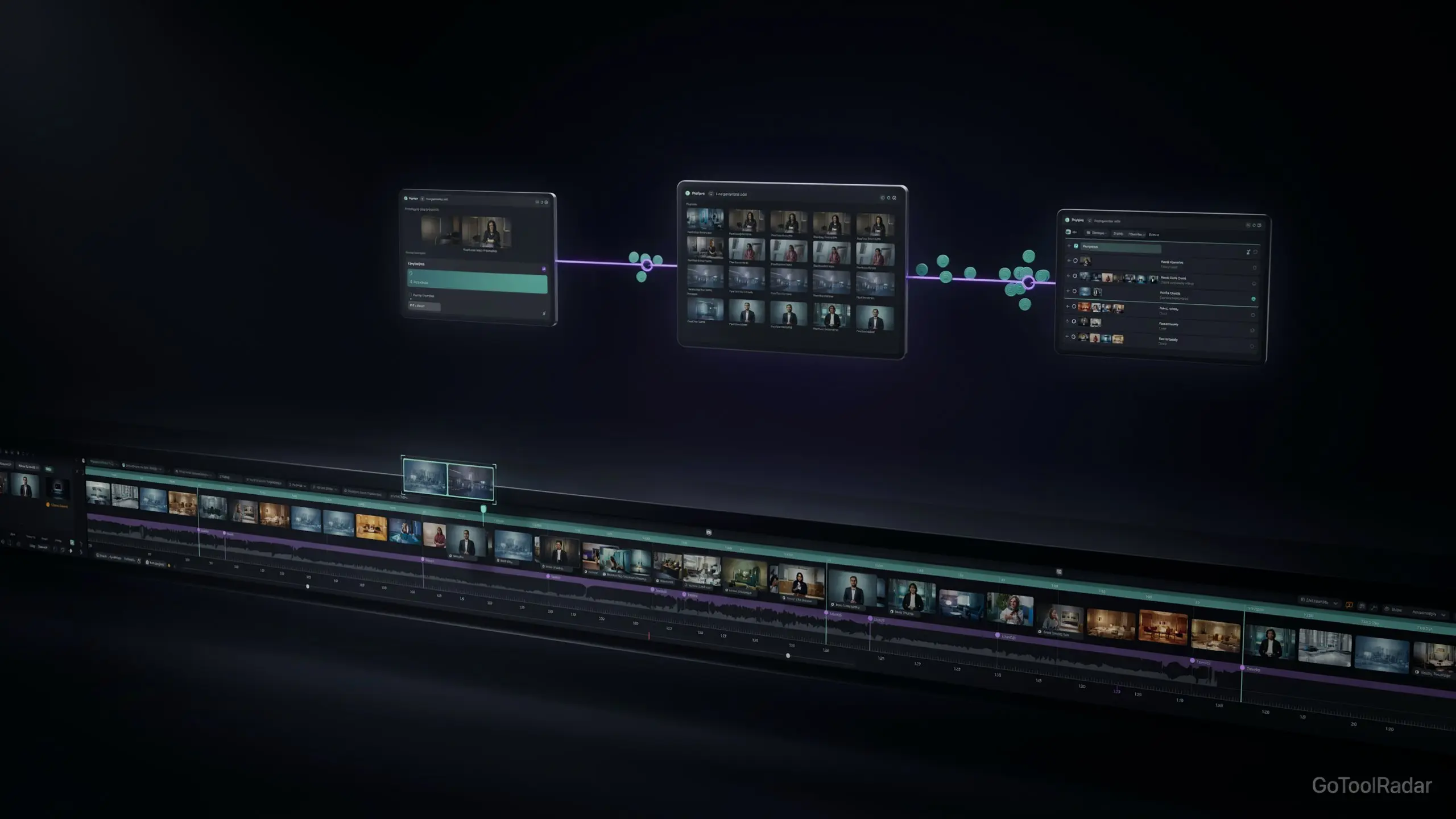
Higgsfield AI Review 2026: Can It Really Make 10-Minute AI Videos?
OpenAI says Higgsfield's videos now run past 10 minutes. The company's own docs, price list, and public record show what that claim covers, and what it leaves out.
📋 Table of Contents
This Higgsfield AI review starts with the number that launched a hundred headlines. On October 13, 2026, OpenAI published a customer story saying that Higgsfield videos used to top out around one minute and can now run "over 10 minutes", with GPT-6 Astra helping plan the work. It reads like a leap in what a video model can do. The catch is who is speaking: nearly every performance claim in that story comes from Higgsfield's CEO, Alex Mashrabov, and the story offers no benchmark, no sample length, and no price.
So we went to the platform's own pages instead, and the picture is more interesting than the headline. A ten-minute video is not new on Higgsfield. What is new is the claim that an agent workflow built on Astra can go further, and whether that workflow is worth its credits is the question this review tries to answer. If you read our earlier look at Higgsfield, treat this as the update: new plans, a new headline, and a harder look at the evidence.

What Changed on October 13, and What Didn't
According to OpenAI's story, Higgsfield's creative agents now handle repetitive production work, such as making several variations of a shot, and GPT-6 Astra lets those agents call outside tools for complex 3D modeling. Mashrabov ties that to consistency across longer videos, which he calls one of creative AI's hardest problems. He also says Higgsfield's tutorial channel, which he puts at almost half a million subscribers, now produces its instructional videos of more than 10 minutes through an Astra workflow.
That describes a change in how work gets done. It does not describe a measurement.
Before judging the claim, separate three things that the word "length" can mean:
- A single clip: what one model call returns. Higgsfield's changelog says Cinema Studio 4.0, launched August 11, generates up to 30 seconds at a time.
- A finished video: many clips plus voice, music, and edits. The same changelog says Video Explainer has supported narrative videos "up to 10 minutes" since July 1, and a Supercomputer help page describes faceless YouTube videos up to 15 minutes.
- An automated workflow: agents planning, generating, and revising. This is the layer the Astra story is about.
"Over 10 minutes" therefore speaks about the second and third kinds of length, not the first. We found no page stating a maximum for the Astra-driven workflow, no sample film, and nothing on how long it takes or what it costs to run. OpenAI's story also describes the voice-to-movie idea as a direction for the future, not a shipped feature.
Long form is not new to the platform, either. CGMagazine reported in May that Hell Grind, a 95-minute action-fantasy feature, was made with Higgsfield tools (Soul Cinema, Soul Cast, and Dreamina-Seedance 2.0) by a director, a co-writer, and a team of 15 other professionals, for under $500,000 in 14 days. Those cost, schedule, and "entirely on Higgsfield" claims come from the film's makers and the company, and the same piece says only that a trailer had an "exclusive Cannes Film Festival preview", not that it was an official selection. The practical lesson is that the longest results came from skilled teams assembling many pieces, not from typing one prompt and waiting.
What You Get
Higgsfield sells itself less as one video model and more as a production workspace that sits on top of many. These are the pieces documented on its own pages.
Supercomputer
An agentic workspace: you describe a task in plain language, and the agent plans it, runs generation across image, video, and audio models, and can connect to apps such as Gmail, Google Drive, and Notion. GPT-6 Astra became selectable there on September 4, per the changelog.
Video Explainer
A narrative-video skill, also a standalone app since July 2, that supports up to 10 minutes in 16:9 or 9:16.
Cinema Studio 4.0
Launched August 11 with 30-second generations, up to 50 references per generation, more than 30 camera-movement presets, an emotion wheel, an era selector, tempo control, and forward and backward extend.
Soul ID
A trained, reusable character identity for keeping a face consistent across shots. Higgsfield's own comparison post says Runway documents no equivalent, so weigh that as a claim from an interested party.
A big model shelf
Seedance 2.5, Kling 3.0, WAN 3.0, Veo 3.1, and Gemini Omni Flash 1.1 are listed as licensed integrations, alongside Higgsfield's own tools: Marketing Studio, Lipsync Studio, and Ads Studio. The company describes the whole catalog as "35+ models and tools".
Apps and MCP
Since July 7 the agent can build small apps that call Higgsfield models, with no API keys or code. An MCP route also exists, and as the credits section below explains, it always spends credits.
Learning Curve
Starting is easy. Higgsfield's help center says you can generate without a paid plan, using a small set of models and no credits, though there is no free trial of the paid models. The cost of a generation appears on the Generate button before you confirm it, which is a good habit for a credit-based product.
The steeper part is budgeting. In Supercomputer, multi-step tasks use more credits than a single generation, and the running cost updates as the task proceeds. Free and unlimited-model generations count only on higgsfield.ai itself, while MCP, CLI, Canvas, and Supercomputer always deduct credits, whatever your plan. Trustpilot reviewers also complain about upgrade banners and a cluttered interface. We rate the effort 3 out of 5 as an editorial estimate from these documents, not from using the product.
Pricing: What the Credits Actually Buy
These plans come from Higgsfield's own comparison with Runway, dated October 11, 2026. The post does not say whether they are monthly or annual-billing prices, and it lists no free or business pricing, so confirm everything at checkout.
200 credits a month.
1,000 credits a month. The post says it allows up to 6 video and 8 image generations in parallel.
3,000 credits a month. Listed with unlimited paid parallel generations.
Dividing the published prices by the credits gives about $0.075 per credit on Starter, $0.049 on Plus, and $0.043 on Ultra. That is our arithmetic, not a Higgsfield figure, but it shows why the cheapest plan is the most expensive way to buy credits. Help-center pages also mention Team, Scale, and Enterprise business plans with shared credits, and say individual plans are available monthly or annually, with annual costing less per month.
The credit rules matter as much as the price. Subscription credits expire at renewal and do not roll over. Credit Packs, Auto-Refill, and Boost credits each expire 90 days after purchase. Failed generations are usually refunded automatically within minutes, but the credits page warns that some models may not refund them. Subscription refunds are available within seven days only if no credits were used, with a service fee of up to 6%, and renewals are not refundable.
One discrepancy to flag: our June review listed Plus at $39 and Ultra at $99 in a table labeled annual pricing. The October post shows $49 and $129 without naming a billing period. Both may be right for different billing cycles, which is exactly why you should check the live checkout page before relying on either.
For more on how per-second pricing compares across the category, our AI video pricing breakdown explains why credit systems resist simple conversion.
Ownership, Commercial Use and Training
For creators selling what they make, the terms of use are worth a few minutes. Higgsfield's agreement says the company does not claim ownership of your inputs or outputs and does not restrict commercial use of outputs. It also says outputs are not guaranteed to be unique, so another user may receive something similar or even identical.
Three clauses cut the other way. You are responsible for what you upload and for how you use or distribute outputs, and you must indemnify the company for claims arising from them. Your content, inputs, and outputs "may be used by Company to train, develop, enhance" its models. And where a feature runs on a third-party model, that provider's acceptable-use policy applies too, and the stricter rule wins. You must be at least 18. This is a summary of public terms, not legal advice.
Higgsfield vs Runway vs InVideo AI
This compares how each platform is sold, not how good its video looks. Credits are not interchangeable between them, so a bigger number on one card does not mean more video.
Plans: $15, $49, $129 a month for 200, 1,000, and 3,000 credits.
Model approach: a shelf of licensed third-party models plus its own studios, an agent workspace, and Soul ID for character consistency.
Watch for: credits that expire at renewal, and costs that rise with every retake.
Plans: $15, $35, $95 a month for 625, 2,250, and 9,500 credits, or $12, $28, $76 with annual billing. A free plan gives 125 one-time credits.
Model approach: its own Gen-4.5 at 12 credits per second, plus Aleph 2.0 for editing existing video and Act-Two for performance transfer.
Watch for: rollover exists only on Max, and only for one month.
Plans: $20, $60, $150 per seat monthly for 400, 2,000, and 5,000 credits. A banner advertises 50% off annual billing, and no free plan is listed.
Model approach: a Seedance-centered line-up. Its page estimates about 15 Seedance 2 Fast videos on Starter and about 52 Seedance 2 videos on Plus.
Watch for: the page states no maximum video length and contradicts itself on which Seedance models Starter can use.
On cost per clip, the only side-by-side figures we found are in Higgsfield's own post, which is a competitor comparison written by one of the parties. In its table, Higgsfield is cheaper on four of five listed models (for example Kling 3.0 at $1 against $2, and Seedance 2.5 at $3.50 against $4.70) and Runway is cheaper on Gemini Omni Flash 1.1 ($1.25 against $1.50). Runway's own pricing page matches the post's monthly Runway prices, which is reassuring. The post's FAQ, though, says Runway Standard costs $12 a month while its table says $15, because $12 is the annual-billing price.
The decision is mostly about what you make. Runway is the more natural home if you want its own model and editing tools for footage you already have, and our comparison of Kling 3.0, Runway Gen-4.5, and Luma Ray3 covers that side. Higgsfield makes more sense if you want many models under one subscription, reusable characters, or an agent that strings steps together.
💡 What Reviewers and Reporters Say
The first quote is a commenter's allegation, strongly worded and unproven by itself, and we show it because it reflects a pattern in public complaints, not because we can confirm it. The second is the milder and more common kind of complaint: not that the product fails, but that it costs a lot per result.
Trustpilot's page showed a 4.0 score from 5,043 reviews on October 17, with 63% five-star and 18% one-star, compared with the 3.2 we cited in June. Praise centers on output quality, the range of models, and responsive support; complaints center on cost and credit use, unexpected recurring charges or hard cancellations, upsell prompts, and strict moderation. Scores on review sites move, so treat the number as a snapshot.
The most substantial outside reporting is a February 2026 Forbes investigation. It described a company valued at $1.3 billion that had raised $80 million in January, and it reported what users and creators said: difficulty withdrawing rewards from the Higgsfield Earn program, and discounted "unlimited" plans that were then throttled until the app felt unusable without more credits. It also reported a creator media kit built from stock templates, and offensive promotional clips. A co-founder told Forbes the offensive clips were "a mistake" and not representative of the company's values, and said 90% of Earn submissions had been paid, pointing to fraud as the cause of the rest. The CEO said the company had made mistakes and would add legal and leadership review of external material. Revenue figures in that piece, such as a run rate above $300 million, were company statements. This is eight months old, and we do not know how much has changed since.
Pros and Cons
✓ What works
- ✅ One subscription reaches many models, including Kling 3.0, Veo 3.1, Seedance 2.5, and WAN 3.0.
- ✅ A documented path to long videos: Video Explainer up to 10 minutes, Supercomputer workflows up to 15 for faceless videos.
- ✅ The cost of each generation is shown before you confirm it.
- ✅ Terms say the company claims no ownership of outputs and does not restrict commercial use.
- ✅ A public, dated changelog and a detailed credits page.
✗ What to weigh
- ❌ The headline "over 10 minutes" claim comes from the CEO, with no sample, benchmark, or stated maximum.
- ❌ Credits expire at renewal, and automated routes such as MCP and Supercomputer always spend them.
- ❌ No published price for a finished long video, so the real cost is unknowable in advance.
- ❌ Outputs may be used to train Higgsfield's models, and uniqueness is not guaranteed.
- ❌ Public complaints and Forbes reporting about billing practices and marketing conduct.
Who Should Use It
Ideal user: a creator, marketer, or small studio that wants several video models and reusable characters under one bill, can budget credits per scene, and treats the agent workflow as a way to save assembly time, not to avoid editing. Short ad creative and explainer-style videos match the features best.
Look elsewhere if: you need a fixed, predictable price for long videos, want a single-vendor editing suite built around one model (Runway is the closer fit), or are uncomfortable with outputs feeding model training. Anyone planning to rely on the "10 minutes" claim should run a paid test project first and count credits.
Expert Editorial Opinion
Higgsfield is an established platform wearing a brand-new headline, and the two need to be judged separately. The platform side is concrete: dated changelog entries, a credits page that explains expiry and refunds, published plans, and terms that say plainly who owns the output. The headline side is a single CEO's statement relayed through a partner's customer story, which is the weakest kind of evidence a review can lean on. Both can be true, and neither tells you what ten minutes of footage will cost you or look like.
What I would watch for is the gap between what the word "agent" suggests and what the documents describe. The documents describe planning, shot variations, and tool calls that help with consistency, which is useful production labor. They do not describe a machine that returns a finished film from one sentence, and the best-documented long-form example, a 95-minute feature, came with a director, a co-writer, and a team of 15. If your picture of the product is the solo creator typing a prompt, the evidence points to a more modest and more human-assisted reality.
Now the pricing gap. The $15 Starter plan is the number people see, yet it buys credits at about $0.075 each, roughly 53% more than Plus's $0.049, and the ten-minute arithmetic shows how fast clips add up: around $60 for a single Kling 3.0 pass of 60 clips, or $210 with Seedance 2.5, before a single retake. Credits that expire at renewal turn every unused month into a small loss. The headline price is the entrance fee, not the cost of a finished video.
Would it be worth paying for if there were no free option to ease you in? Higgsfield does have one, but it is thin: a small set of models, no credits, and no trial of the paid tiers. For ad creative, character-consistent shorts, or teams that want many models in one place, I think the paid plans can earn their cost. For someone who just wants to try AI video casually, or whose output must be cheap and predictable, I would start elsewhere or buy the smallest plan for one month and count the credits.
The honest verdict follows from the evidence: a capable, broad, reasonably documented platform whose marketing runs ahead of what its documents prove, with a public record on billing and conduct that deserves a careful read before you hand over a card. We scored it in the Competent-but-compromised band, and we will revisit the number if Higgsfield publishes a maximum length, a sample long-form workflow, or a price for finished videos.
Final Verdict
Higgsfield AI lands in the Competent but compromised band (7.0 to 7.9): suitable for a specific kind of user, not for everyone. The model shelf, agent workspace, and documented long-video tools are real, and the terms are creator-friendly on ownership. Against that stand a headline claim without evidence, credits that expire and always spend through automation, no published cost for long videos, and a public record on billing that calls for caution.
| Dimension | Weight | Score /10 | Why |
|---|---|---|---|
| Technical quality | 30% | 7.8 | Broad model access and documented long-video tools, but the Astra claim has no sample, benchmark, or stated maximum. |
| Price-to-value | 25% | 7.4 | Cheaper than Runway on four of five listed clips in its own table, offset by expiring credits and no long-video price. |
| Maturity & documentation | 20% | 7.3 | Dated changelog and clear credit rules, but length figures differ across pages and its own comparison post contradicts itself on a rival's price. |
| Ceiling & flexibility | 15% | 8.0 | 35+ models and tools, MCP, and creator-owned outputs, tempered by credit lock-in and training rights. |
| Honesty of positioning | 10% | 6.2 | A headline that outruns the documentation, plus Forbes-reported marketing and billing problems the company partly acknowledged. |
Final score = (7.8 × 0.30) + (7.4 × 0.25) + (7.3 × 0.20) + (8.0 × 0.15) + (6.2 × 0.10) = 2.34 + 1.85 + 1.46 + 1.20 + 0.62 = 7.47, shown as calculated and not rounded up.
❓ Frequently Asked Questions
🔗 Related ToolRadar Reviews
- Is Higgsfield AI the most powerful AI video tool? Our June look
- AI video pricing breakdown: what you're really paying per second
- Kling 3.0 vs Runway Gen-4.5 vs Luma Ray3
- Claude Fable 5.1 vs GPT-6 Astra: the model behind the workflow
Official sources: Higgsfield · OpenAI customer story · Higgsfield changelog · How credits work · Terms of use
Comments
Post a Comment