


ProductNow Review 2026: Can This Tool Actually Fix Your AI Prototype Handoff?
Your team ships prototypes in a day with Claude or Lovable. Engineering still spends a week figuring out what to build. ProductNow claims to close that gap — here is what actually works and what does not.
- What Is ProductNow and Why Does It Matter in June 2026?
- Core Features: From Prototype Snapshot to Engineering Pull
- Pricing: Free Tier, Demo-Gated Plans, and the Hidden Cost
- Pros and Cons: The Honest Breakdown
- Real User Pulse: What Design Partners Actually Say
- Comparison: ProductNow vs. Linear vs. Notion vs. Figma Dev Mode
- Learning Curve and Who Should Actually Use It
- Expert Editorial Opinion
- Final Verdict
- Related ToolRadar Reviews
- Frequently Asked Questions
Here is a scenario that probably feels familiar if you work on a product team in mid-2026. Your designer drops a polished prototype into Slack on Monday morning, built with Lovable or Claude in about four hours. It looks production-ready. The CEO loves it. Your PM immediately asks when engineering can ship it. And then the silence starts. Because nobody wrote down the decisions that led to this layout. The customer feedback that justified the flow is scattered across three different threads. The edge cases are assumptions at best. Engineering opens the prototype, squints at it, and starts a week of reverse-engineering what was actually intended.
That gap — between how fast AI tools let you prototype and how slowly engineering receives the context to build — is exactly what ProductNow was built to close. Updated for June 2026, this review examines whether the tool delivers on that promise, where it falls short, and whether it deserves a place in your product stack.
What Is ProductNow and Why Does It Matter in June 2026?
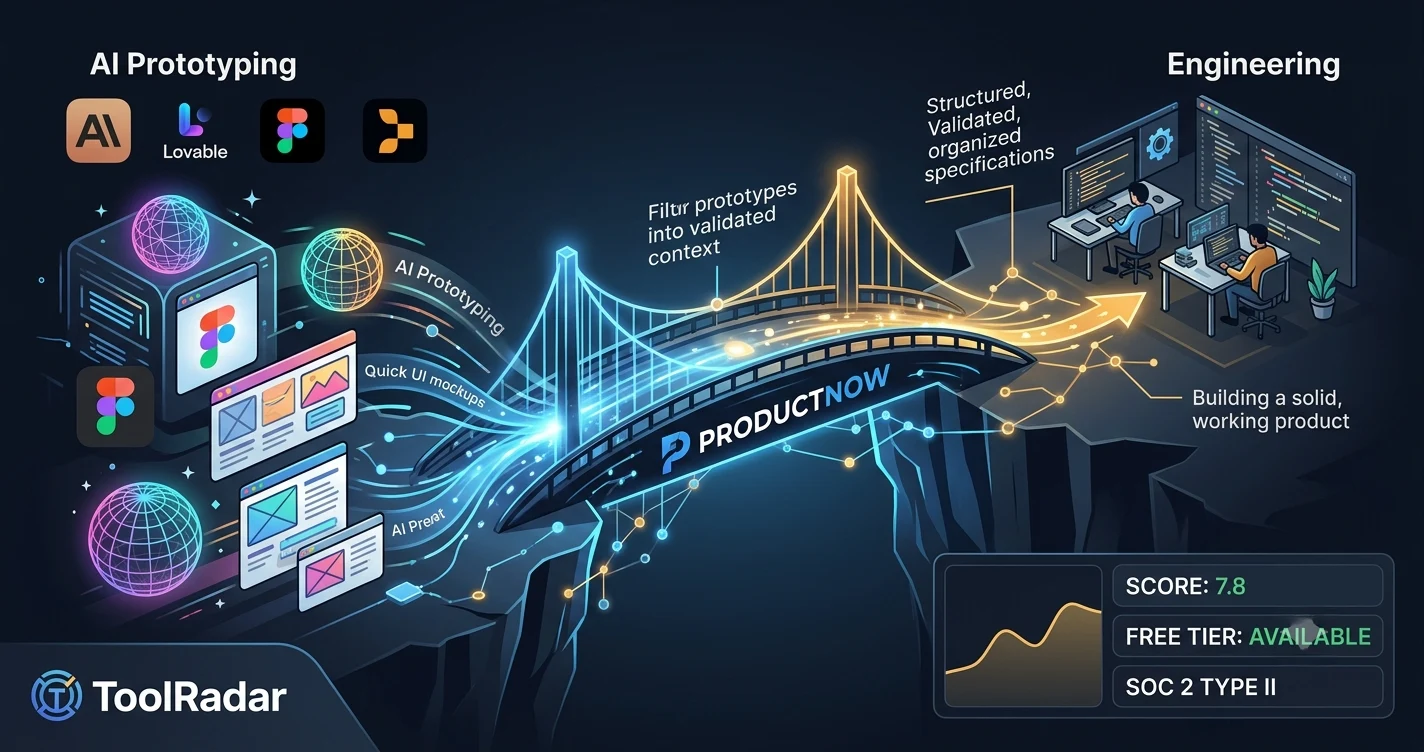
ProductNow is a handoff layer, not a prototyping tool and not a project management platform. It sits between the moment a prototype is generated by an AI tool and the moment an engineer starts writing code. The core idea is simple: embed or snapshot prototypes from Claude, Lovable, Figma Make, ChatGPT, Gemini Canvas, or Replit, collect ranked customer feedback tied directly to that prototype context, track what is validated versus what is still speculative, and then let engineering pull the entire validated context — prototype, feedback, decisions, and requirements — directly into their codebase via Cursor or similar editors.
The company operates in design-partner mode with organizations including Salesforce, Amazon, Shopify, DoorDash, TikTok, and RingCentral. These are not casual users — they are organizations that have already hit the handoff wall at scale and need an answer. That partner list is one of the strongest credibility signals ProductNow has, because companies at that scale do not commit design-partner resources to tools that solve theoretical problems.
Core Features: From Prototype Snapshot to Engineering Pull
Prototype Embedding & Snapshotting
Teams can embed or snapshot prototypes from Claude, Lovable, Figma Make, ChatGPT, Gemini Canvas, and Replit with zero friction. No rebuilding, no exporting, no format conversion. The prototype lives inside ProductNow as the single source of truth for the entire handoff process. A PM working with a Claude-generated landing page can drop it into ProductNow in seconds, and the engineering team sees the exact same interactive version without needing access to the original prompt or tool.
Rapid Customer Feedback Collection
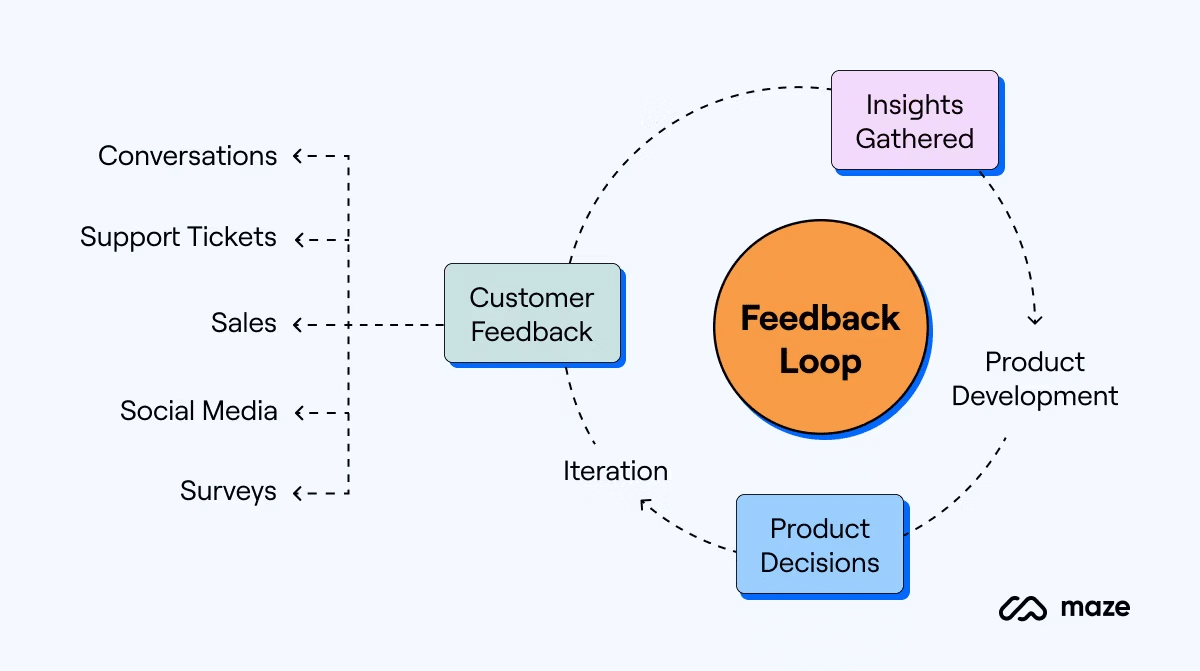
ProductNow collects ranked customer signal in hours, not weeks. Every response is tied to the surrounding prototype context, so feedback is never decontextualized. A team testing a checkout flow can see exactly which screen a customer was looking at when they flagged confusion, rather than receiving a generic comment like "the payment page feels off" with no reference point.
Validated vs. Exploratory Status
Teams see at a glance what is validated with real customers, what is still speculative, and what is ready to build — without a status meeting. This distinction is one of the most repeated pain points in AI-accelerated product teams, where engineering cannot tell the difference between a polished demo of an idea and something that has been tested with actual users.
Engineering-Ready Context Pull
Engineers pull the validated prototype, feedback, decisions, and requirements directly into their codebase — including via Cursor — with nothing lost and no reverse-engineering required. The full ProductNow context becomes the starting point for implementation, not a reference document that gets ignored.
Security is not an afterthought. ProductNow is SOC 2 Type II compliant with Auth0-powered SSO and MFA, automated security posture tracking via Vanta, role-based access controls, and encryption at rest and in transit. For teams handling customer data or working in regulated industries, this baseline matters.
Pricing: Free Tier, Demo-Gated Plans, and the Hidden Cost
| Plan | Price | What You Get |
|---|---|---|
| Free Tier | $0 | Core prototype embedding, limited feedback collection, basic status tracking, single-user or small team access |
| Paid Plans | Demo Required | Expanded feedback collection, team collaboration, advanced integrations, priority support. Pricing not published publicly. |
| Enterprise | Custom | SOC 2 compliance, SSO/MFA, role-based access, dedicated onboarding, design partner program access |
The pricing transparency is ProductNow's biggest weakness at this stage. Teams cannot self-serve into a paid plan with a credit card — they must book a demo. That adds friction at the evaluation stage and makes it harder to include ProductNow in budget comparisons alongside tools like Linear or Notion, which publish pricing clearly. The free tier is generous enough to test the core workflow, but teams scaling beyond a single prototype will hit the paywall quickly.
Try ProductNow Free →Pros and Cons: The Honest Breakdown
✓ What Works
- ✅ Zero-friction prototype embedding from 6+ AI tools without rebuilding or exporting
- ✅ Customer feedback tied directly to prototype context — no decontextualized comments
- ✅ Validated vs. exploratory status eliminates ambiguity for engineering
- ✅ Direct Cursor integration pulls full context into codebase with no reverse-engineering
- ✅ SOC 2 Type II compliance with enterprise-grade security (Auth0 SSO, Vanta monitoring)
✗ What Holds It Back
- ❌ Pricing is not publicly listed — demo booking required for any paid plan
- ❌ Early-stage product in design-partner mode; workflows still being shaped
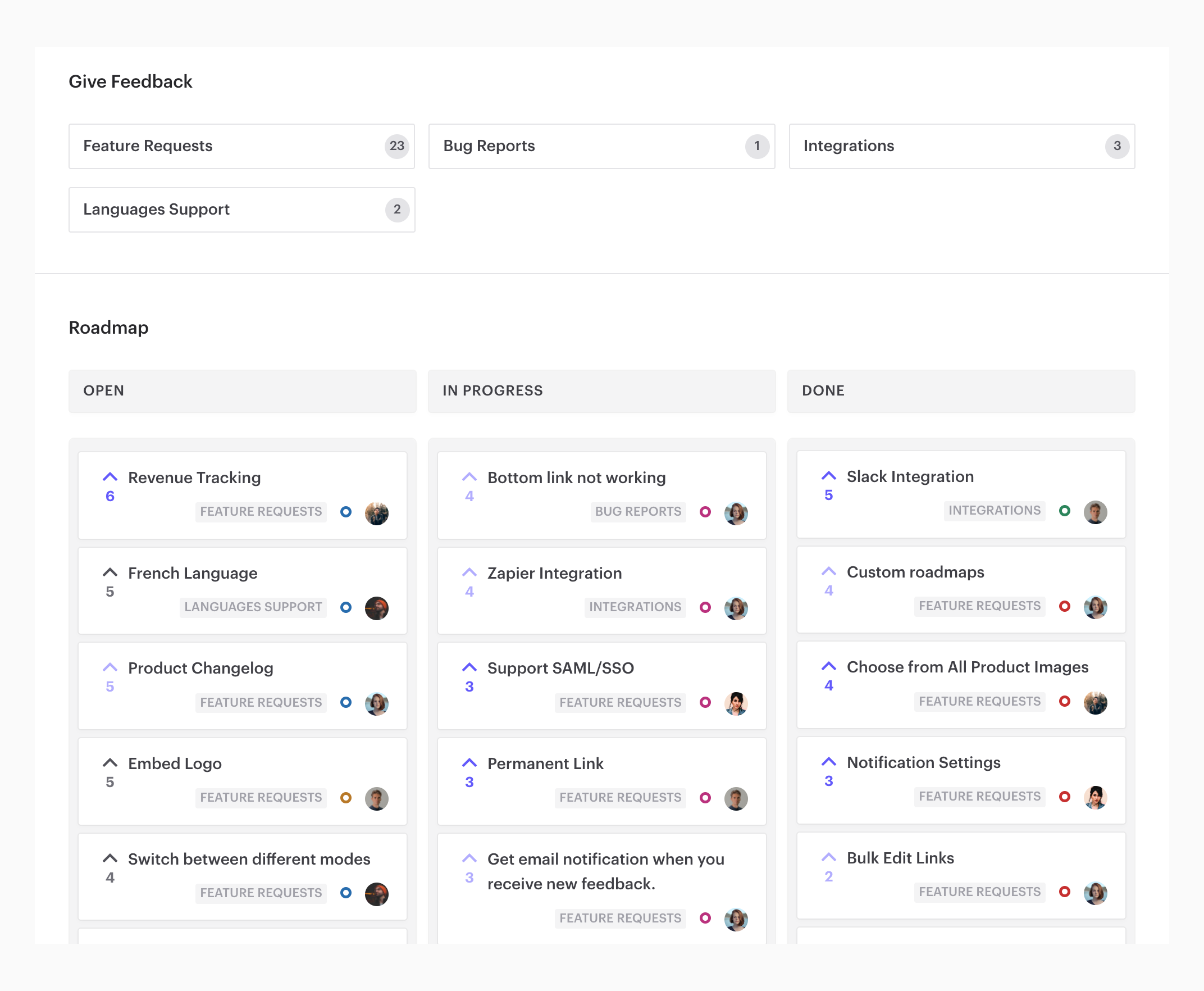
- ❌ Narrow scope by design — not a full PM platform, no roadmapping or backlog management
- ❌ Requires AI prototyping workflow adoption; traditional PRD-first teams see less immediate value
💡 Real User Pulse: What Design Partners Actually Say
Comparison: ProductNow vs. Linear vs. Notion vs. Figma Dev Mode
| Feature | ProductNow | Linear | Notion |
|---|---|---|---|
| AI Prototype Embedding | Native (6+ tools) | None | Manual embed only |
| Contextual Customer Feedback | Tied to prototype | Issue comments only | Custom databases |
| Engineering Handoff | Direct Cursor pull | Issue-based workflow | Document-based |
| Validated vs. Exploratory Tracking | Built-in status | Custom labels | Manual setup |
| Pricing Transparency | Demo-gated | Published clearly | Published clearly |
| Full PM Platform | Handoff layer only | Project management | All-in-one workspace |
| Enterprise Security | SOC 2 Type II | SOC 2 | SOC 2 |
The comparison reveals ProductNow's positioning clearly. It is not trying to replace Linear or Notion — it is solving a problem those tools were never designed to solve. Linear manages the engineering workflow beautifully but has no concept of a prototype. Notion can store anything but requires manual setup to create meaningful connections between prototypes, feedback, and implementation context. Figma Dev Mode bridges design-to-code but stops at the design file — it does not handle customer validation or decision tracking. ProductNow's bet is that the handoff layer deserves its own dedicated tool, and for teams shipping AI-generated prototypes at scale, that argument is increasingly convincing. The trade-off is narrowness: you will still need Linear for sprint planning, Notion for documentation, and Figma for design exploration.
Learning Curve and Who Should Actually Use It
ProductNow is designed to be learned in under an hour for anyone already familiar with AI prototyping workflows. The interface is straightforward: connect your prototype source, set up a feedback collection flow, review ranked responses, mark items as validated or exploratory, and generate the engineering handoff package. Teams using Claude, Lovable, or Figma Make daily will find the mental model intuitive. Teams still working in traditional wireframe-to-PRD workflows will face a steeper adjustment — not because ProductNow is complex, but because it assumes you are already generating prototypes with AI tools.
Ideal for: Product managers and cross-functional teams at companies scaling through AI-generated prototypes — particularly teams where the design-to-engineering handoff has become the bottleneck as prototyping speed accelerates. Teams already using Claude, Lovable, Figma Make, ChatGPT Canvas, Gemini Canvas, or Replit for rapid prototyping will see immediate value. Engineering leads tired of reverse-engineering prototypes will appreciate the direct Cursor integration. Startups and mid-market companies with aggressive shipping cadences are the sweet spot.
Look elsewhere if: Your team still works in traditional wireframe-to-PRD workflows without AI prototyping tools. You need a full project management platform with roadmapping, backlog management, and sprint planning — ProductNow is a handoff layer, not a replacement for Linear or Jira. You require publicly listed pricing before evaluation. You are a solo developer who handles both prototyping and implementation yourself — the handoff problem simply does not exist in that context.
Expert Editorial Opinion
ProductNow addresses a problem that was invisible two years ago and is now unavoidable. The AI prototyping wave of 2025 and 2026 created what we call "handoff debt" — the faster you ship prototypes, the faster you accumulate missing context that engineering needs to build. A team shipping five or six AI-generated prototypes per week, each visually complete but lacking validated feedback and scoped decisions, is not moving faster. They are moving faster toward a wall of engineering confusion and rework. ProductNow's core insight is that this gap deserves its own tool, not a workaround inside an existing platform.
The pricing gap is the most significant concern. In June 2026, teams evaluating tools expect transparent pricing. ProductNow's demo-gated model creates friction that competitors like Linear and Notion do not have. For a tool that targets fast-moving product teams, adding a sales call to the evaluation process feels misaligned with the speed ethos the product itself promotes. The free tier mitigates this for small teams, but any organization evaluating at scale will hit the opaque pricing wall quickly. The question is whether the value justifies the friction — and for teams already drowning in handoff debt, it might.
Whether ProductNow justifies adoption without a free tier depends entirely on your prototyping volume. If your team ships one prototype per month, the free tier is sufficient and the paid plans are irrelevant. If you ship five per week, the time saved on handoff clarification meetings alone could justify enterprise pricing — whatever that pricing turns out to be. The design partner list adds credibility: Salesforce, Amazon, Shopify, DoorDash, and TikTok are not experimenting with theoretical tools. They are organizations that have hit this wall at scale and need an answer now.
The narrow scope is both a strength and a limitation. By refusing to become a full PM platform, ProductNow avoids the feature bloat that plagues all-in-one tools. But it also means every team adopting it will need to maintain at least one other tool for roadmapping, backlog management, or user research synthesis. That integration overhead is real, though arguably smaller than the overhead of managing handoff context across Slack threads, Figma comments, and Notion docs.
The long-term question is whether this capability gets absorbed into the prototyping tools themselves. If Lovable or Claude eventually build native handoff features with validated feedback tracking, ProductNow's standalone value proposition weakens. But for now, those tools are focused on generation speed, not handoff completeness. ProductNow has a window to become the standard layer between AI prototyping and engineering — and its partner list suggests it is moving fast enough to claim that position before the incumbents catch up.
Final Verdict
ProductNow earns a 7.8 out of 10 for solving a genuinely new problem with precision and security rigor, but losing points on pricing transparency and early-stage product maturity. It is the right tool for the right moment — teams shipping AI-generated prototypes at scale who have already felt the pain of handoff debt. The free tier removes risk for evaluation, the SOC 2 compliance removes risk for enterprise adoption, and the design partner list removes doubt about whether the problem is real. The demo-gated pricing and narrow scope keep it from scoring higher, but neither flaw undermines the core value proposition. If your team prototypes with AI and struggles to get engineering the context they need, ProductNow is worth the free tier test today. Updated June 2026.
🔗 Related ToolRadar Reviews
More tools from AI Product Management
- Can a Non-Designer Really Build a Prototype?
- Build a Complete App From a Single Prompt
- I Gave AI a 47-Page Spec and Watched It Build
- v0.dev vs Bolt.new vs Cursor: Which AI Builder Wins?
- Lovable.dev 2026 Review: Will It Kill Traditional Dev?
- Vibe Coding Is Changing How We Build
- Why Replit Agent Is One of the Hottest AI Tools
- This AI Agent Works While You Sleep
❓ Frequently Asked Questions
How many prototypes has your team shipped this month — and how many made it to production with the context engineering actually needed?
If the gap between those two numbers is growing, you are not alone. The AI prototyping revolution created a handoff crisis that most teams are still pretending does not exist. ProductNow is one of the first tools to name the problem and build for it. Whether it becomes the standard or gets absorbed into larger platforms, the conversation it started is one every product team needs to have in June 2026.
Try ProductNow Free →
Comments
Post a Comment