



Can AI Really Turn 10 Years of Your Content Into a Published Book? Prosed Review 2026
A review of the AI tool that assembles newsletters, podcasts, and blog posts into publish-ready manuscripts — without generating new content from a prompt.
Reviewed by the ToolRadar Editorial Team · Independent analysis based on official documentation and verified user feedback
There is a peculiar paradox at the heart of the creator economy in 2026: the people who have the most to say have written the least number of books. A Substack writer with 50,000 subscribers has likely produced more original thinking in the last three years than most published authors produce in a career — but that thinking lives scattered across hundreds of individual posts, never assembled into the coherent argument a book would make. A podcaster with 200 episodes has conducted hundreds of expert interviews and synthesized thousands of hours of domain knowledge — but none of it is searchable, citable, or distributable in the form that books still provide.
Prosed is an AI-based tool designed to solve exactly that problem. Launched in beta in May 2026 by an independent team, it helps creators and aspiring authors turn existing content into publish-ready books. It assembles newsletters, podcasts, posts, notes, and ideas into a coordinated manuscript — not by generating new content from a prompt, but by working directly with what the creator has already produced. The platform operates through a multi-stage pipeline modeled on real publishing methods, with a built-in AI reviewer named Typo that checks for voice consistency, grammar, story flow, chapter cohesion, and brand alignment. The finished manuscript exports as print-ready PDF, ePub, or DOCX — ready for Amazon KDP, Gumroad, or direct sale. Updated July 2026.
What Prosed Does
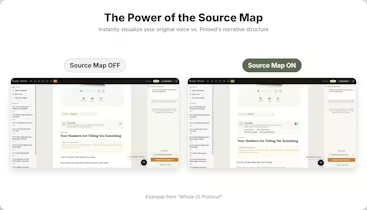
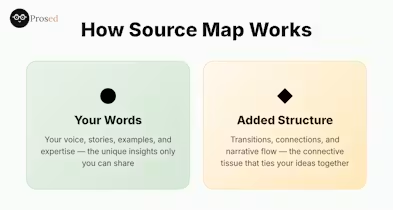
Prosed treats your content archive as raw material rather than as a limitation. Users submit their existing content in various formats — newsletters, podcast transcripts, blog posts, social posts, and notes — and the platform structures them into a coherent manuscript with chapter flow, narrative arc, and editorial consistency. The process is not generation; it is assembly and elevation. The AI does not write new paragraphs from a one-line prompt. It reads what you have already written, identifies thematic threads, groups related pieces into chapters, and bridges gaps with transitional material that matches your established voice.
The workflow happens inside a personal portal where you read each chapter as it forms, leave comments, and request rewrites. This is a deliberate design choice: Prosed does not hand you a finished document and ask you to accept or reject it. It builds the book in front of you, chapter by chapter, with your input at every stage. The Typo AI reviewer functions as an automated developmental editor, checking the assembled manuscript for voice consistency, grammar, story flow, chapter cohesion, and brand alignment — a layer of quality control that separates Prosed from tools that simply concatenate content and call it a book.
Core Features
Content Assembly Pipeline
Takes existing newsletters, podcast transcripts, blog posts, social posts, and notes and structures them into a coherent manuscript with chapter flow, narrative arc, and editorial consistency. The pipeline groups related content, identifies thematic threads, and builds bridges between scattered pieces.
Typo AI Reviewer
A built-in editorial AI that checks the assembled manuscript for voice consistency, grammar, story flow, chapter cohesion, and brand alignment. Typo functions as an automated developmental editor rather than just a grammar checker — a feature early evaluators as the reason they trust the output.
Interactive Creator Portal
Users read every chapter as it forms, leave comments, and request rewrites — maintaining creative control and collaboration with the process rather than receiving a finished document with no input. This portal-based workflow treats the creator as an editor, not just a source.
Multi-Format Export
Outputs the final manuscript as print-ready PDF, ePub, and DOCX, covering physical printing, digital distribution, and further editing in standard writing tools. The export is immediately publishable on Amazon KDP and distributable directly to your audience.
Pricing & Plans
| Plan | Price | What's Included |
|---|---|---|
| Beta (First 100) | $47 per book | Full pipeline access, Typo AI reviewer, creator portal, 5 full draft revisions, unlimited chapter-level edits, PDF/ePub/DOCX export |
| Standard | $197 per book | Same features as beta; 5 full draft revisions included; additional full rewrites at $19 each; unlimited Typo feedback |
| Additional Rewrites | $19 each | Full manuscript rewrite beyond the 5 included revisions; chapter-level edits remain unlimited at no charge |
ToolRadar may earn a commission if you purchase through this link. Pricing verified from tryprosed.com as of July 2026.
Pros & Cons
✓ What Works
- ✅ Per-book pricing instead of subscription — pay for a deliverable, not access
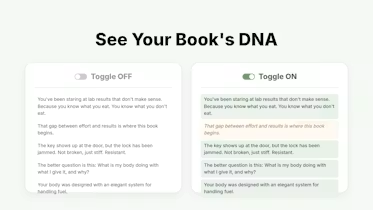
- ✅ Preserves author voice by assembling existing content rather than generating from prompts
- ✅ Typo AI reviewer provides developmental editing-level feedback, not just grammar
- ✅ KDP-ready export in PDF, ePub, and DOCX collapses the gap between manuscript and product
✗ What Holds It Back
- ❌ Non-fiction only — fiction writers, novelists, and screenwriters have no path in the current product
- ❌ Very early stage — beta launched May 2026 with a 100-creator cap; reliability and support are still maturing
- ❌ No public API or integrations — all content must be manually submitted; no connection to podcast hosts or newsletter platforms
Who Should Use Prosed
Ideal user: Substack and newsletter writers with years of archived posts, bloggers and long-form writers with extensive content libraries, podcasters with transcript archives, and first-time authors or domain experts who have produced substantial content but never found the structure to turn it into a book. Specifically: creators in self-help, memoir, business, personal essays, and expertise-driven categories where raw material is abundant but narrative structure is missing.
Look elsewhere if: You write fiction, novels, or screenplays — Prosed does not support these genres at launch. You need a tool that generates original content from a prompt rather than assembling what you have already written. You require API access or direct integration with your content management system. You are looking for a subscription-based writing environment rather than a per-deliverable assembly service. You want to produce multiple books per year and find the $197 per-book cost prohibitive compared to a $20/month AI writing subscription.
💡 Community Feedback
How Prosed Compares
| Feature | Prosed | AIWriteBook | Claude Projects |
|---|---|---|---|
| Pricing Model | Per book ($197) | Subscription ($9.99+/mo) | Subscription ($20/mo) |
| Content Source | Your existing content | AI-generated from prompts | Manual assembly required |
| Editorial Review | Built-in Typo AI reviewer | Basic editing tools | Manual prompting |
| Export Formats | PDF, ePub, DOCX | KDP-ready bundle | Manual export |
| Genre Support | Non-fiction only | Fiction + non-fiction | Any genre |
| Voice Preservation | Native — works from your content | Style mimicry via prompts | Custom style guides |
Prosed occupies a distinct position in the AI book-writing market. Where AIWriteBook and Claude Projects generate content from prompts or require manual assembly, Prosed starts from the assumption that the content already exists. This is a fundamentally different value proposition. For creators with years of published material, Prosed removes the step of "writing the book" and replaces it with "structuring the book" — a much smaller and more achievable task. The trade-off is genre limitation and a higher per-unit cost than a subscription model. For a creator producing one book from a decade of content, $197 is a reasonable one-time investment. For someone planning to write multiple books per year, a subscription tool may offer better economics. Updated July 2026.
Learning Curve
Prosed is designed around a workflow most creators already understand: submitting content and reviewing drafts. The learning curve is not technical — it is editorial. Creators must learn to think of their content archive as a single body of work rather than as individual posts. The portal interface, where you read chapters as they form and leave comments, mirrors the experience of working with a human editor. If you have ever used Google Docs with track changes or commented on a shared draft, the Prosed portal will feel familiar.
The steeper learning curve is understanding what makes a good submission. Prosed assembles what you give it. Creators with disorganized archives, inconsistent writing styles across years of content, or thin source material will get proportionally weaker output. The tool does not fix a broken content strategy — it reveals one. The most successful users will be those who spend time curating their best pieces before submission and who understand their own thematic threads well enough to guide the assembly. Compared to AIWriteBook, where the learning curve is prompt engineering, or Claude Projects, where it is workflow design, Prosed's curve is editorial judgment. That makes it more accessible to non-technical creators and more demanding of content quality. Updated July 2026.
Expert Editorial Opinion
Prosed represents a meaningful shift in how AI tools approach book creation. The dominant model in 2026 is generation: give the AI a prompt, receive a draft. Prosed inverts that model. It says the draft already exists — scattered across newsletters, podcasts, and blog posts — and what creators need is not more words but better architecture. That insight is both correct and underexplored. The creator economy has produced an enormous library of unassembled books, and Prosed is the first tool to treat that library as a resource rather than as noise.
The technical implementation is straightforward and appropriate for the task. The content assembly pipeline, the Typo AI reviewer, and the interactive portal are all logical components of a publishing workflow. None of them are revolutionary individually. What matters is the combination: a tool that treats assembly, review, and export as a single pipeline rather than as separate tools. The per-book pricing model reinforces this — you are not buying software, you are buying a book.
Where Prosed sits in the market is between DIY and ghostwriting. A ghostwriter costs $15,000–$30,000 and takes six months. A DIY approach with Claude and manual assembly costs $20/month in subscription fees but requires dozens of hours of prompting, organizing, and formatting. Prosed at $197 is positioned as a third path: faster than DIY, cheaper than a ghostwriter, and more structured than either. For creators with substantial archives, that positioning is credible.
The pricing gap is worth examining carefully. At $197 per book with 5 included revisions, Prosed is significantly cheaper than a ghostwriter and comparable to 10 months of a $20 AI subscription. But it is not a subscription replacement. If you plan to produce multiple books per year, the per-book cost adds up quickly. A creator writing 3 books annually would pay $591 with Prosed versus $240 with a Claude subscription. The value calculation depends entirely on whether you have the content archive to justify the assembly model. Creators with 5+ years of content will find Prosed economical. Newer creators without archives will not.
Is it worth the cost without a free tier? Prosed does not offer a free trial or a free tier — only the beta discount for the first 100 creators. For a $197 purchase with no preview, that is a genuine barrier. The beta price of $47 mitigates this for early adopters, but once the beta closes, prospective users will need to trust the product sight unseen or rely on community reviews that do not yet exist. For creators with a substantial archive and a clear book concept, the risk is low. For creators testing the waters, the absence of a free tier is a real friction point. The 5 included revisions help — they give you room to shape the output — but the upfront commitment remains.
Final Verdict
Prosed is a well-conceived tool that addresses a real and under-served niche: creators with years of published content who have never assembled it into a book. The content assembly pipeline, the Typo AI reviewer, and the KDP-ready export make it a credible alternative to both DIY AI workflows and expensive ghostwriters. The per-book pricing model is fair for creators with substantial archives, and the voice-preservation approach is a genuine differentiator in a market saturated with prompt-to-book generators. The limitations are significant but contextual: non-fiction only, very early stage, no API or integrations, and no free tier. For the right creator — a Substack writer with 200 posts, a podcaster with years of transcripts, a blogger with a deep archive — Prosed is the most direct path from scattered content to published book. It earns a 7.2 out of 10 — a promising beta product with a strong concept and a clear ideal user.
Technical Quality: 7.5/10 · Price-to-Value Ratio: 7.5/10 · Maturity & Documentation: 6.5/10
🔗 Related ToolRadar Reviews
More tools from AI Writing Tools
- I Summarized a 50-Page Paper in 5 Minutes
- I Turned a 47-Page Research Paper Into a Presentation
- I Let Claude Browse the Web for Me
- Genspark Review 2026: AI Research Agent
- Fabric App Review 2026: AI Second Brain
- Jasper AI: Your Personal Content Writer
- Copy.ai: Best Tool for Marketing and Ads
- ChatGPT: The Smartest AI Assistant You Need
❓ Frequently Asked Questions
How many books are hiding in your content archive right now?
Prosed is betting that the next wave of AI publishing is not about generating more content — it is about recognizing the books that already exist, scattered across years of newsletters, podcasts, and posts. The question is whether you are sitting on a manuscript you never knew you wrote.

Comments
Post a Comment